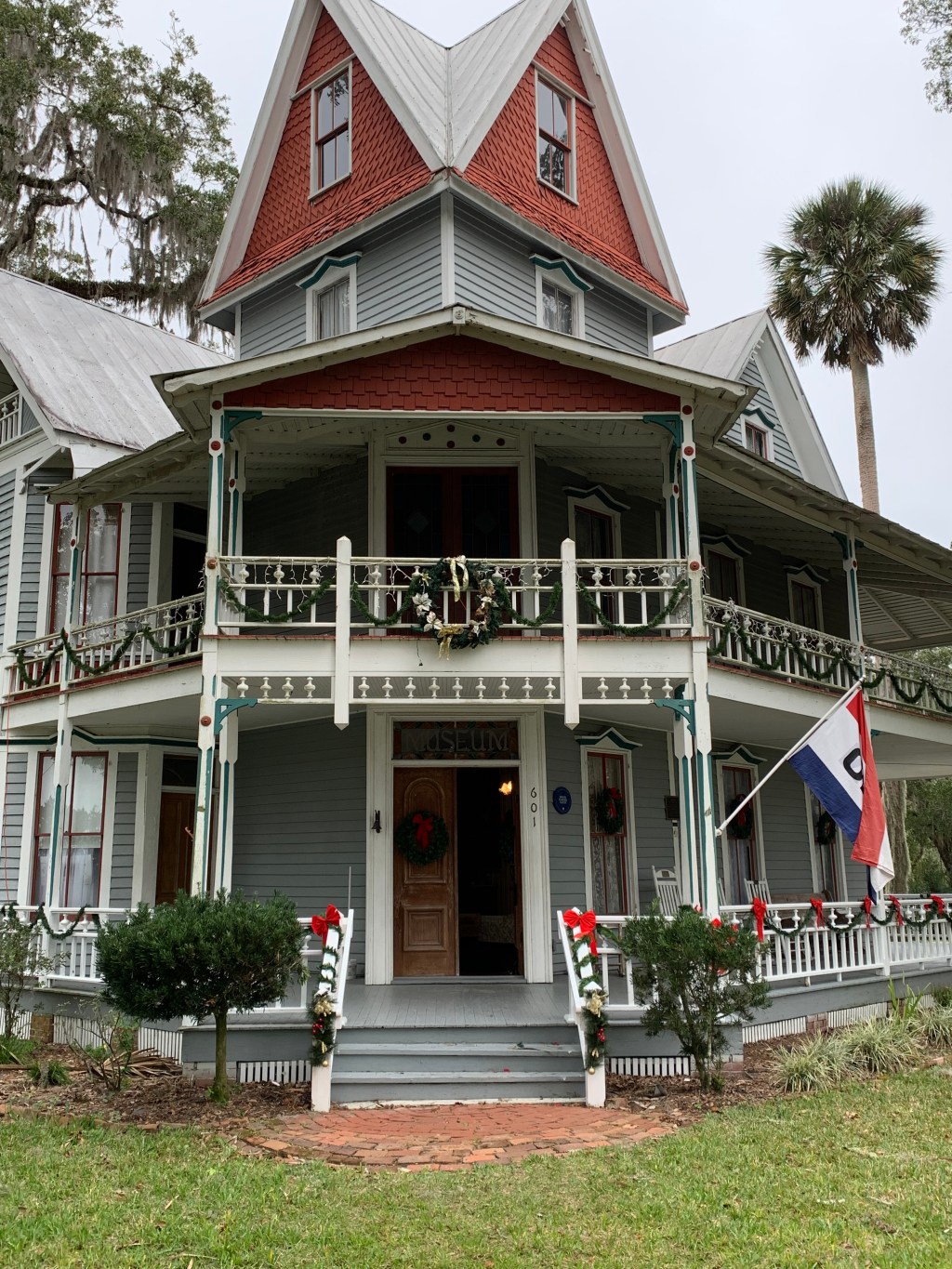
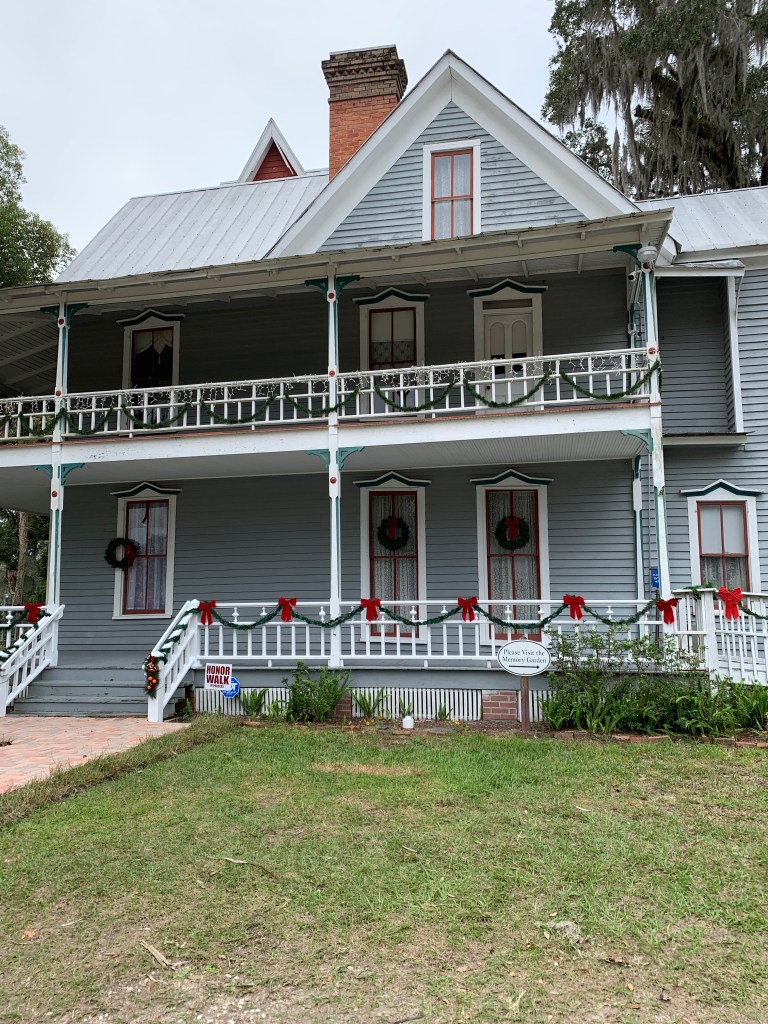
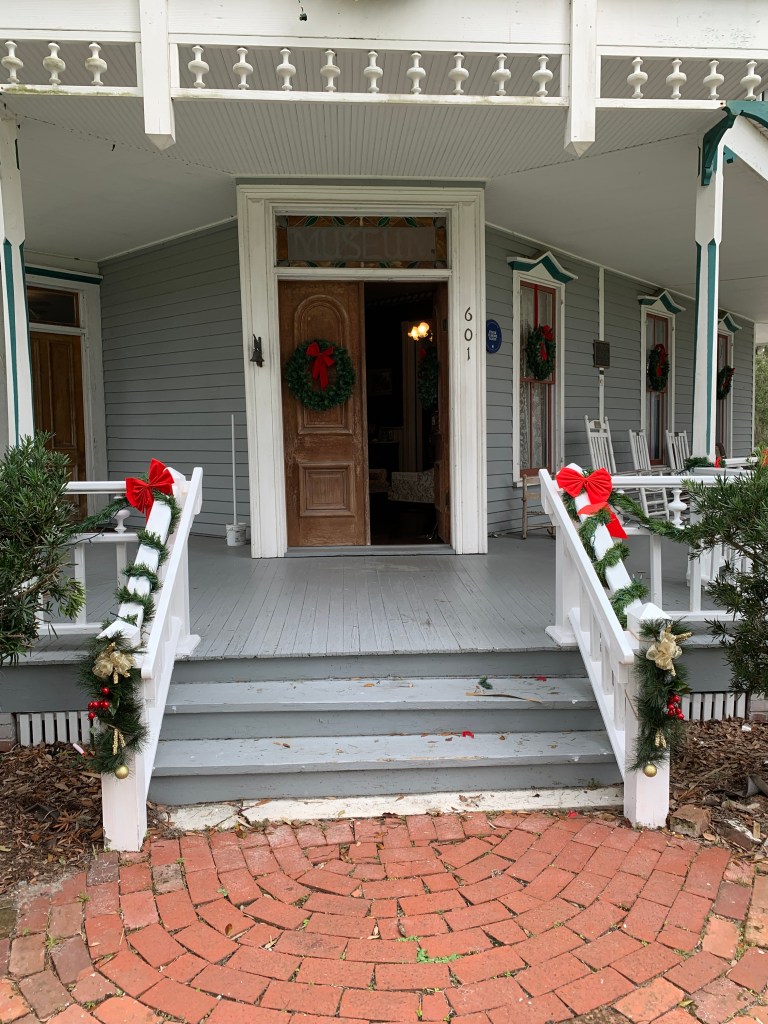
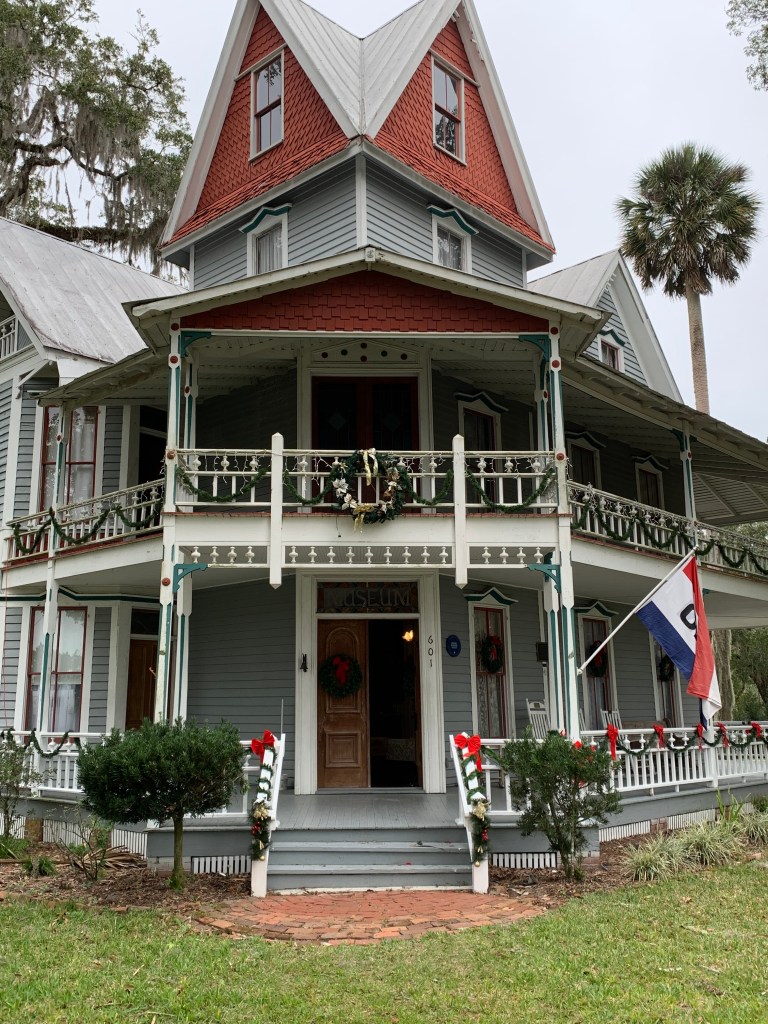
This beautiful, 4-story, 7-gable, 14-room “Painted Lady” Victorian home (called the Heritage Museum online), began as a 4-room home in 1855. The Armed Occupation Act of 1842 stated that “any settler who came to Florida, lived on the land for five years, cultivated five acres, and built a dwelling” would be granted 160 acres.
The homestead was established by Richard Wiggins and then bought by John May in 1855. John built a 4-room house and moved in with his wife Marena and their two daughters, Matilda and Annie. John died of tuberculosis three years later. Marena stayed in the home throughout the Civil War. She eventually married John Saxon, a Confederate soldier who had been wounded and taken prisoner. He walked over 1,000 miles to get back to Brooksville and was hailed as a local hero.
Marena and John had a son who died only one month after birth. Tragically, Marena herself died in childbirth in 1869. The baby, a daughter named Jessie Mae, survived the birth but died of unknown causes three years later.
John May, Marena, the one-month-old baby boy and three-year-old daughter, Jessie Mae, are all buried on the property. It is said that their ghosts haunt the house and grounds. If you’re interested, the house has ghost tours that can be booked online. The regular tour does not include the ghost history but is chock full of interesting information on the house and the artifacts.
I asked the gift shop volunteer who has worked there for years if she’s ever experienced the ghosts. She told me there used to be a toy, a wooden train car, that was kept on the first floor in the parlor. She said it was not uncommon to arrive for the day and find it on the floor in the upstairs nursery.
Frank Saxon remarried and moved. The house was eventually sold to Dr. Sheldon Stringer. He added ten rooms to the property and established his medical practice in the downstairs area. The beautiful pocket doors he built to ensure privacy in his “private quarters” are still there. Also there are pocket windows that slide up to the next floor when fully open. Over the years, they had stopped functioning but have been lovingly restored.
The first thing I noticed was all the beautiful woodwork, from the restored floors and banisters to the massive furniture pieces. Can you imagine that at some point before being taken over by the Historical Society, the floors had been painted black? And can you imagine the hours it took to bring them back to pristine condition?
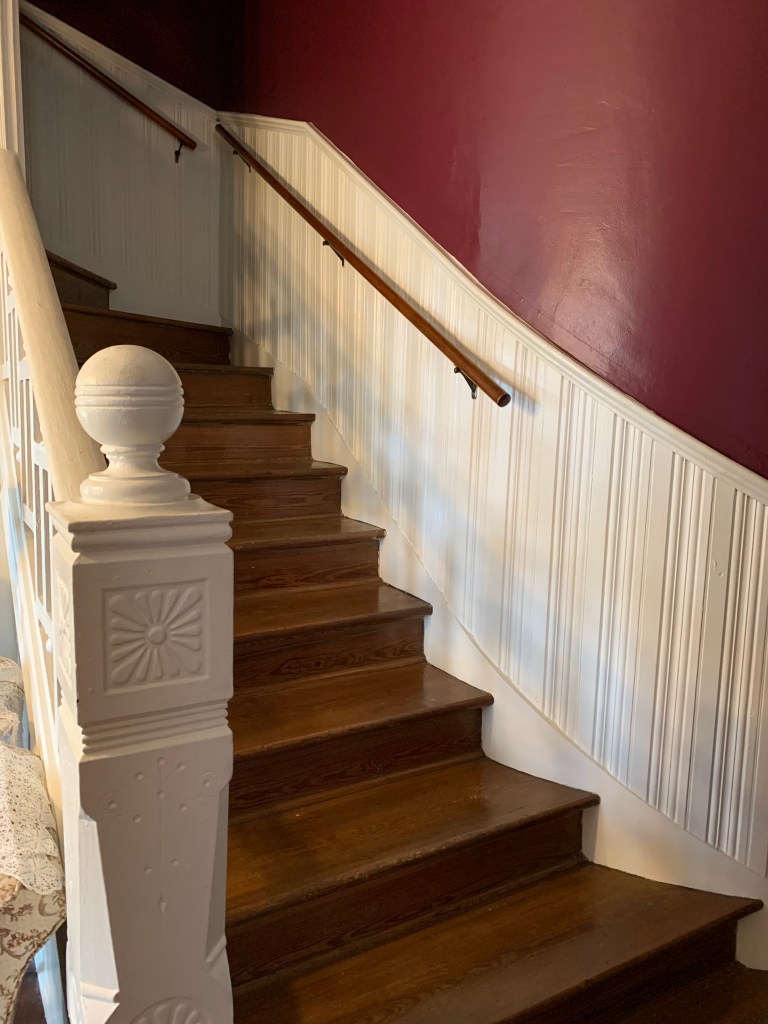
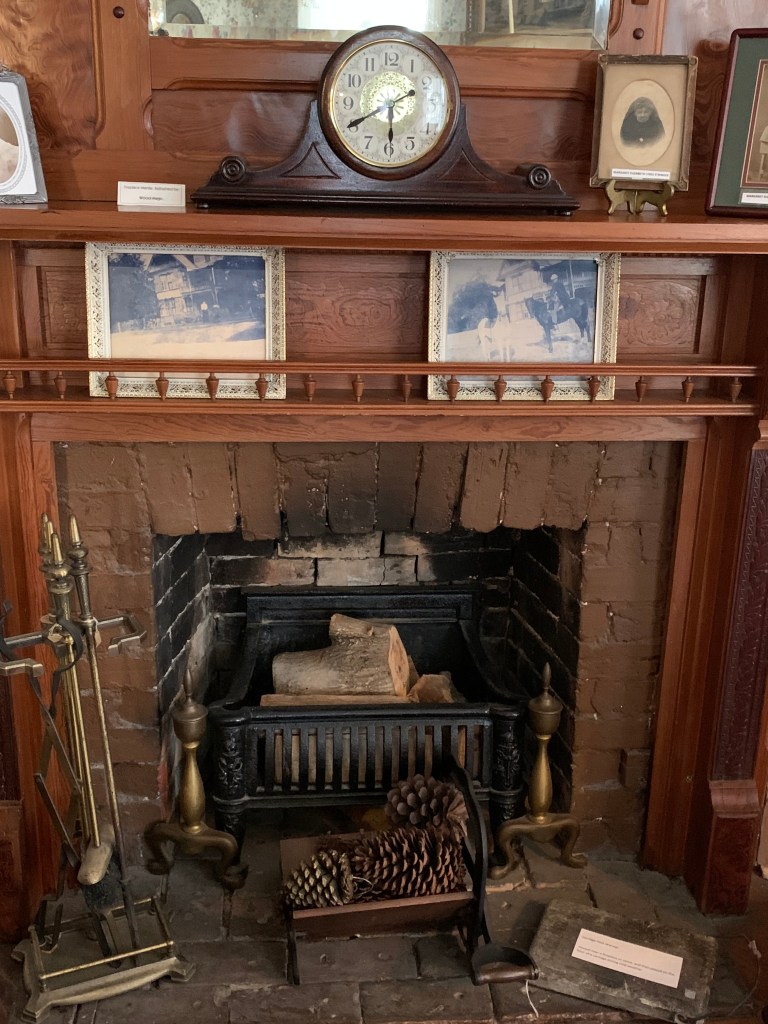
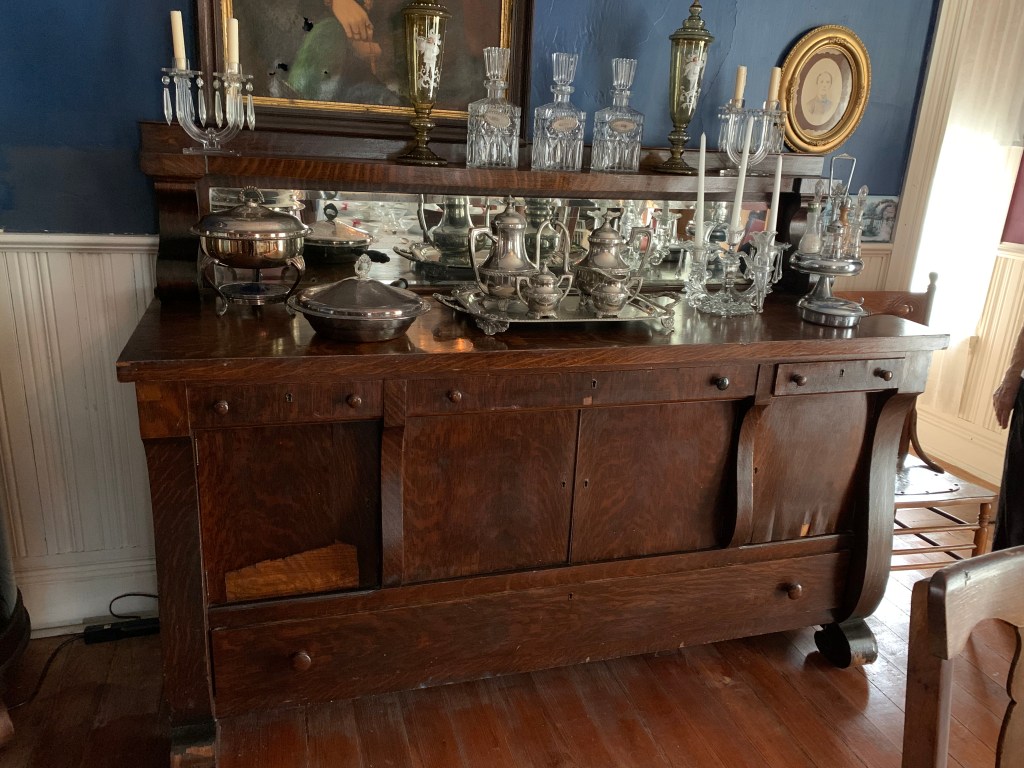
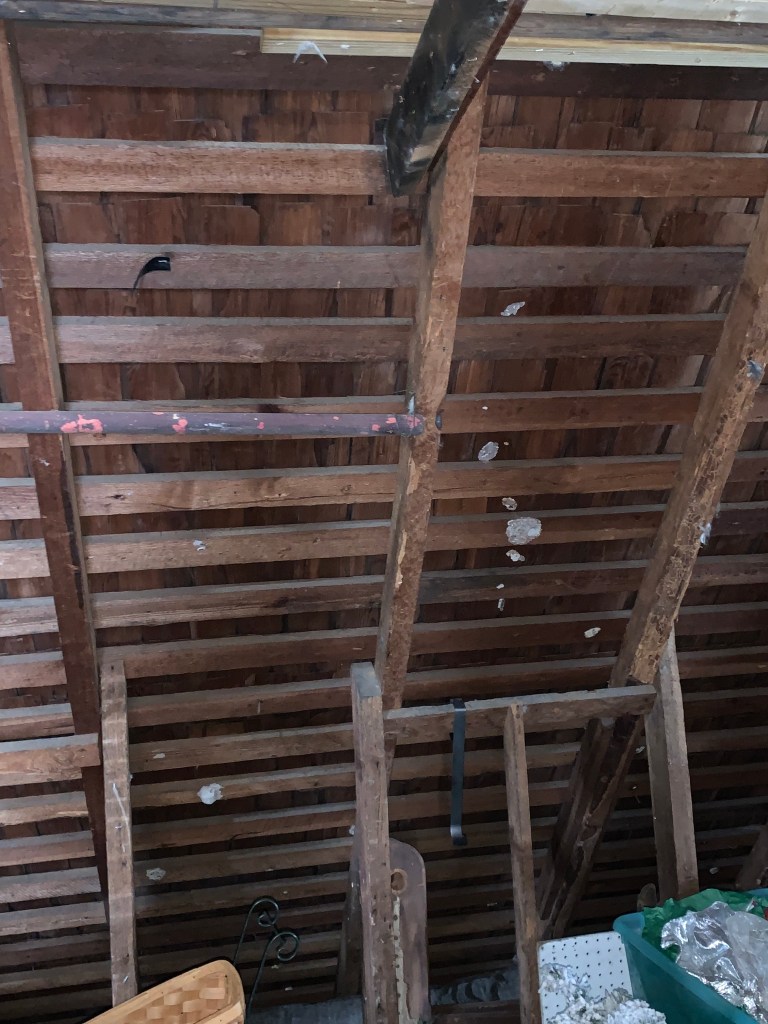
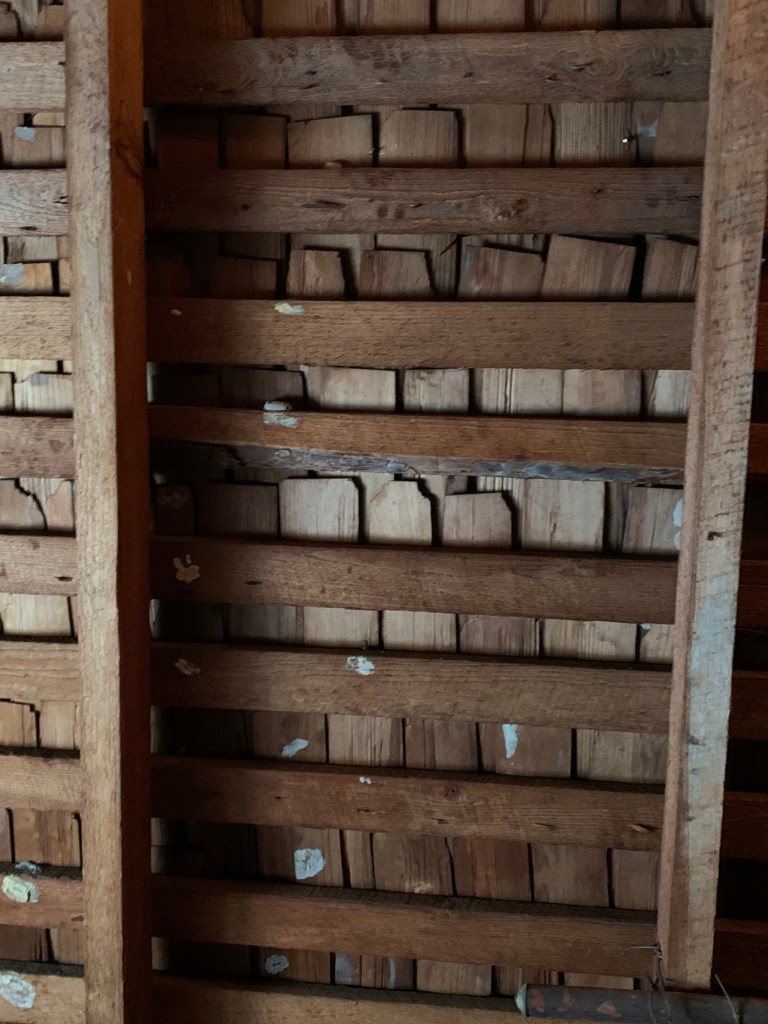
Even the upper banisters and the attic space had original woodwork.

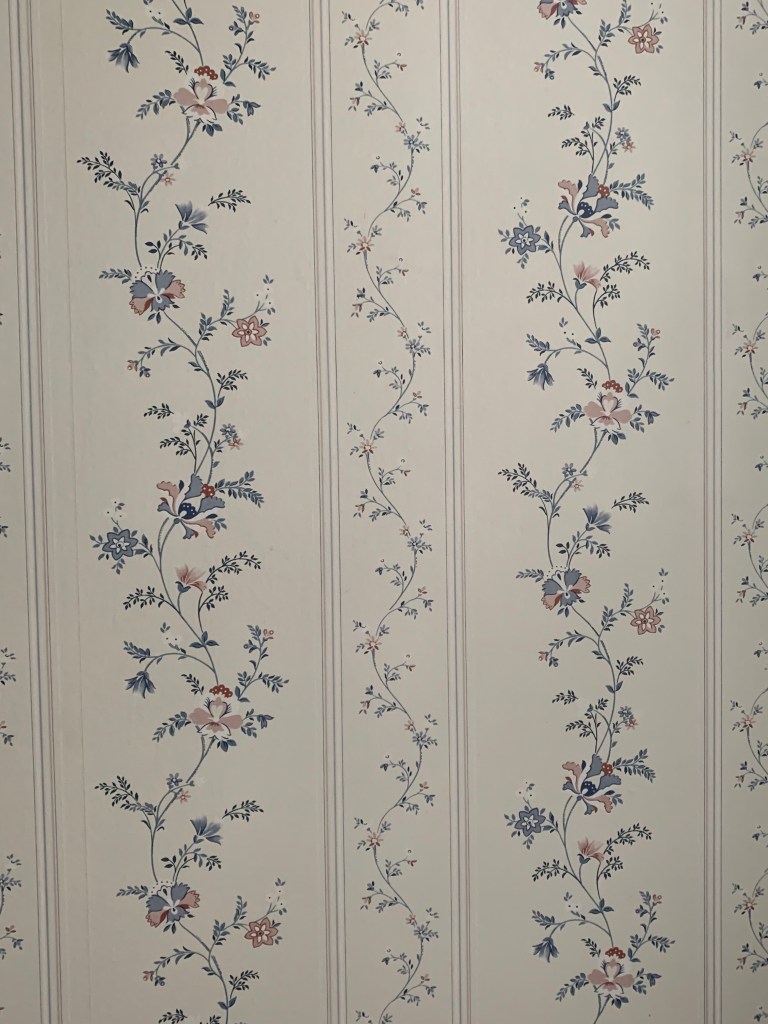
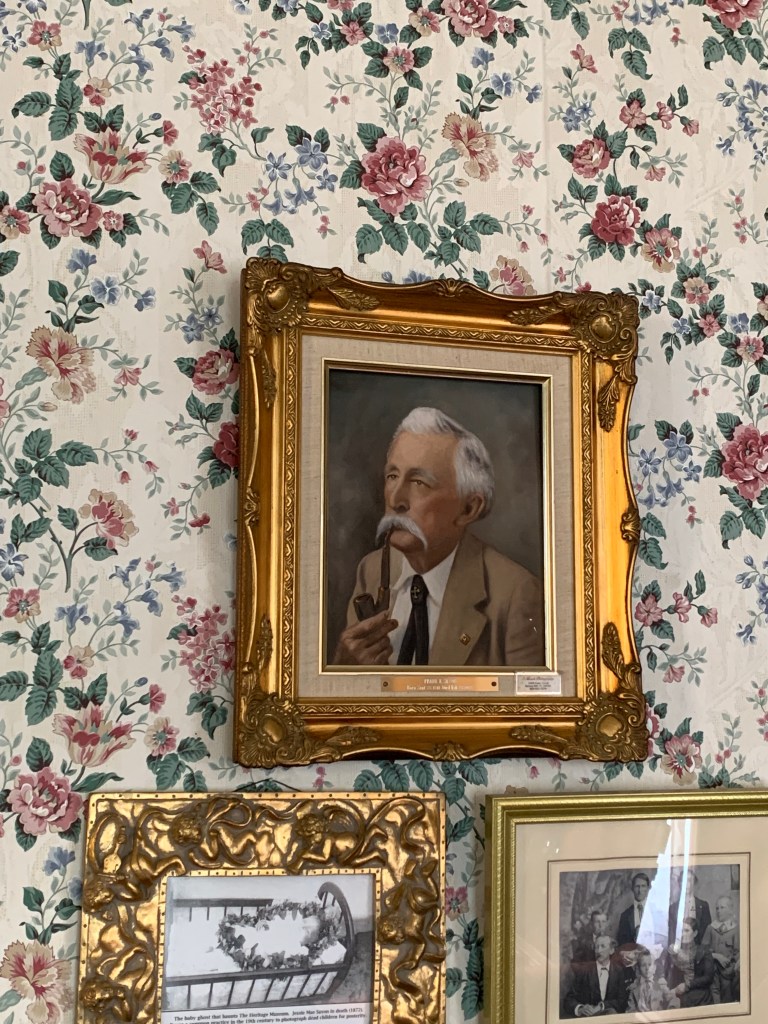
Although I don’t think I’d want these flowery wallpapers in my own house, they seemed a perfect fit for the Victorian. I’m partial to the one in the center.

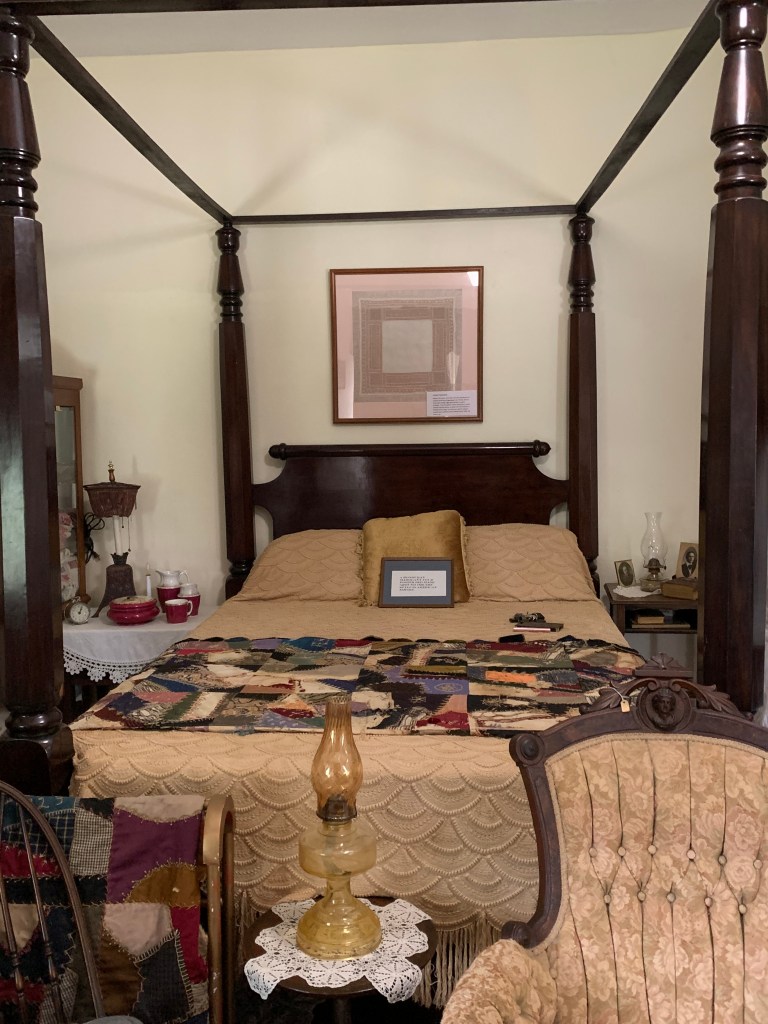
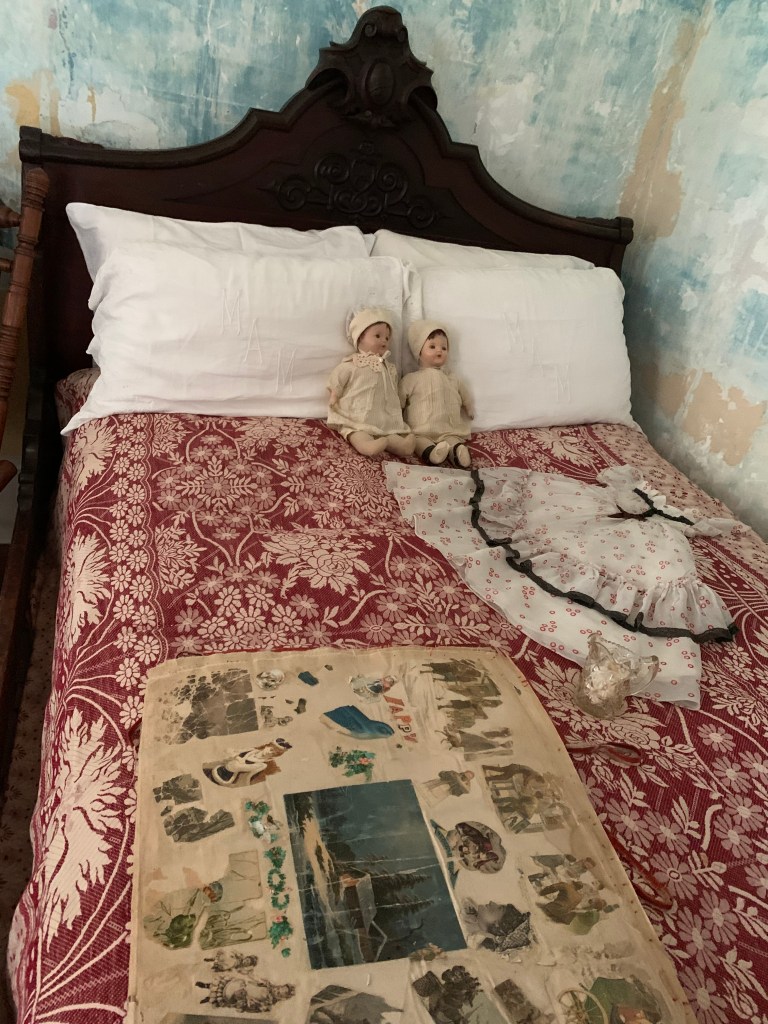
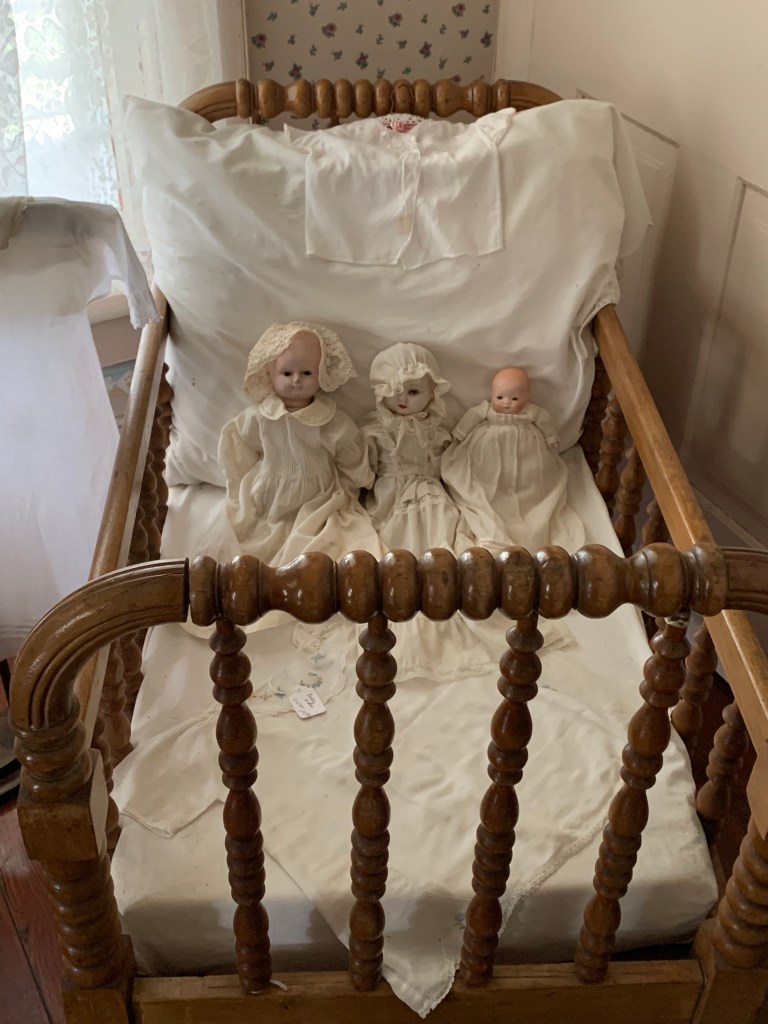
I’m not sure if you can tell from my photo that the bed in the master bedroom seems a tad small. As it turns out, the average male in the 1860s was 5’7″. The bed in the center photo was for the older children and if there were two or three, they shared. The crib on the right contains three dolls, original to the era, made of porcelain.
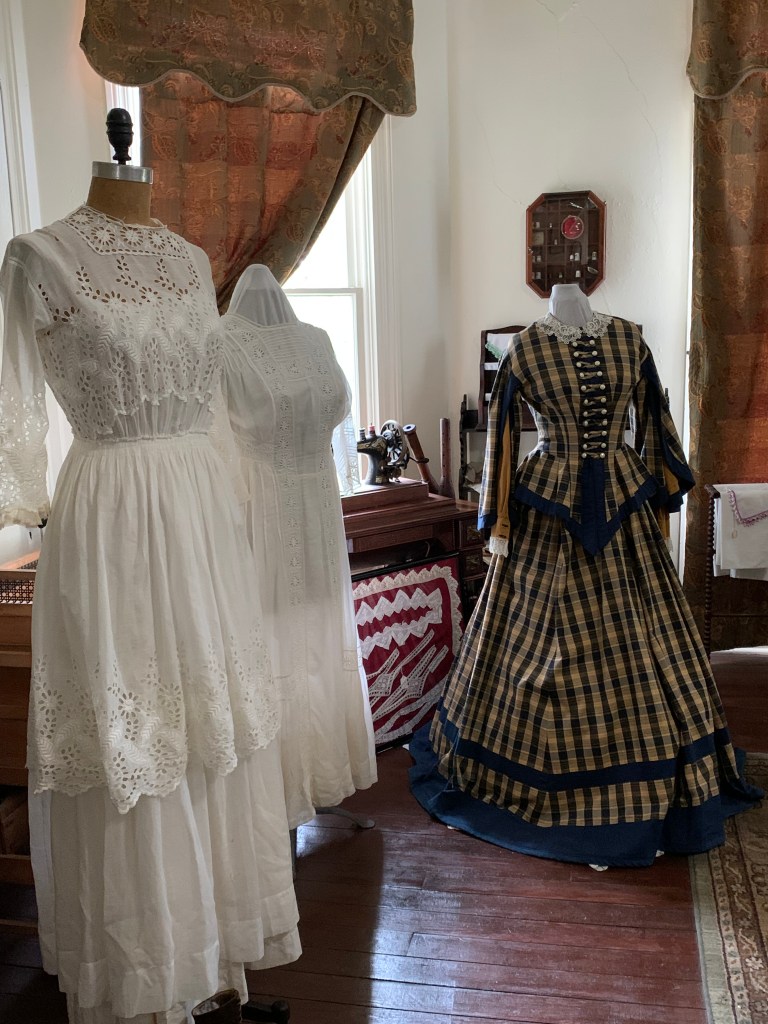
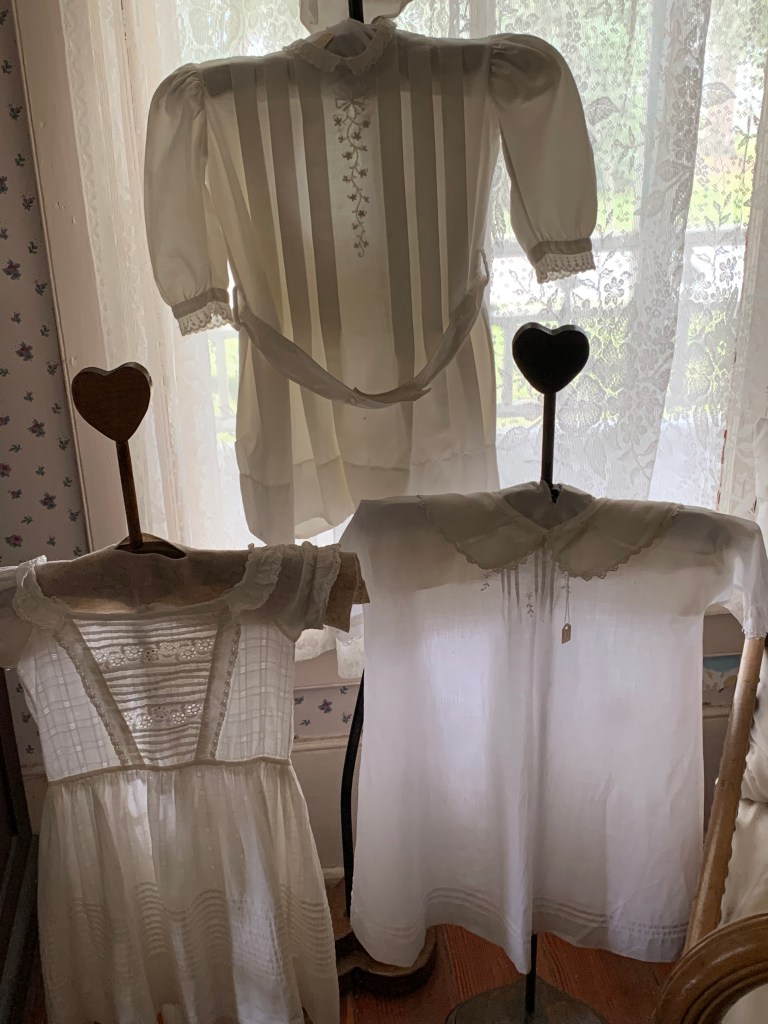
And then there were the clothes. The lacework on the dress in the foreground was stunning. Good thing I didn’t live back then because I can’t imagine anyone ever allowing me in something that delicate. I’m sure I’d have had food stains on it somewhere. And the children’s clothes? Unimaginable. Was everything always white? Surely there had to be some royal blues or mossy greens – something to hide dirt, grass stains, and perhaps pet hair.
The May-Stringer house is full of interesting treasures and I’m pretty sure you couldn’t point out a single thing that the volunteers couldn’t explain to you. Take for instance, the music box (below left). It’s over 100 years old and still works. There’s a wonderful collection of silver spoons, a loom, and a “teaching book”(bottom left). The teaching book is pages and pages of pictures of everyday things that mothers would teach their young children about – horse, bird, bonnet, etc. The room with Civil War artifacts contains a wheelchair and a field kit for doctors. Note the bone saw.
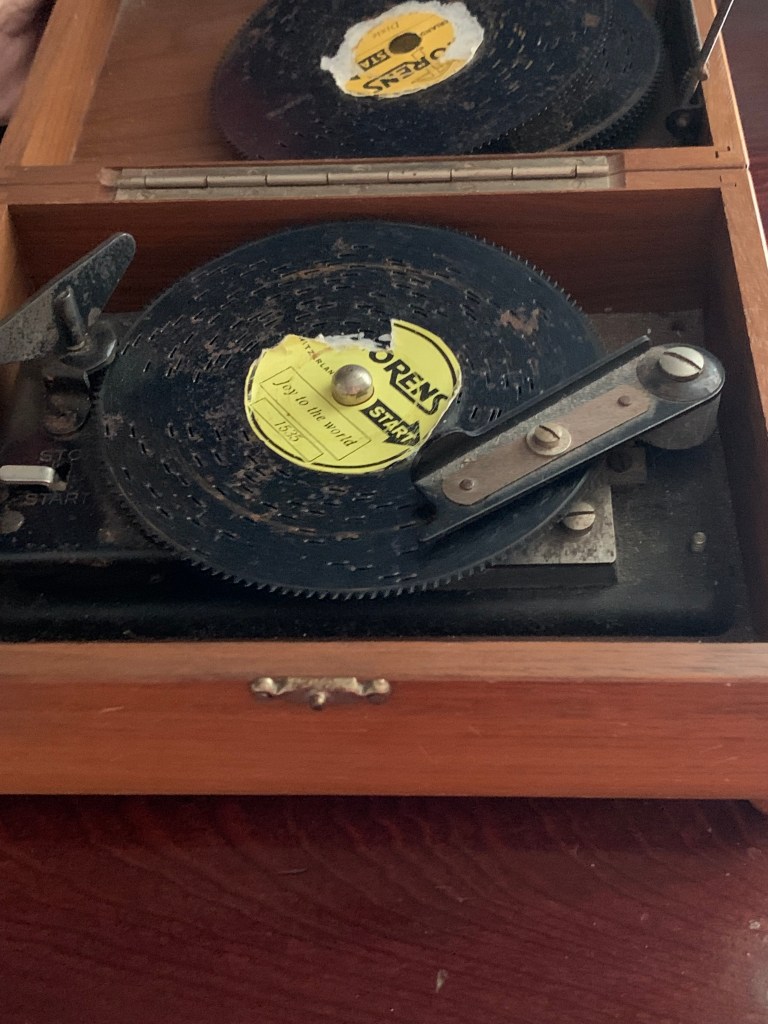
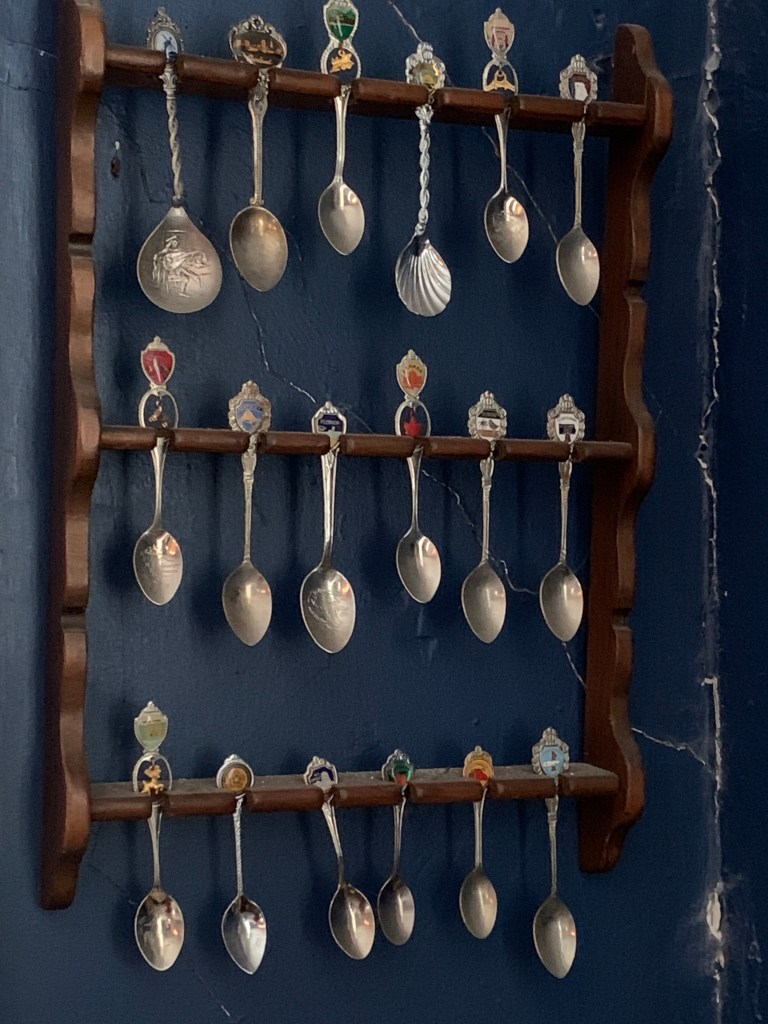
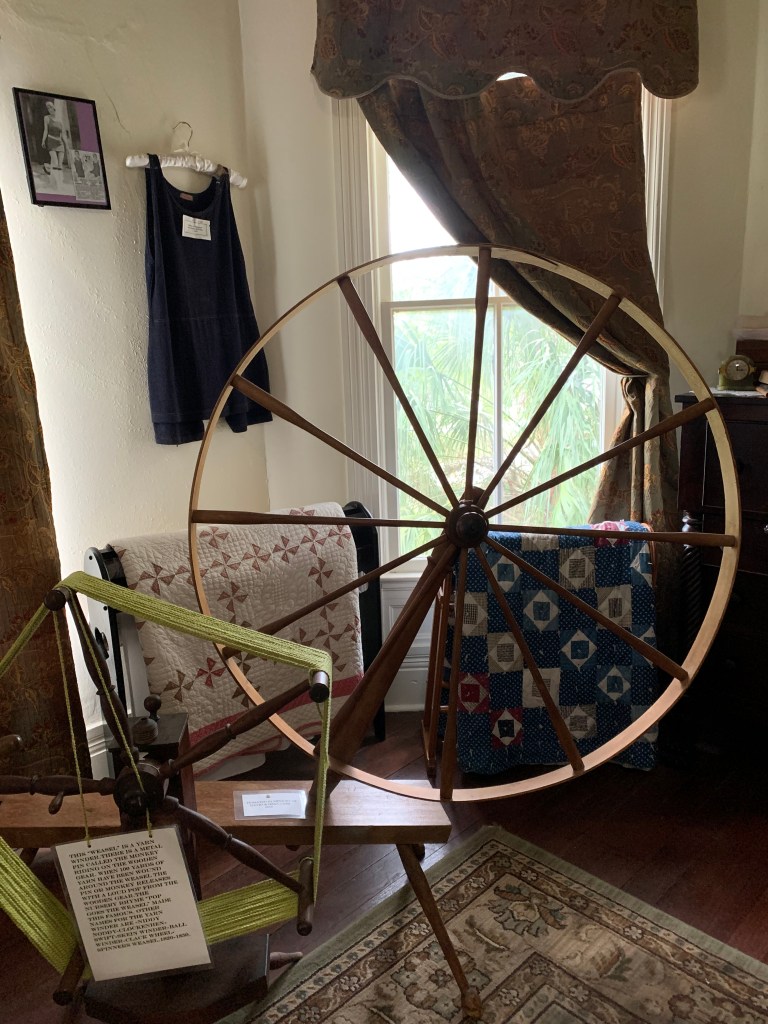

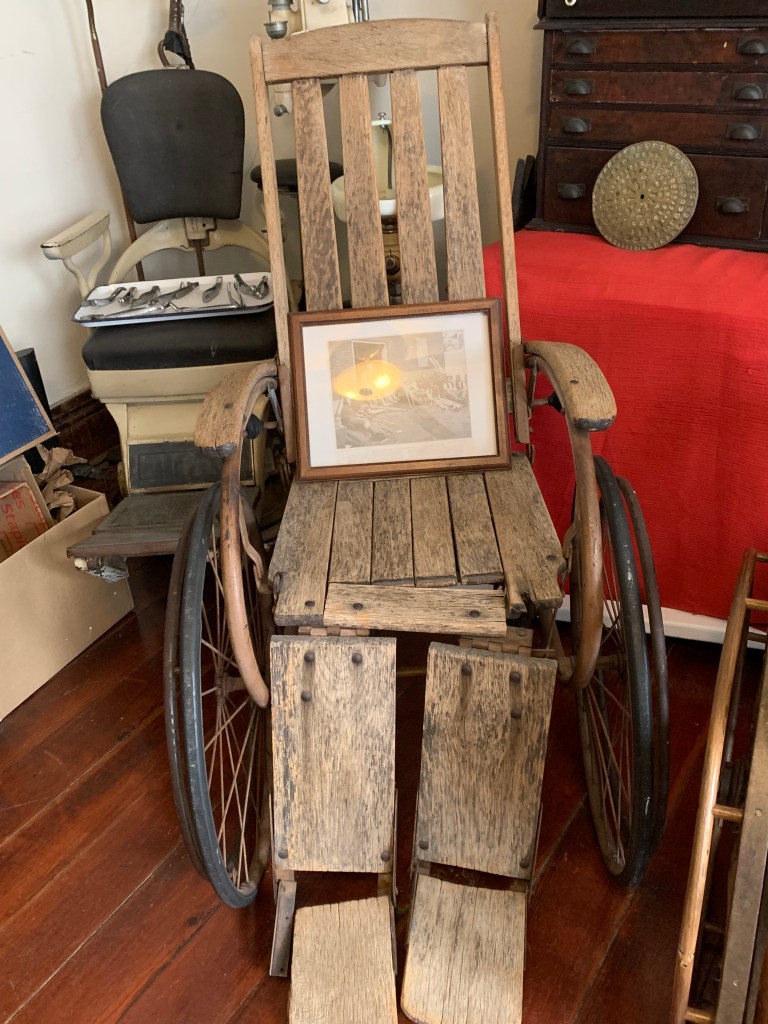

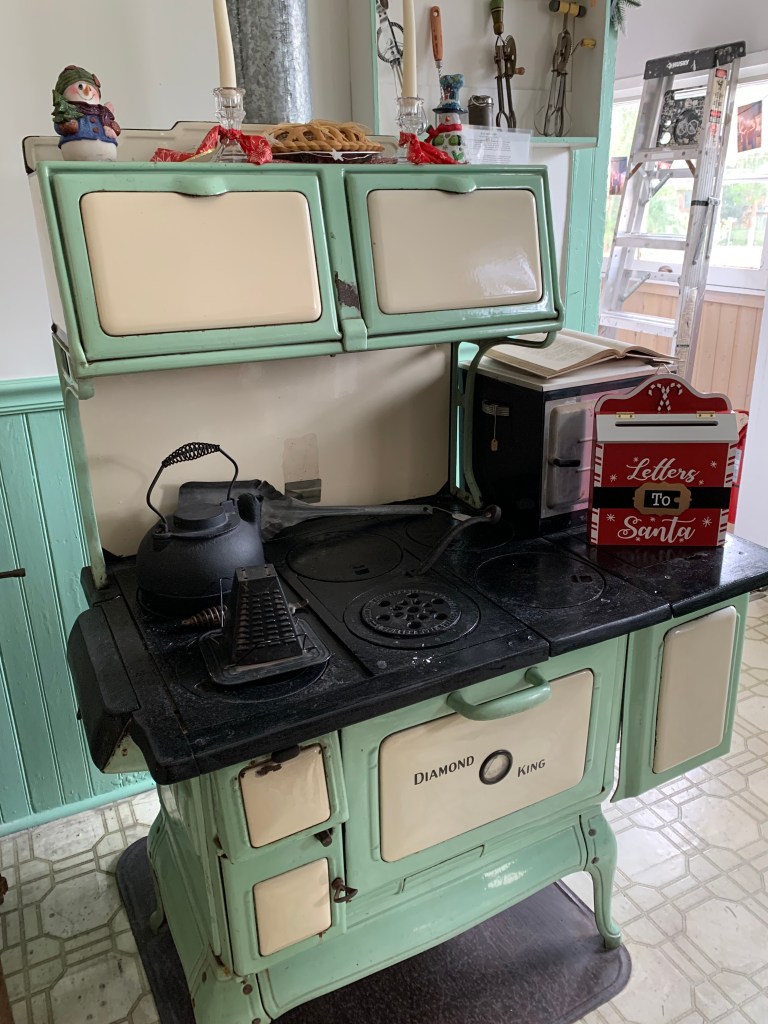
One of my favorite rooms was the kitchen. The stove could be purchased through the Sears & Roebuck catalog. Most of you probably don’t remember those, but I’m old enough to recall thumbing through paper thin pages full of things I’d want Mother to order. Of course, I was young and, oddly, stoves were not at the top of my wish list.
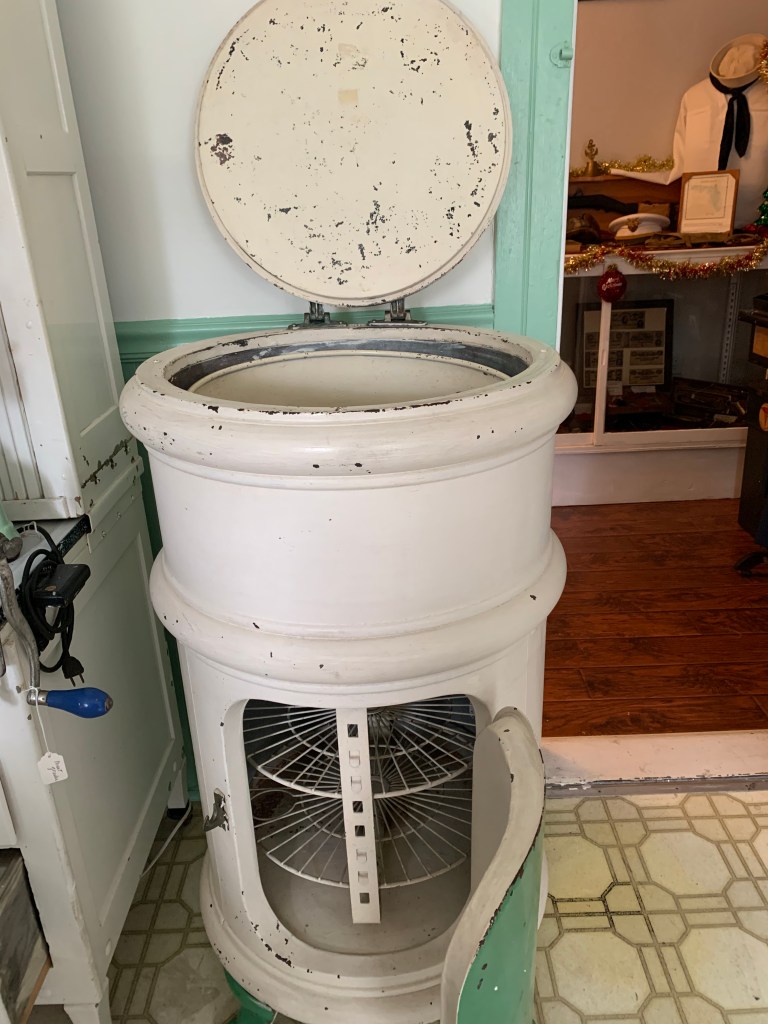
And have a look at the icebox – the original refrigerator. The block of ice would go in the top, after they’d spent time and effort chipping off the square edges. This would keep the food, stored on the lazy Susan-like shelves in the bottom, cool for as long as the ice lasted. Judging by the size, I’d venture to guess they didn’t plan on storing enough food for banquets. I wonder how dinner parties worked.
I loved this tour and highly recommend it. Although access to the first floor is wheelchair accessible, the upper floors are not. Tickets are a steal at $8. They are open Tuesday-Saturday from 11:00 AM to 3:00 PM.
If you’d like to book a ghost tour, call Bonnie LeTourneau, Ghost Tour Director at 352-799-0129. The ghost tours are available on Fridays and Saturdays
 Lisa Browder
Leave a comment