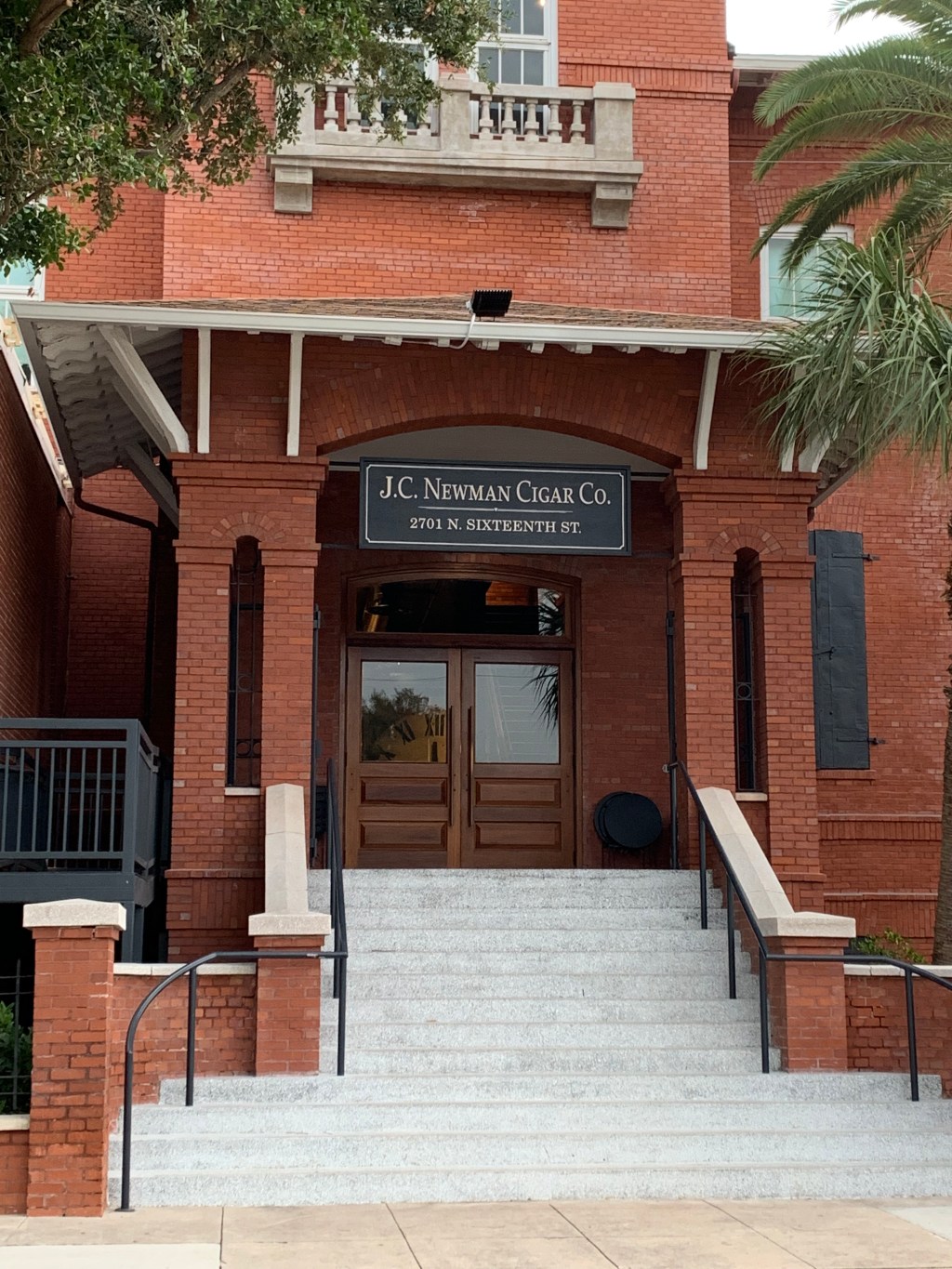
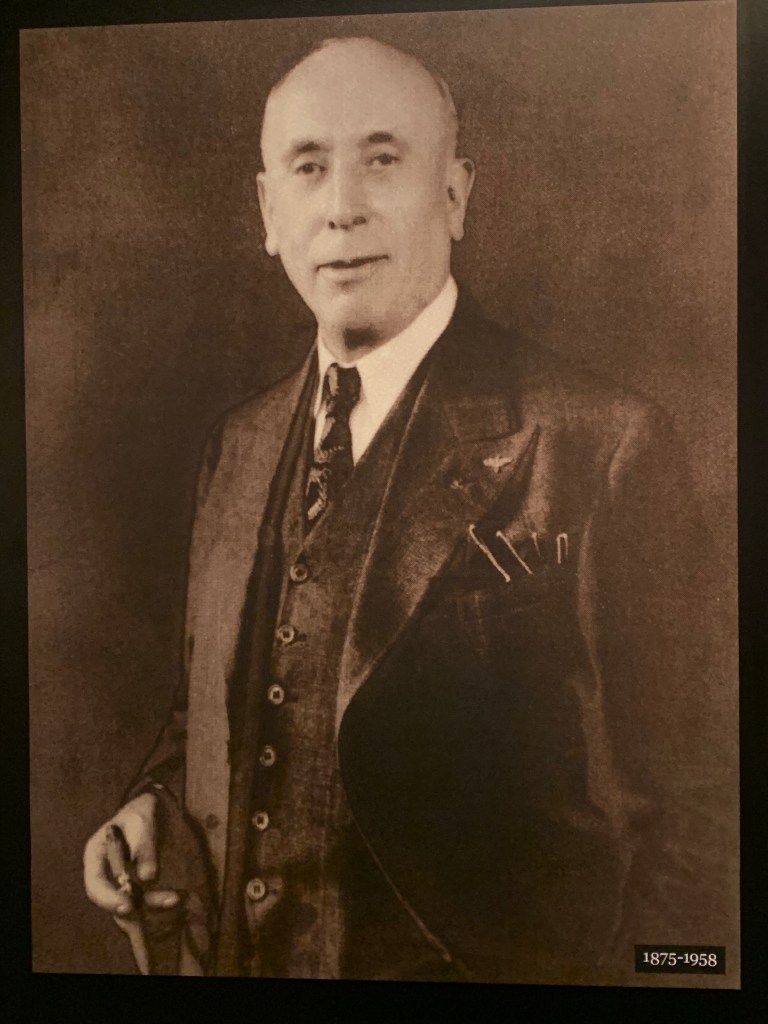
Julius Caeser Newman, founder of the J.C. Newman Cigar Company, started rolling cigars in the family barn in Cleveland, Ohio. His mother had paid $3 a month for him to learn the trade and at age 14, he became an apprentice cigar maker. In 1895, he fashioned a cigar table from old boards, borrowed $50 for tobacco and turned out his first order (500 cigars) for the family grocer. He named his first brand “A.B.C,” an acronym for a local streetcar line, the “Akron, Bedford and Cleveland.”
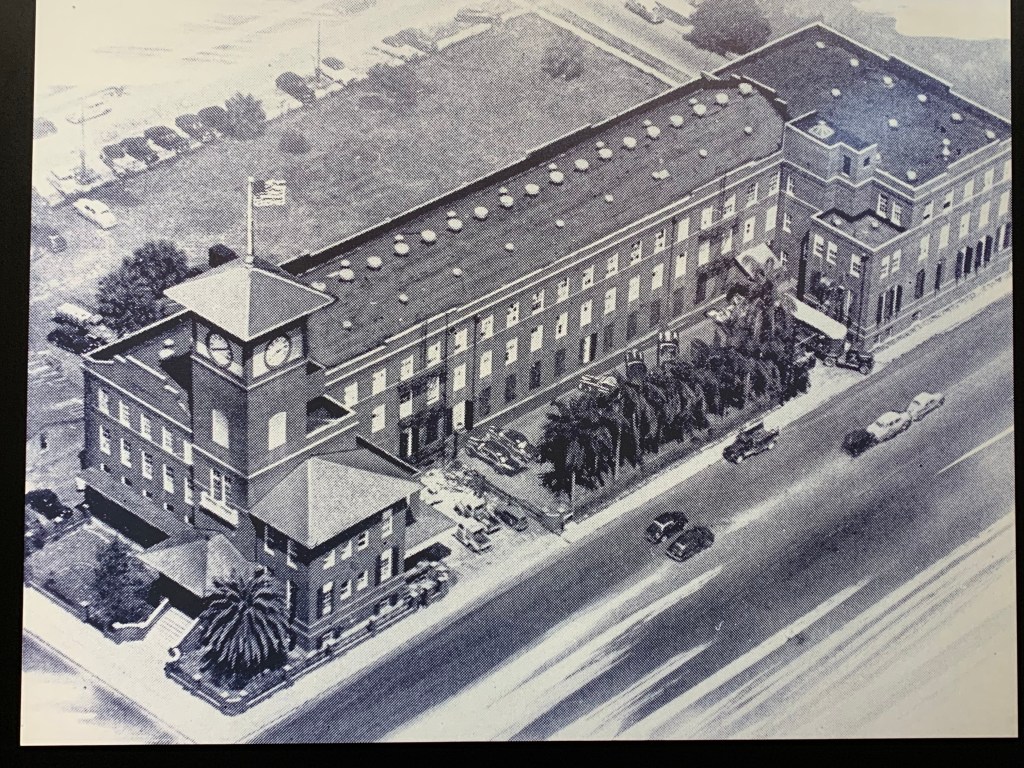
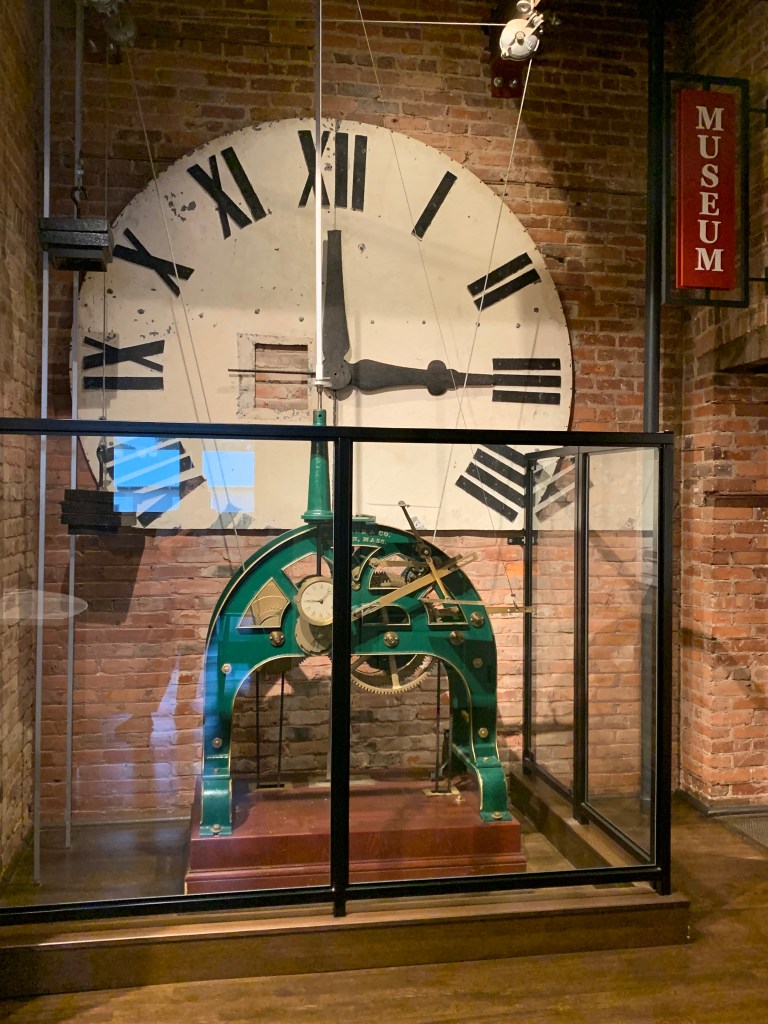
After World War II, when Tampa had become well-established for turning out premium Cuban cigars, J.C.’s two sons, Stanford and Millard, decided to move operations. They bought the 3-story, 2-block long, red brick Regensburg building. The workers nicknamed it “El Reloj” (“The Clock”) because its clock tower chimed on the hour. It was a reliable timecard announcing the workday.
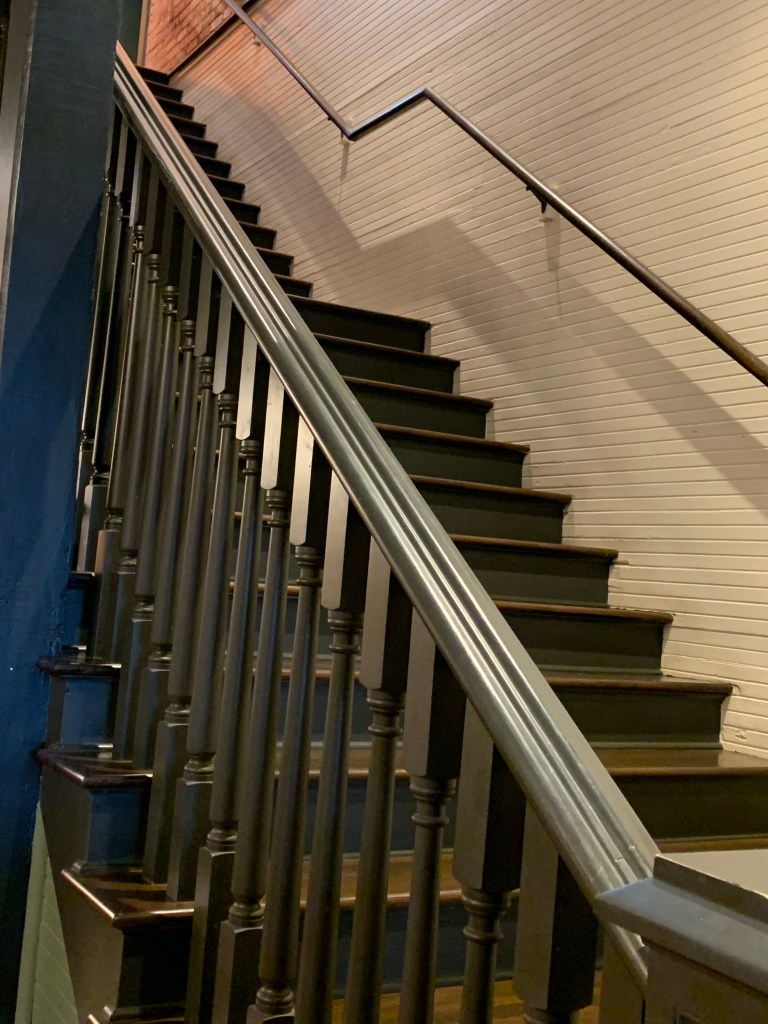
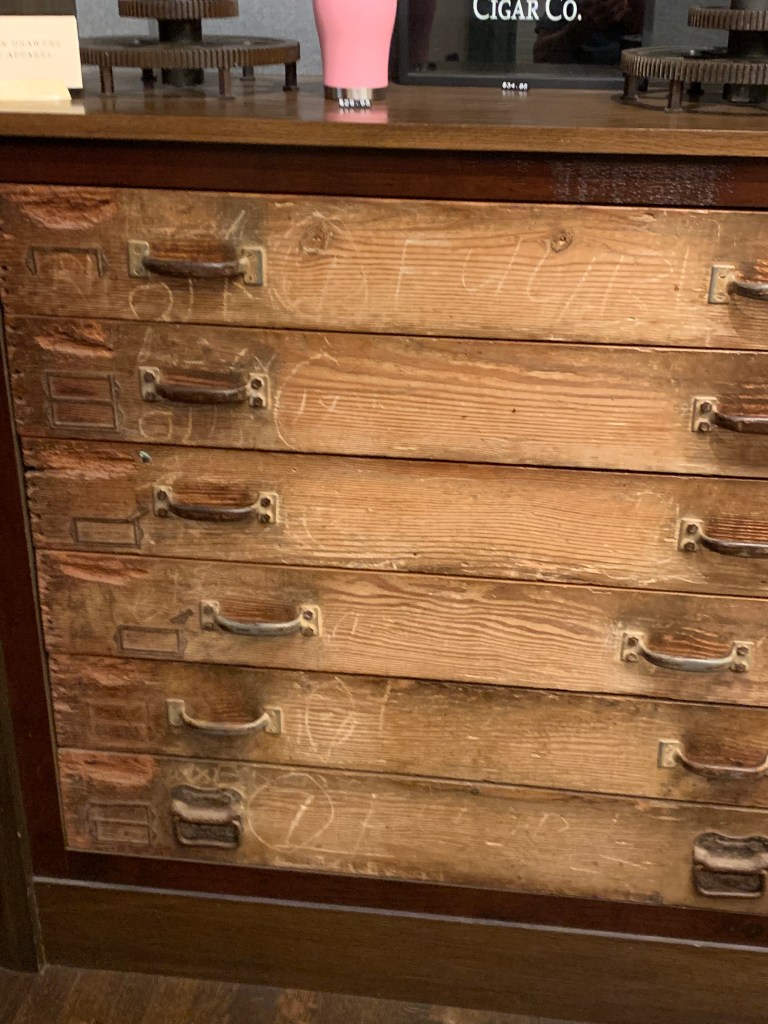
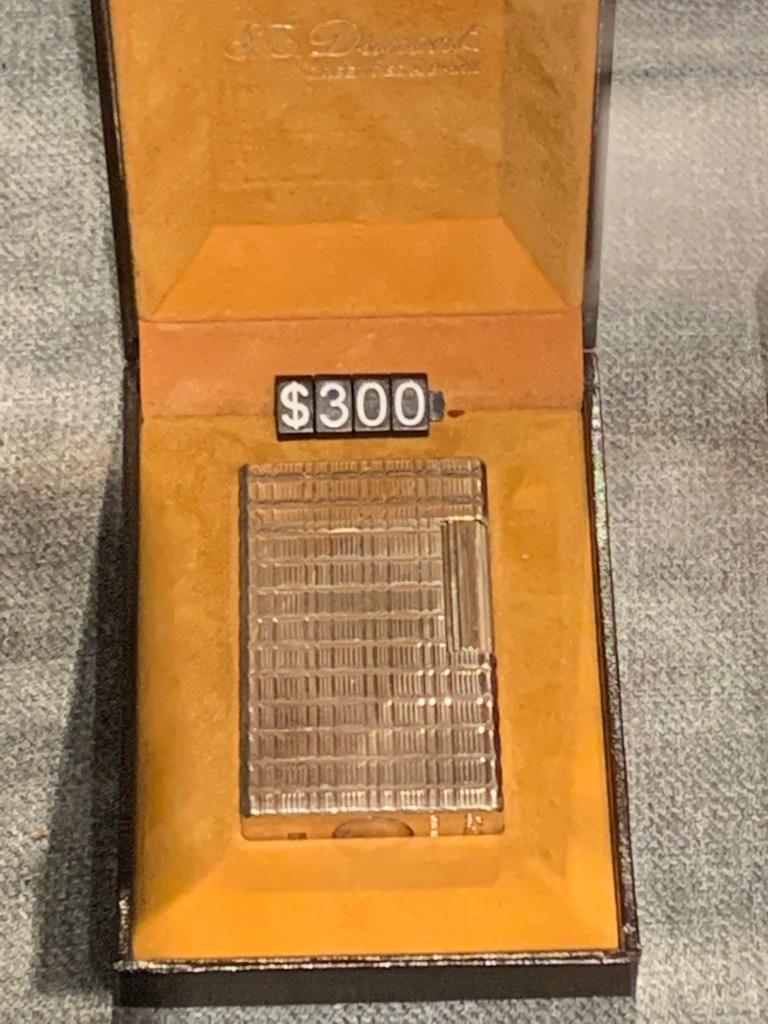
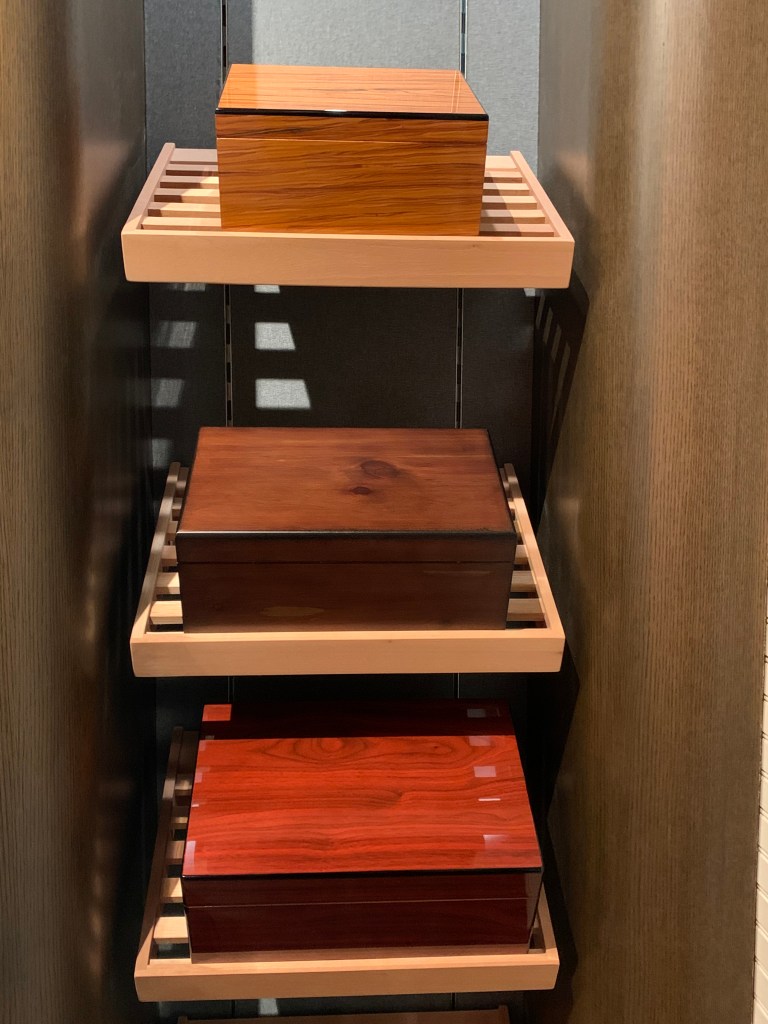
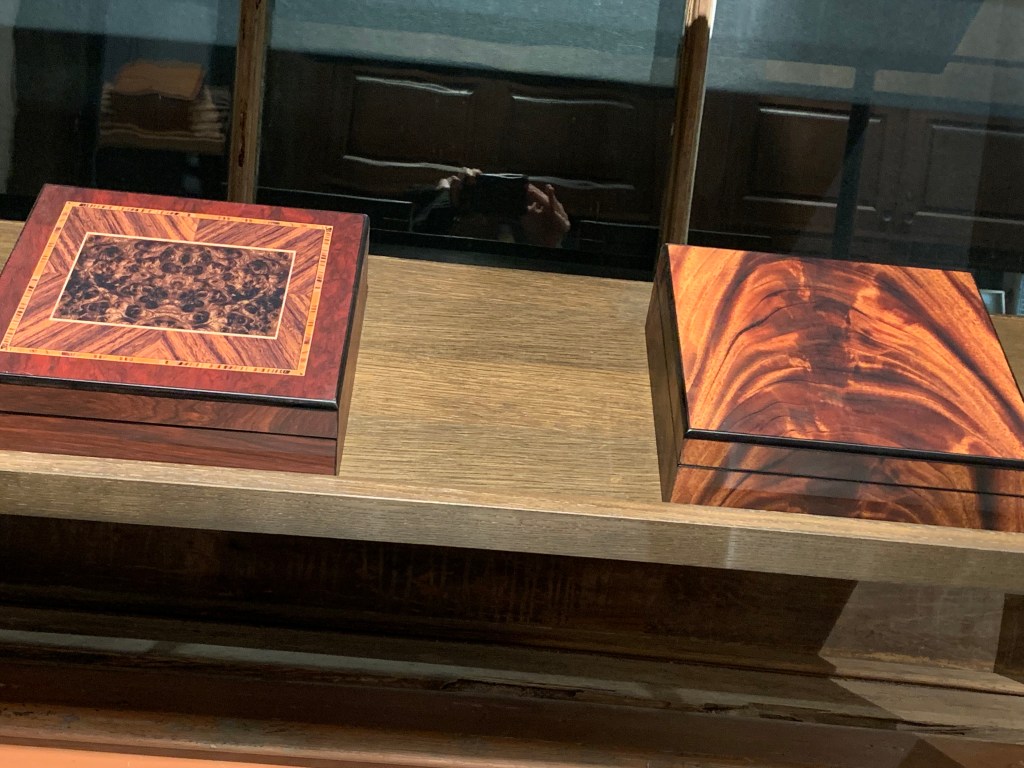
When I walked into the lobby of the building, the clock was the first thing I saw. It’s massive. But there were so many beautiful and interesting things to see while I waited. There were the stairs and the polished handrail, an old chest that originally stored cigar trays, a tobacco leaf mural against the back wall of the gift shop, cigar trays repurposed to make a vestibule for the elevator, an expensive lighter that reminded me of a silver one I managed to get an admirer to give to me when the dance troupe I was with was in Cairo, Egypt (but that’s a whole nother story), some gorgeous cigar boxes for sale, and on the museum side of the lobby, an account book of a tobacco auction in Paris around the 1960s.



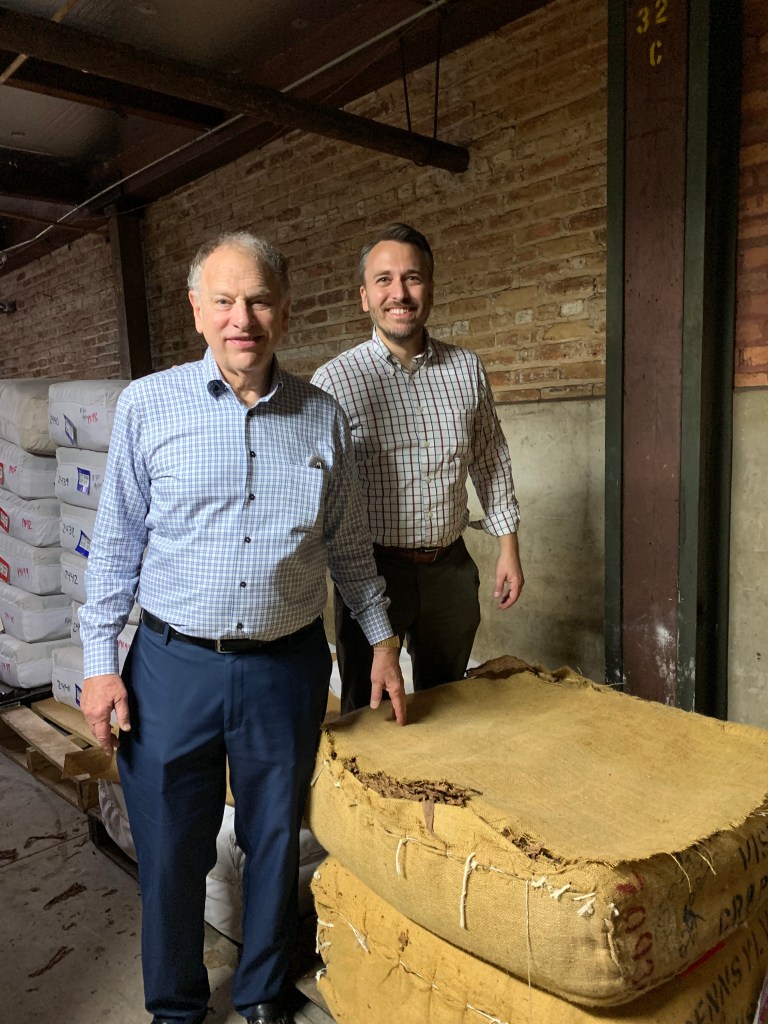
Today, El Reloj is the last working cigar factory in Ybor City. It is still owned and run by the Newman family. The day-to-day operations are overseen by Drew and Eric Newman. During the tour, they happened to be in the basement checking out bales of tobacco leaves and so I asked them to pose for a photo.
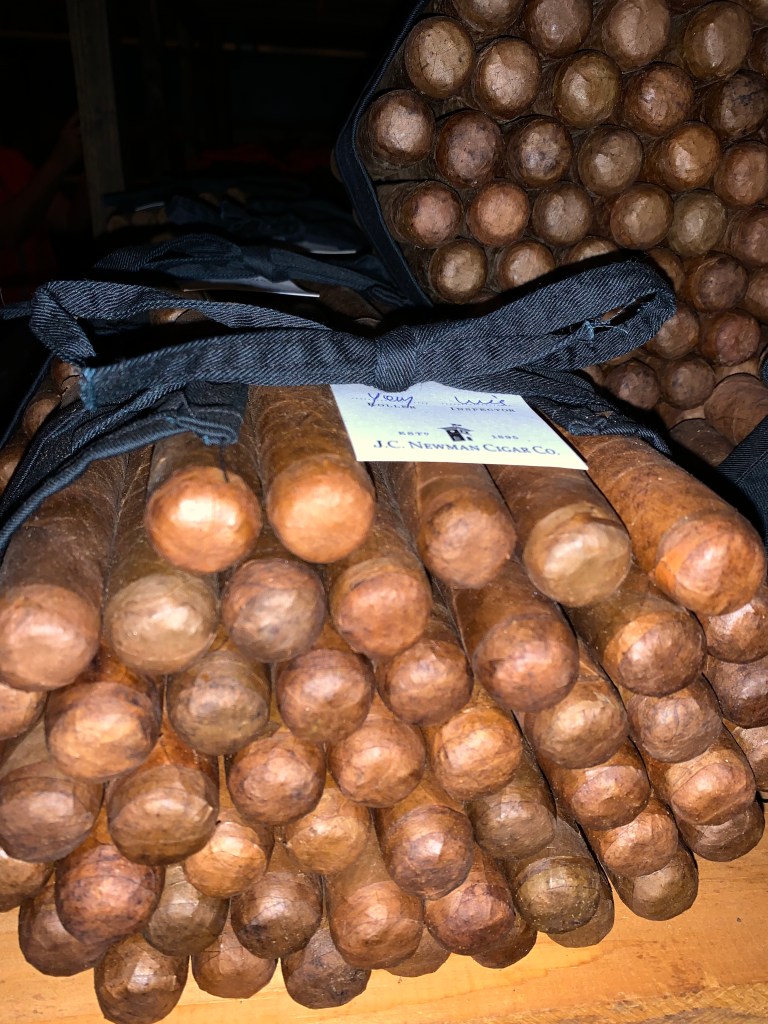
The basement area is where they store and age the cigars. The building’s bricks retain the moisture that’s needed for the tobacco to cure properly. Not only was the basement quite a bit cooler than the first floor, but each room seemed to have its own little micro-climate.
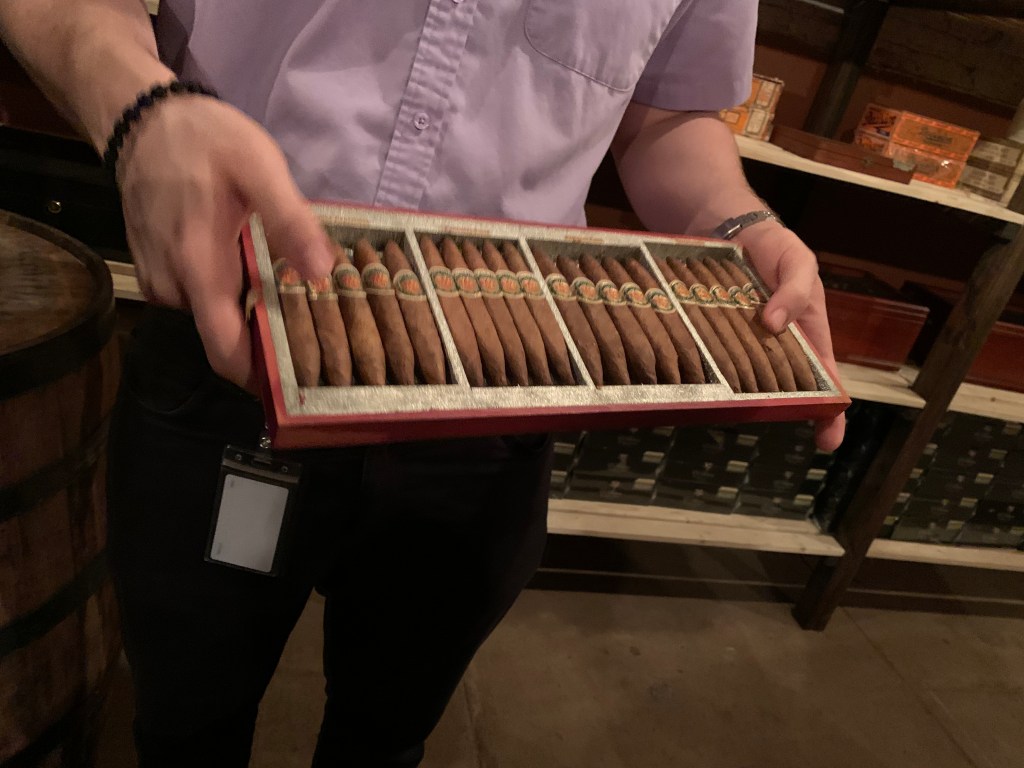
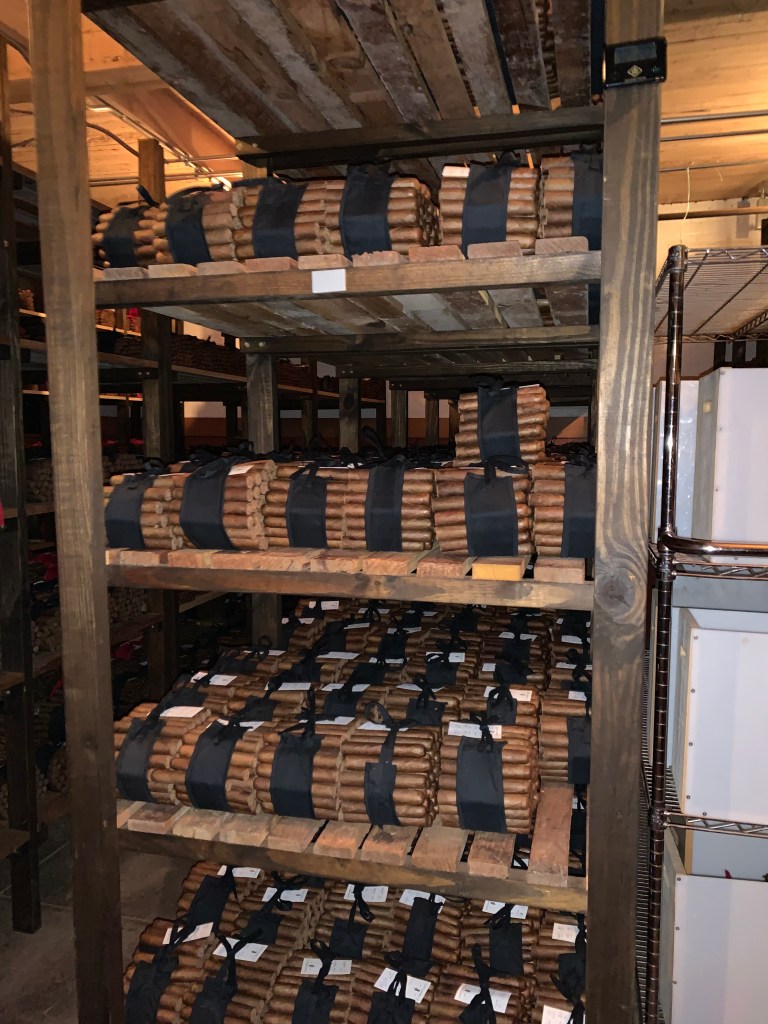
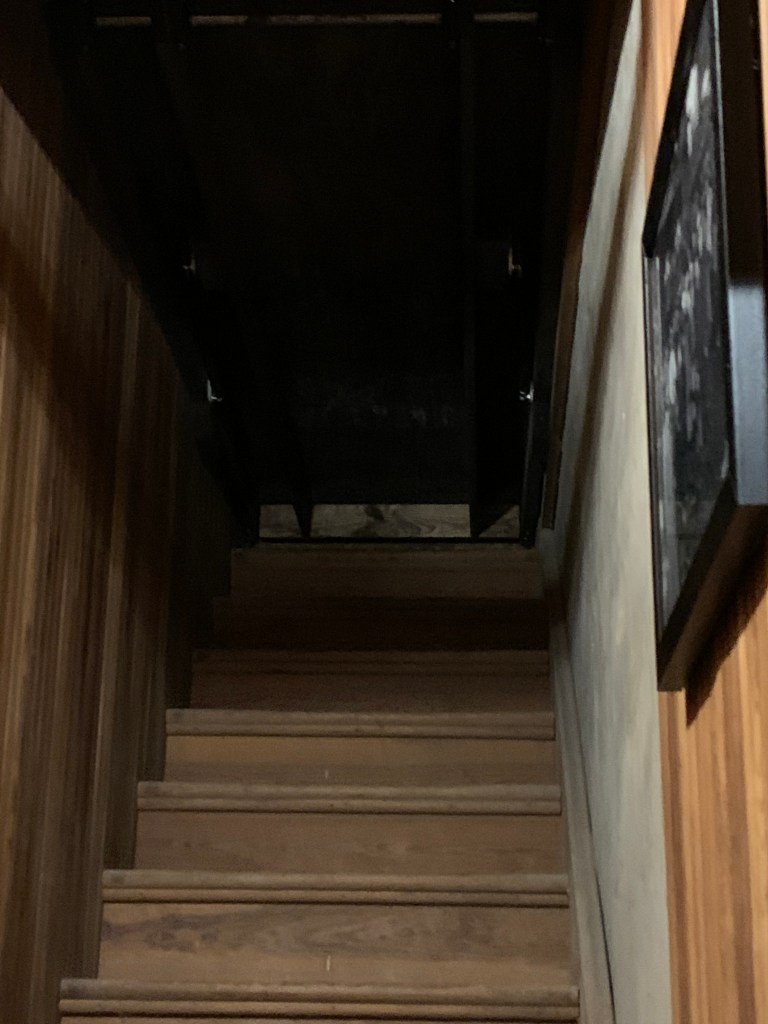
The basement also has an interesting room called “Archives.” It contains shelves packed with all kinds of treasures – old cigar boxes, knickknacks, discarded signage and more. And at the very back, is a narrow staircase that leads to a false door. In the early days, money was kept safely tucked away.
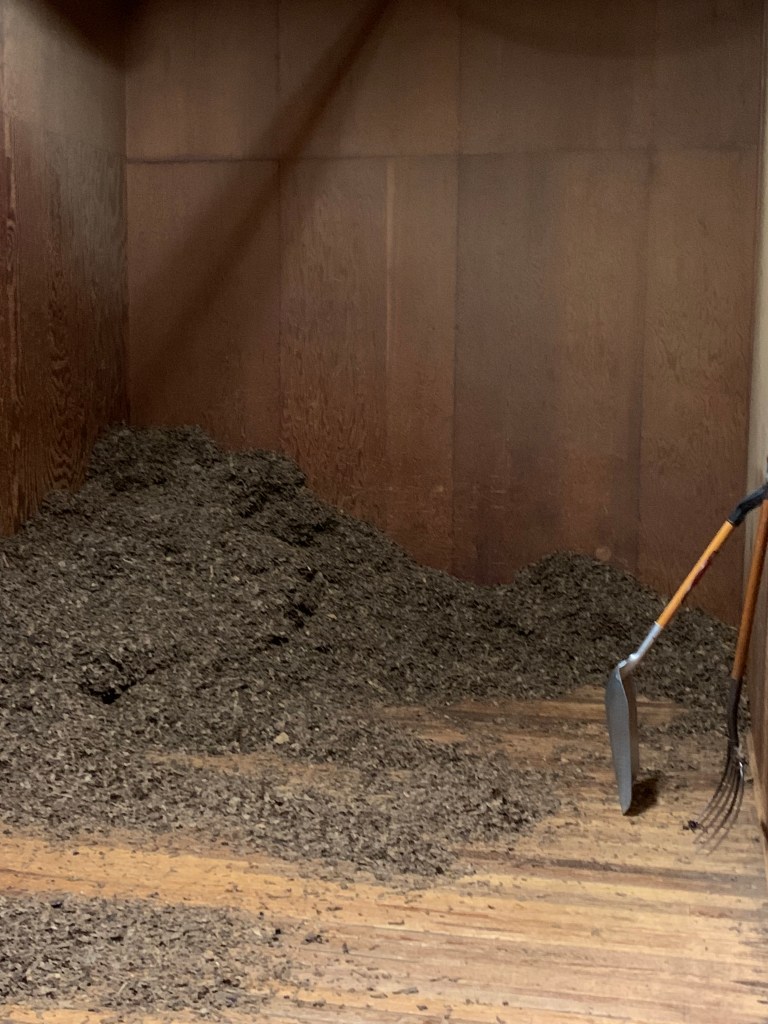
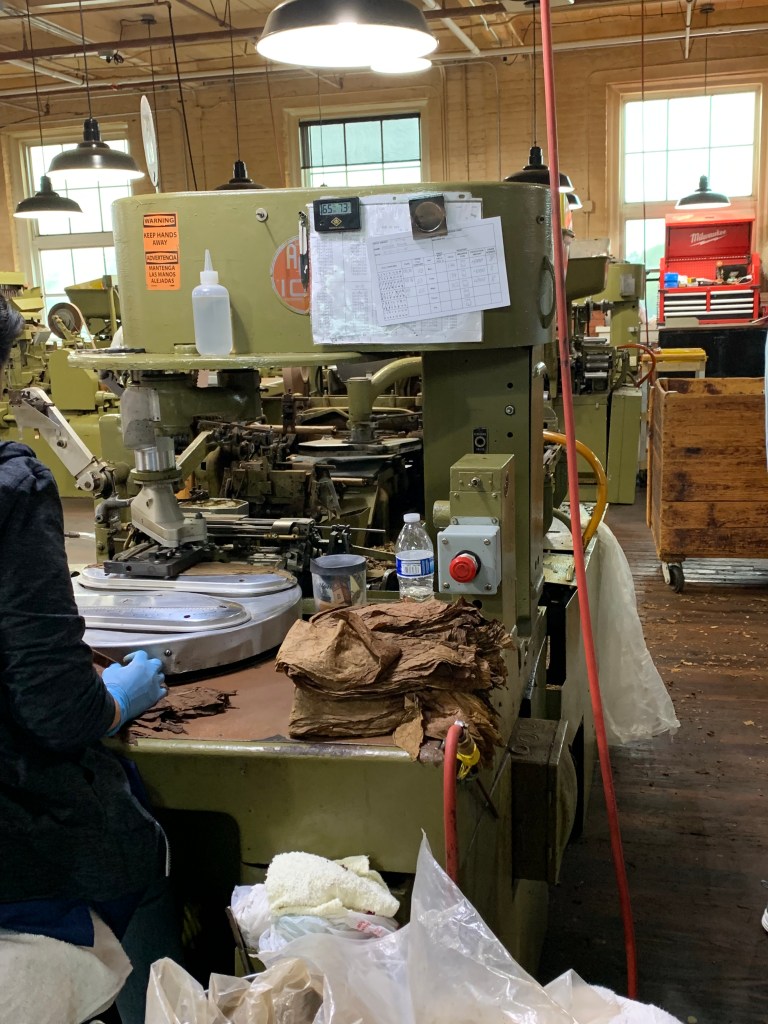
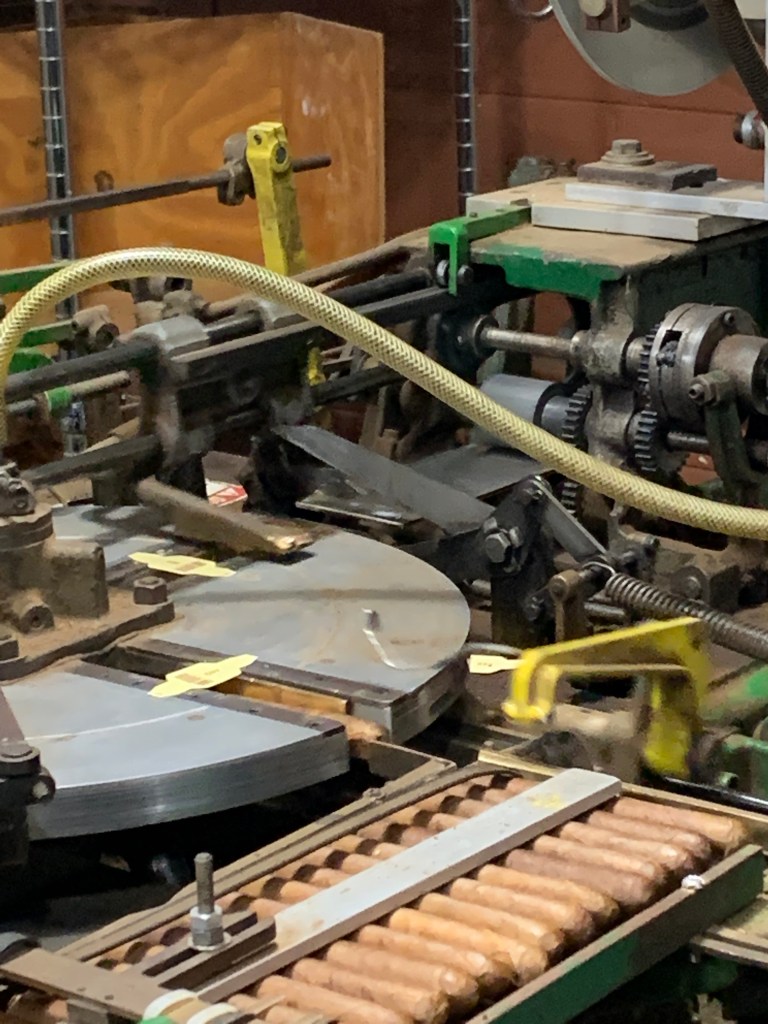
Now that the basement tour was complete, our guide, Holden, took us up several flights of stairs to the heart of the operation – the production floor. We first saw where the machine-made cigars are produced. These cigars use less expensive tobacco. The parts of the leaf that are trimmed away by the machine or discarded by the worker, go into a bin and end up being funneled into a room that looks a bit like a horse barn. They are then used as filler in the cigars. Nothing goes to waste.


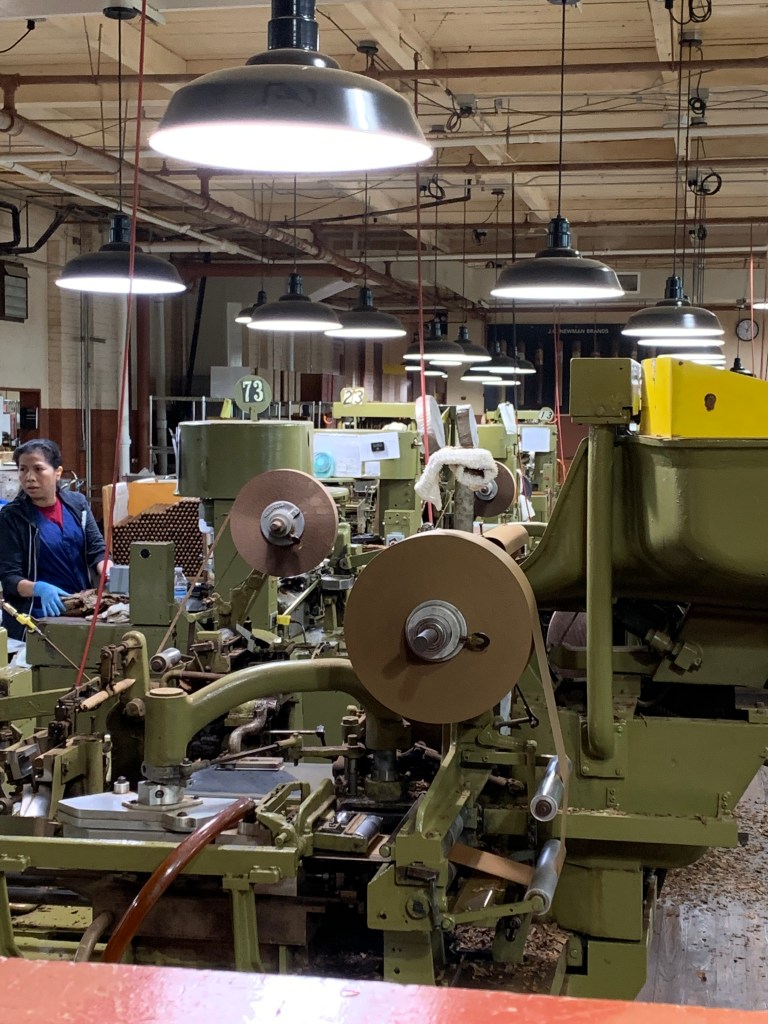
And as for the employees, they are amazingly adept at working with these 100-year-old machines. The machines don’t stop for anything, but the workers had no problem keeping up with the pace. I couldn’t help but think if you stuck me in there, you’d have a replay of the “I Love Lucy” episode in the candy factory where she couldn’t keep up with the conveyor belt. I would be the comic relief for the staff.
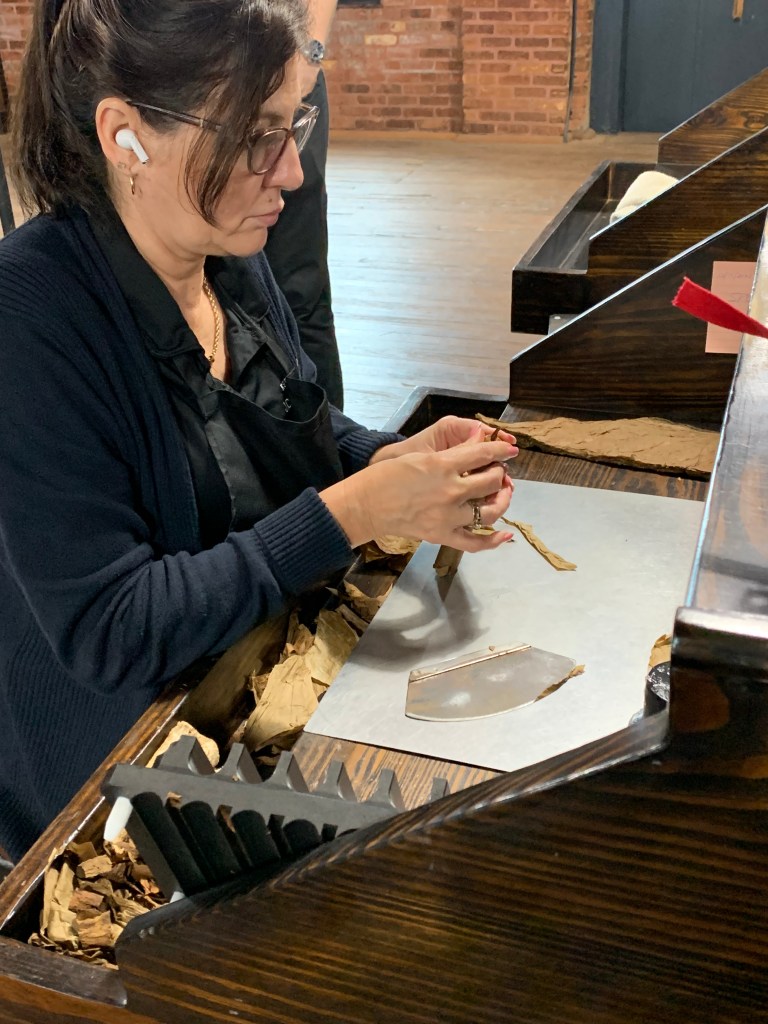
Then we proceeded to the back section where the master cigar rollers work. It’s an interesting room, complete with a raised stage at the front. Back in Ybor City’s cigar-making heyday, it was not uncommon for workers to walk out whenever they felt like they needed a break or something more interesting was going on outside – like a baseball game. In order to keep them occupied, they had “readers.” They would take the stage and read novels and Spanish newspapers to the workers. However, according to Holden, that only worked until the management leaned Spanish and realized some of the material was a tad too racy.

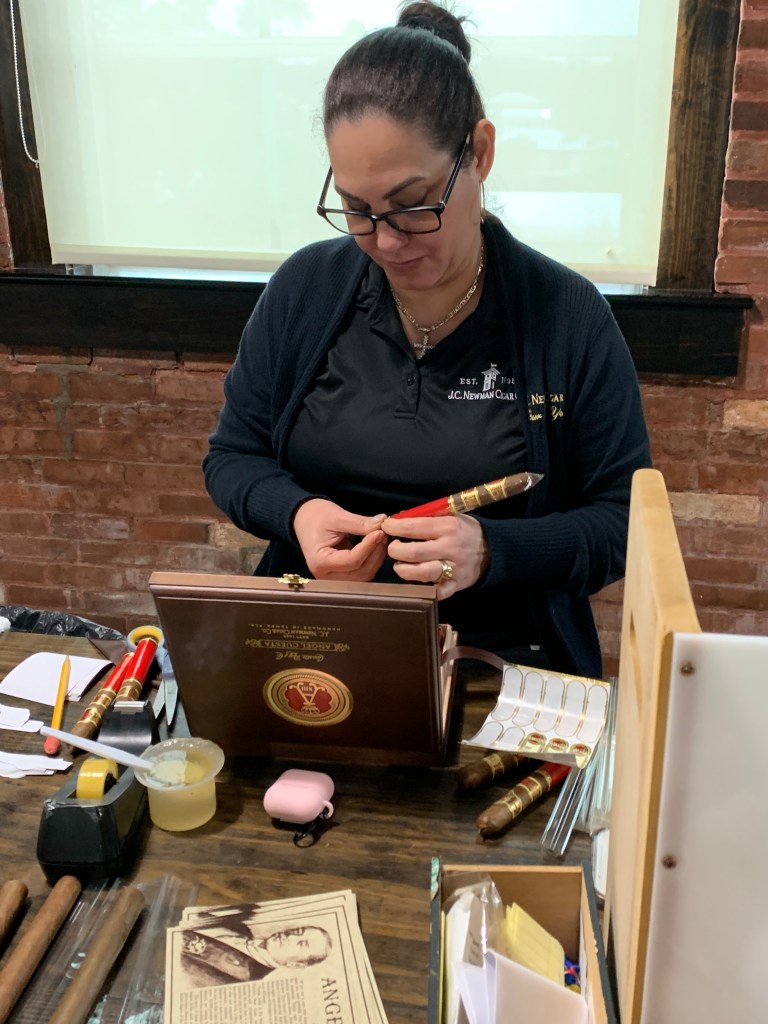
This was a thoroughly entertaining tour, lasting an hour and 15 minutes. Holden was a terrific tour guide with all kinds of fascinating tales from behind the scenes. There wasn’t a single question he couldn’t answer.
I recommend the tour. J.C. Newman Co. is located at 2701 North 16th St. in Tampa. You can book the tour online and it’s $12 for seniors. Tours are available weekdays at 9:30 AM, 11:30 AM and 1:00 PM. It is wheelchair accessible.
 Lisa Browder
Leave a comment