
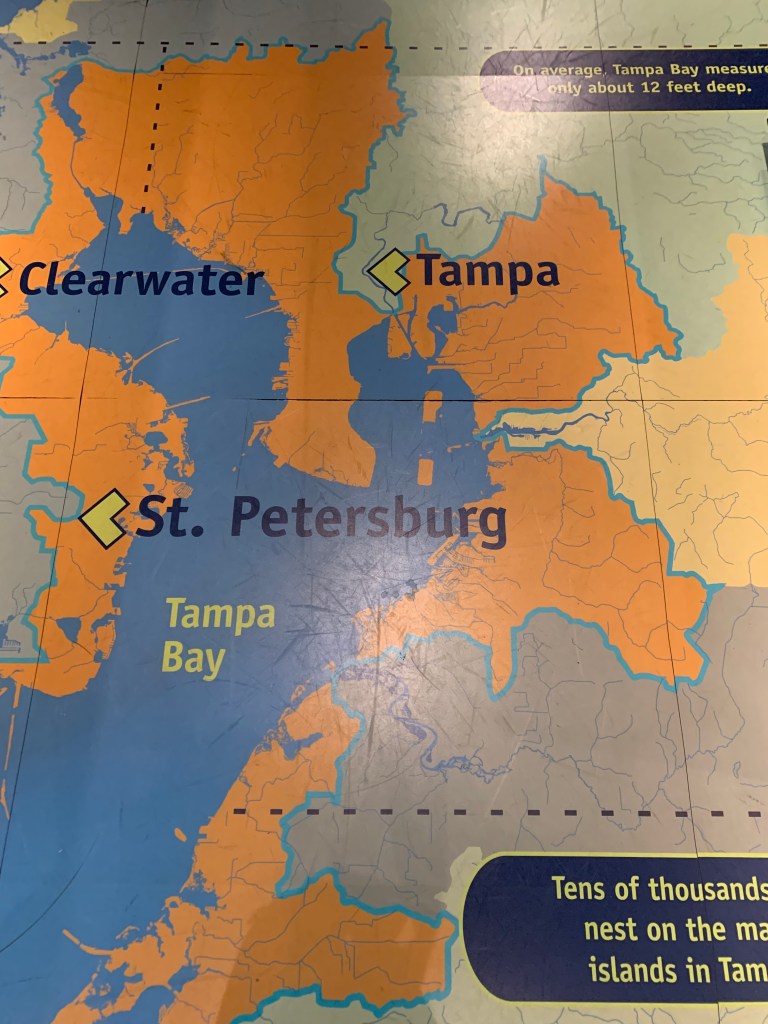
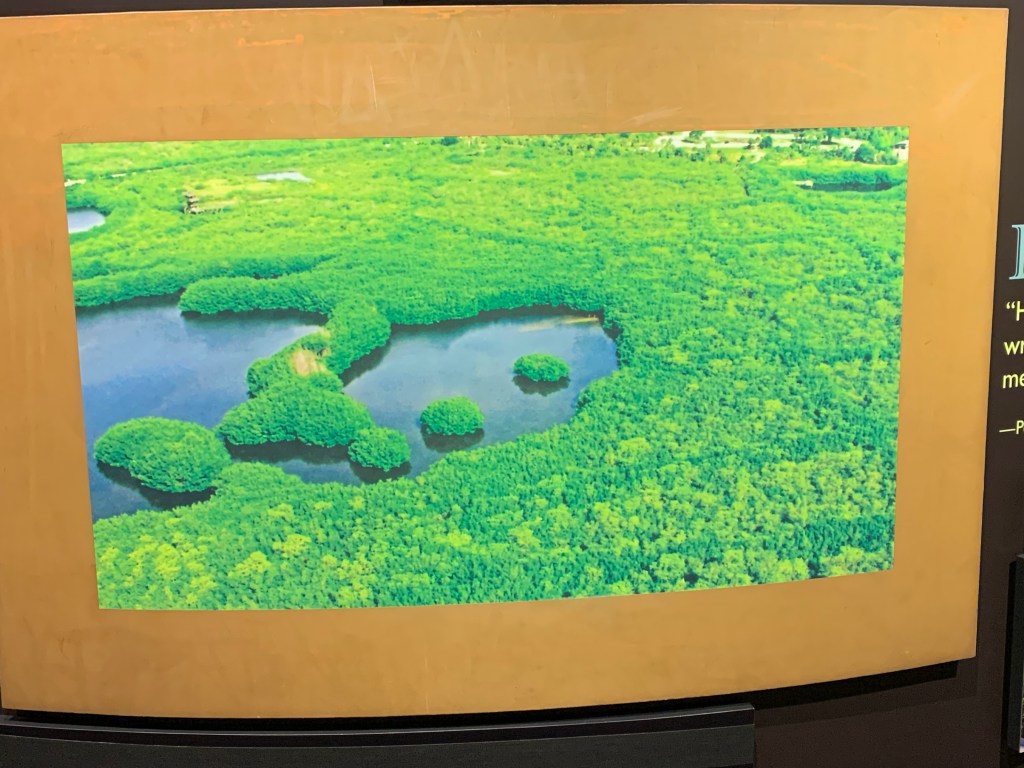
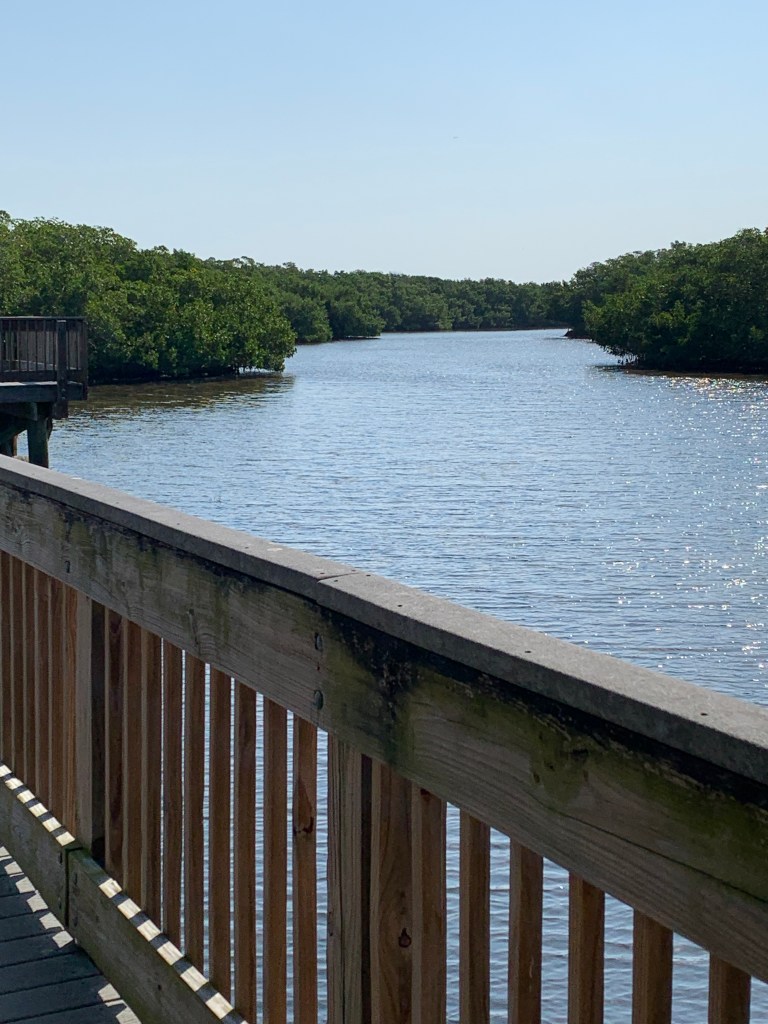
Weedon Island Preserve’s storied past includes a home for prehistoric people, an airport, a movie studio, and a speakeasy. Located along the shores of Old Tampa Bay, it’s a rich tapestry of mangrove forests, open mud flats and salterns, pine/scrubby flatwoods, and maritime hammocks. I may not know a saltern from a hammock, but I was there for the quiet and the beauty and Weedon Island delivered.

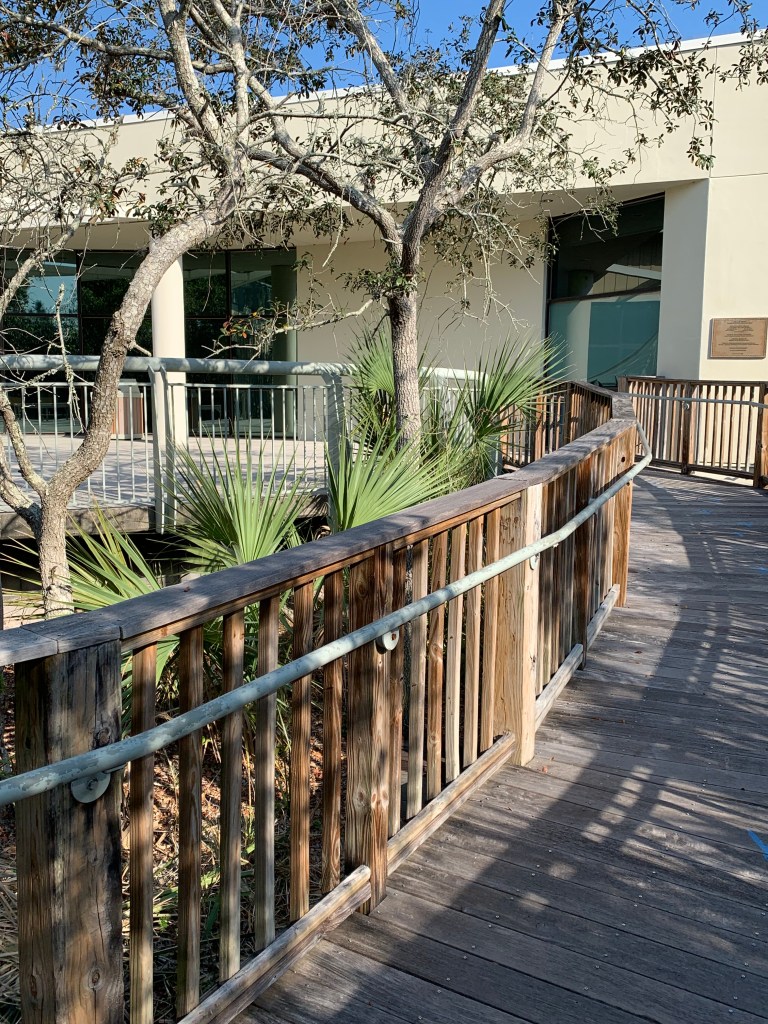
Designed with help of Native Americans, the center’s orientation is along the four cardinal points of the compass. Its curved wall is representative of the pottery of the early people who lived there 1000 to 1800 years ago. If you look closely, you will see that the roof line resembles the curved wings of a bird as it soars through the sky.
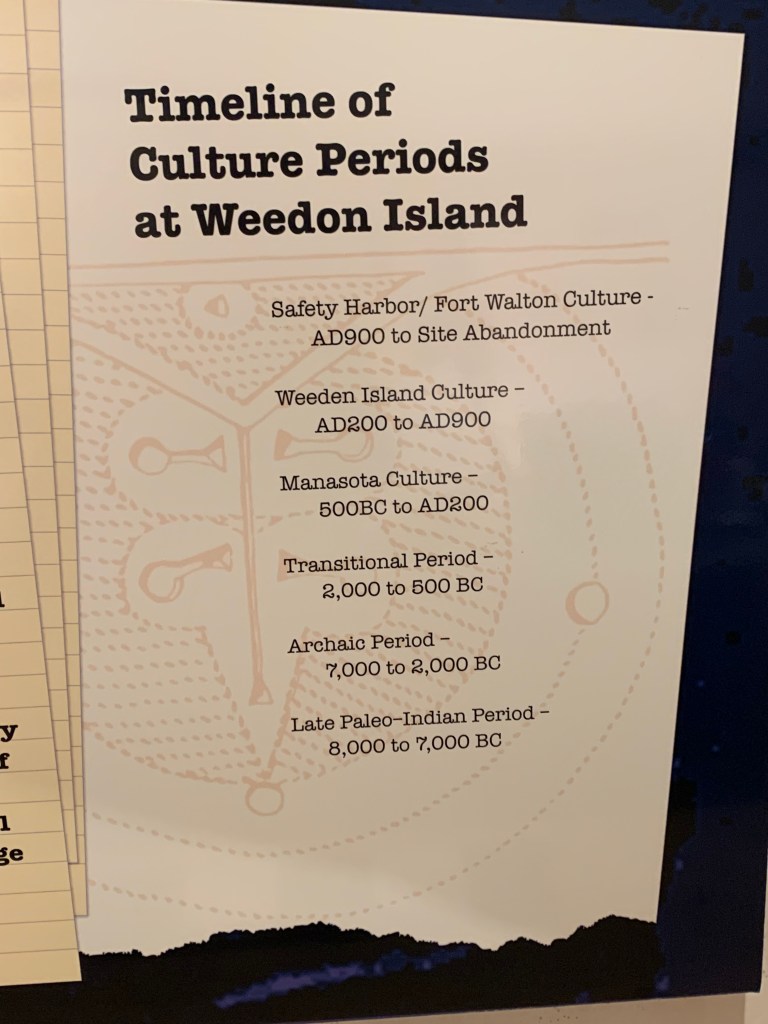

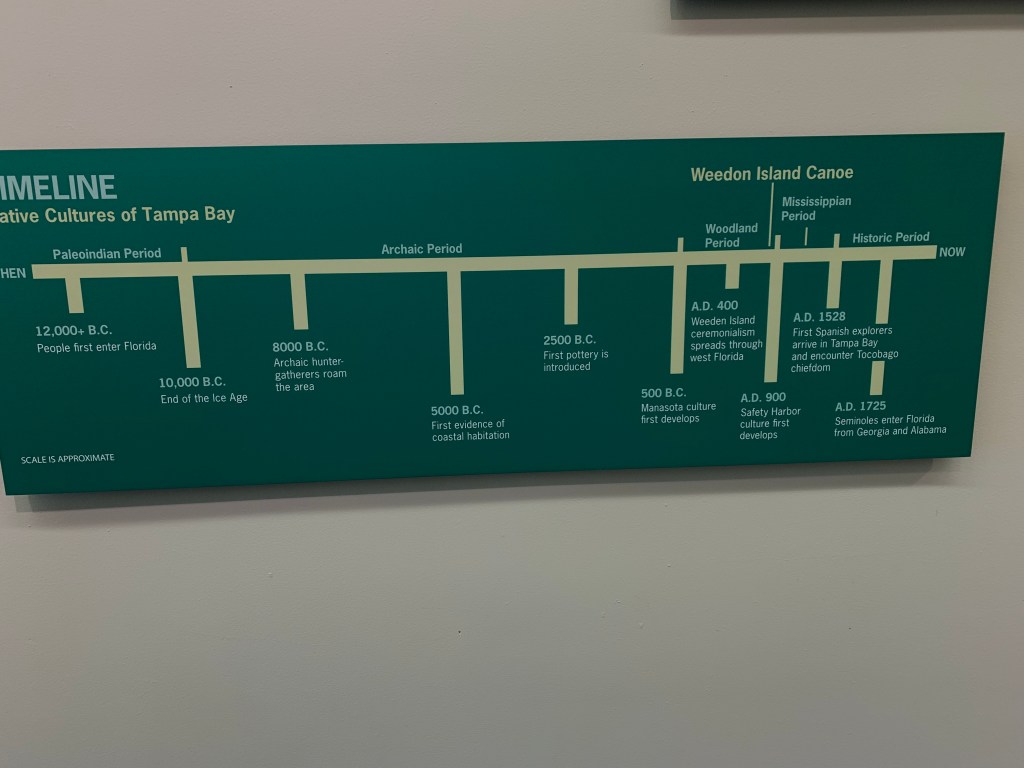
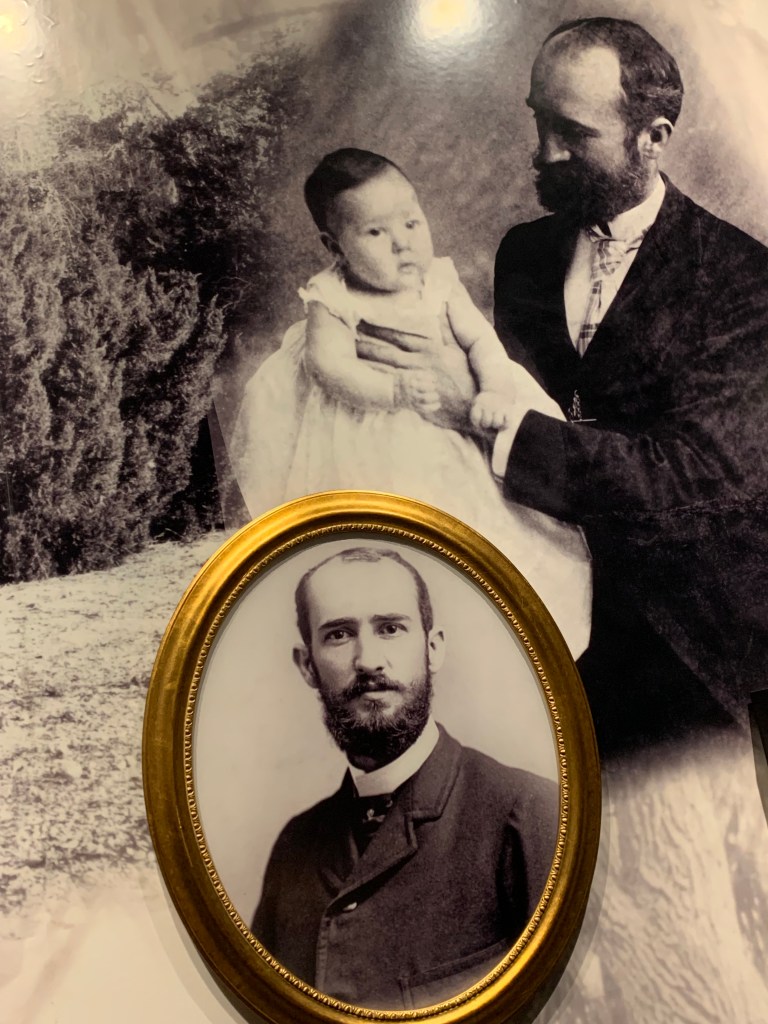
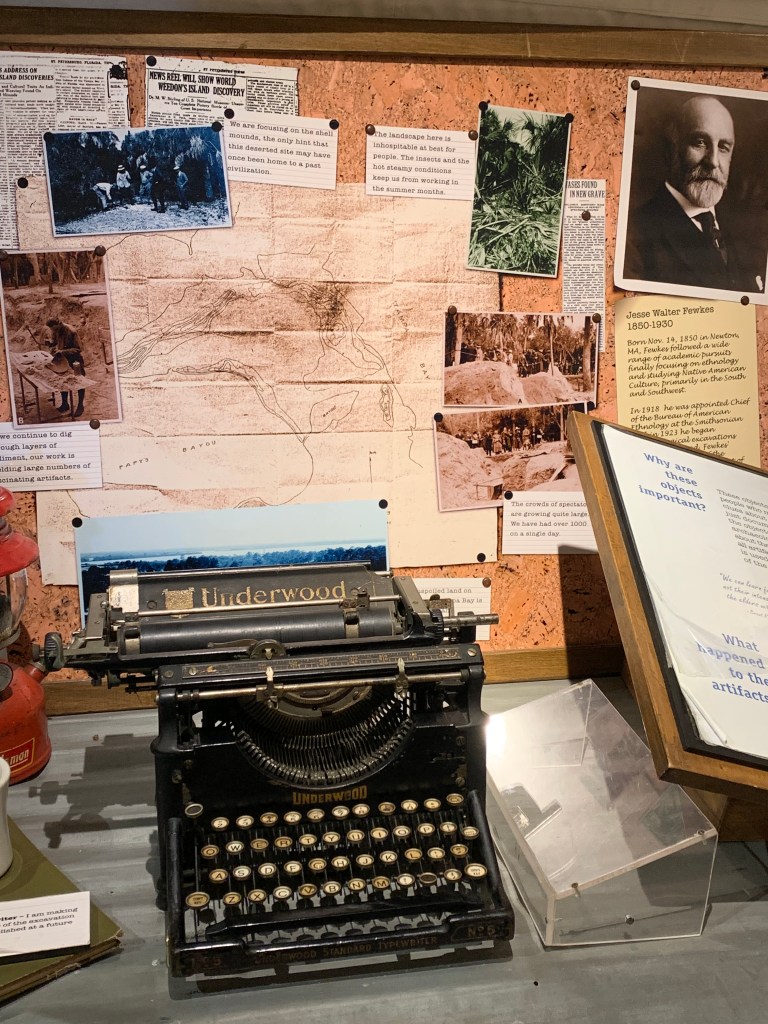
Named for Dr. Leslie W. Weedon, a physician known for his study of yellow fever, the land was given to him as a wedding present. Although he loved the natural beauty, and spent time fishing and bird watching, he was captivated by the Indian mounds and spent most of his time exploring them. Not the only one to do so, many explorers came and went and left artifacts like the old typewriter (below) and various journals and documents.
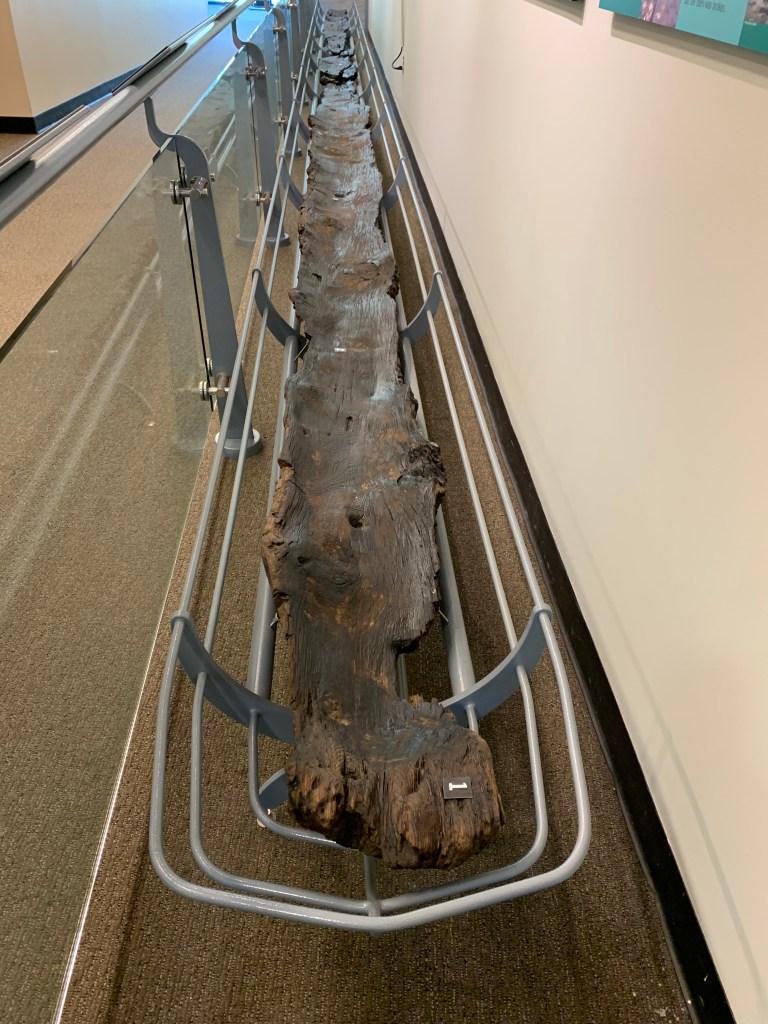
Long before Dr. Weedon, however, there was a Spaniard named Cabeza de Vaca. The diaries of his 1528 expedition noted that hundreds of canoes lined the Gulf of Mexico shoreline. Most of those have never been found because the canoes that are recovered are from the shallow lakes and rivers and are buried in oxygen-rich sediments that have prevented their decay. Because of the saltwater, those favorable conditions aren’t usually found along the shoreline of the Gulf and Atlantic coats.
So it was astounding that a 39.9-foot dugout canoe was discovered in 2001. It’s the only one ever discovered along a shoreline, in a saltwater environment. Radiocarbon dating of the wood indicates it was built between 690 AD and 1010 AD. Its design suggests it was constructed for open-water use.
The canoe is housed in the history center, along with dozens of interesting displays and artifacts. Stop there first before heading out on the paths.
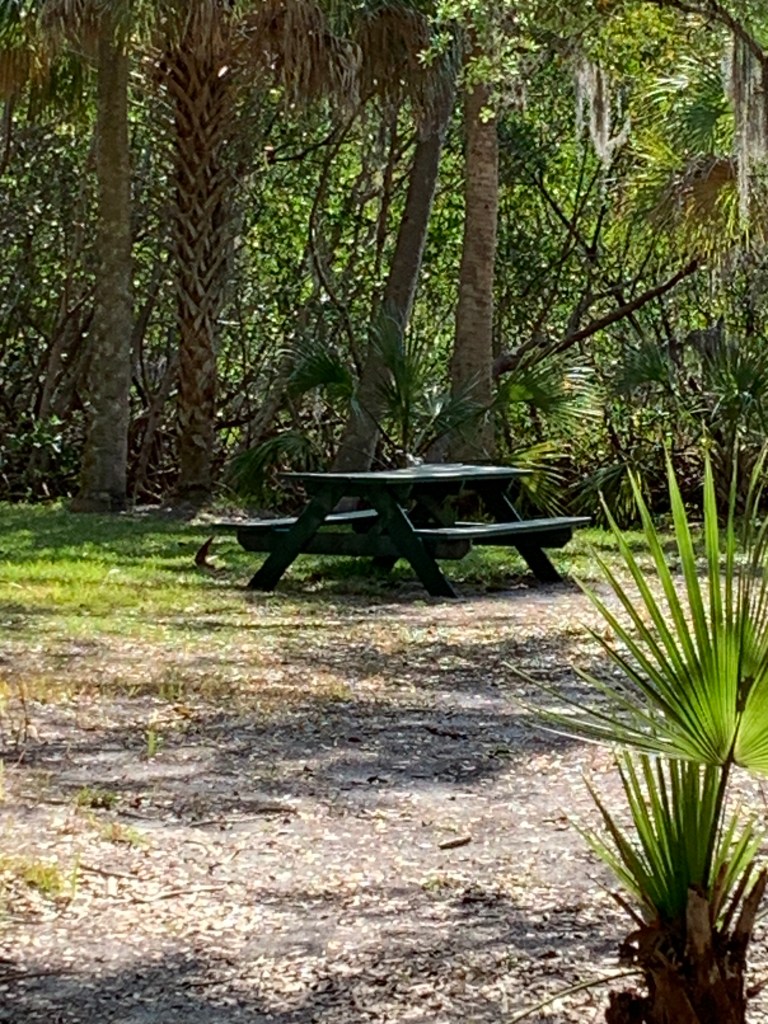
After checking out the history center, I headed out to explore the preserve. The path I chose opened up on a scenic picnic site. I stopped to read the sign that warned me to watch out for alligators, snakes and various other wild animals. The sign indicated I should exercise caution. Ya think?
To my left, the path continued; to my right was a boardwalk. As I contemplated which way to go, a man came striding down the path. I asked him if I should worry about alligators. He responded that he walked that way all the time and he’d never seen an alligator. However, he said, there were lots of rattlesnakes, so I should walk in the center of the path.
I chose the boardwalk.

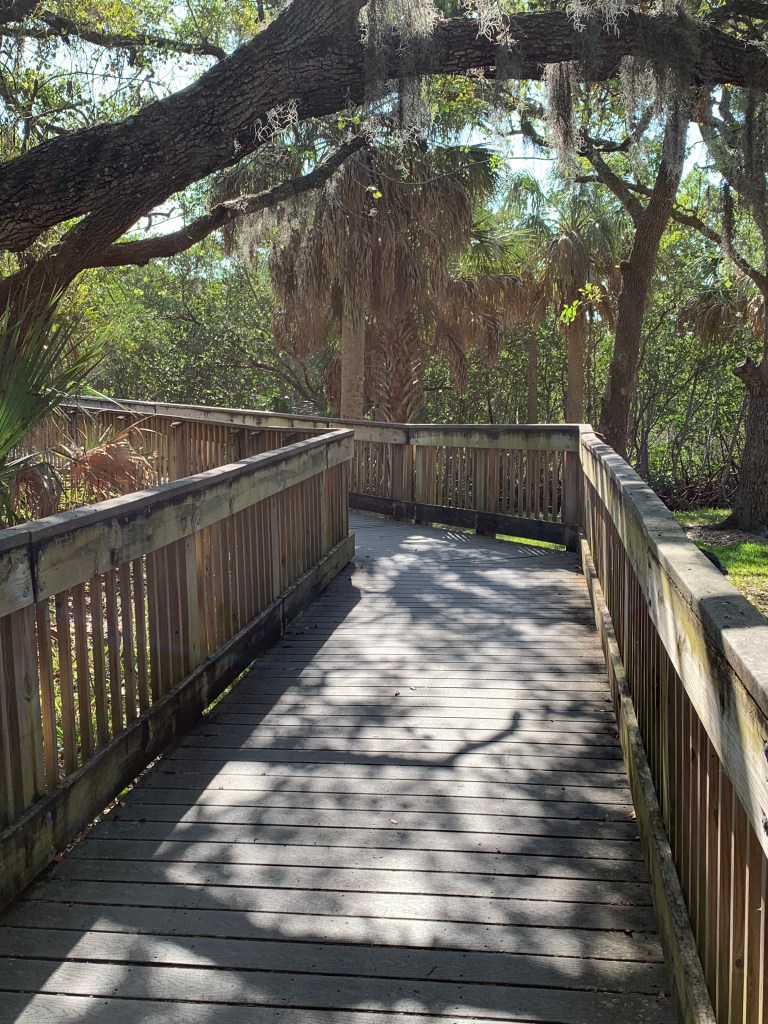
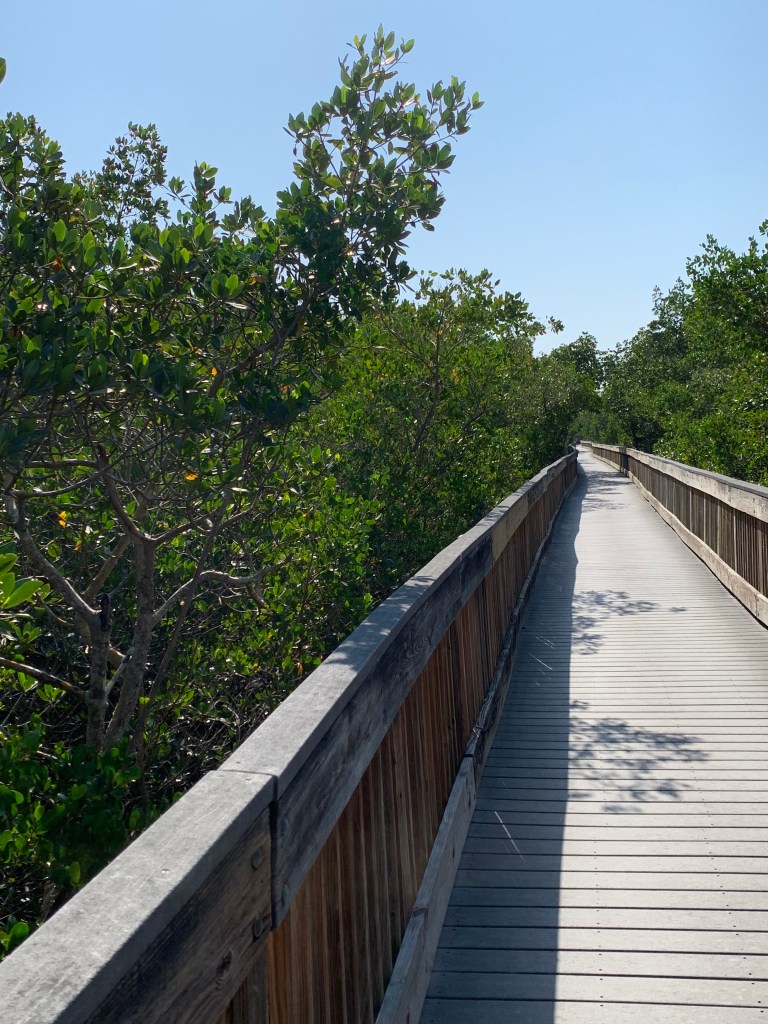
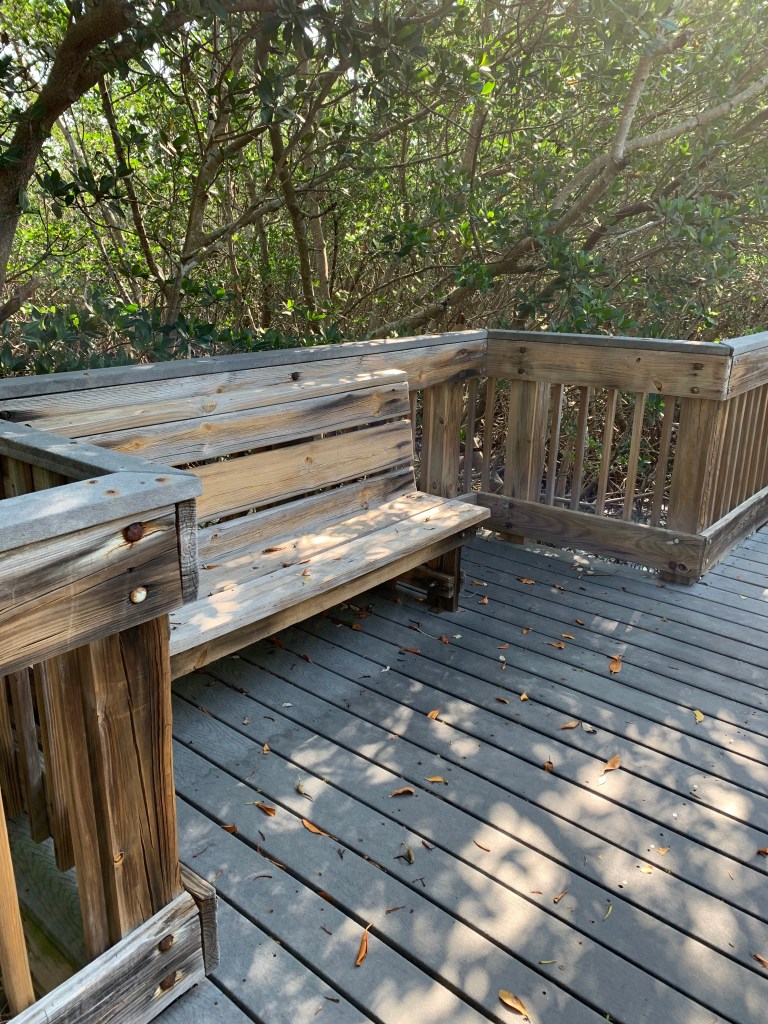
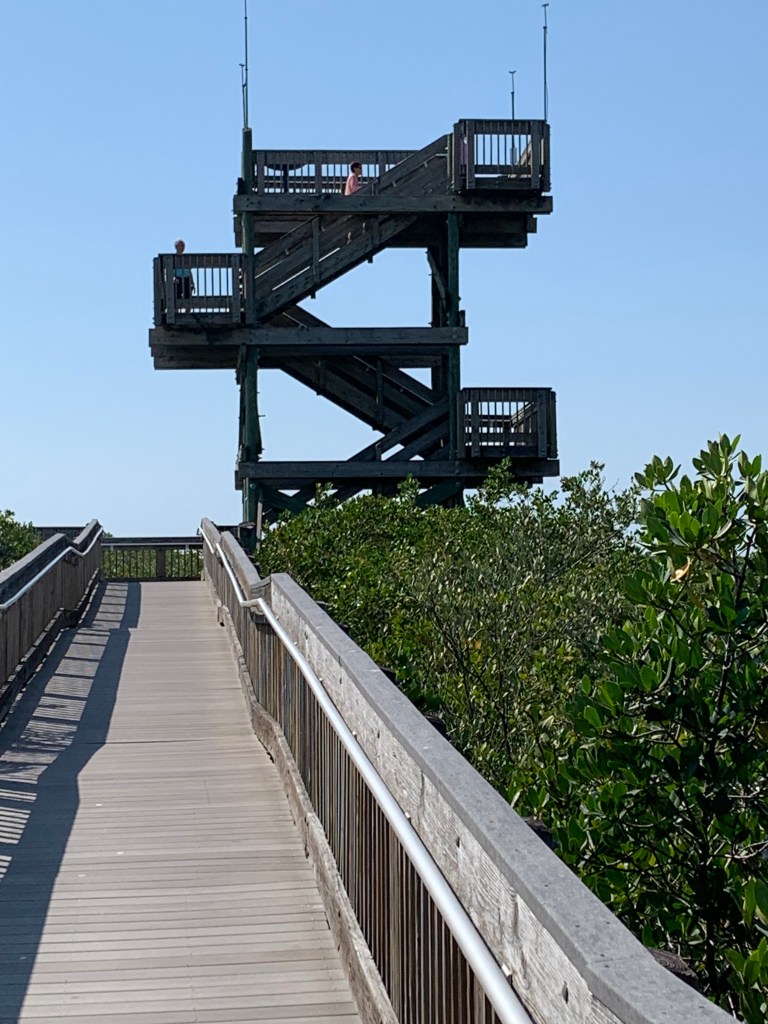
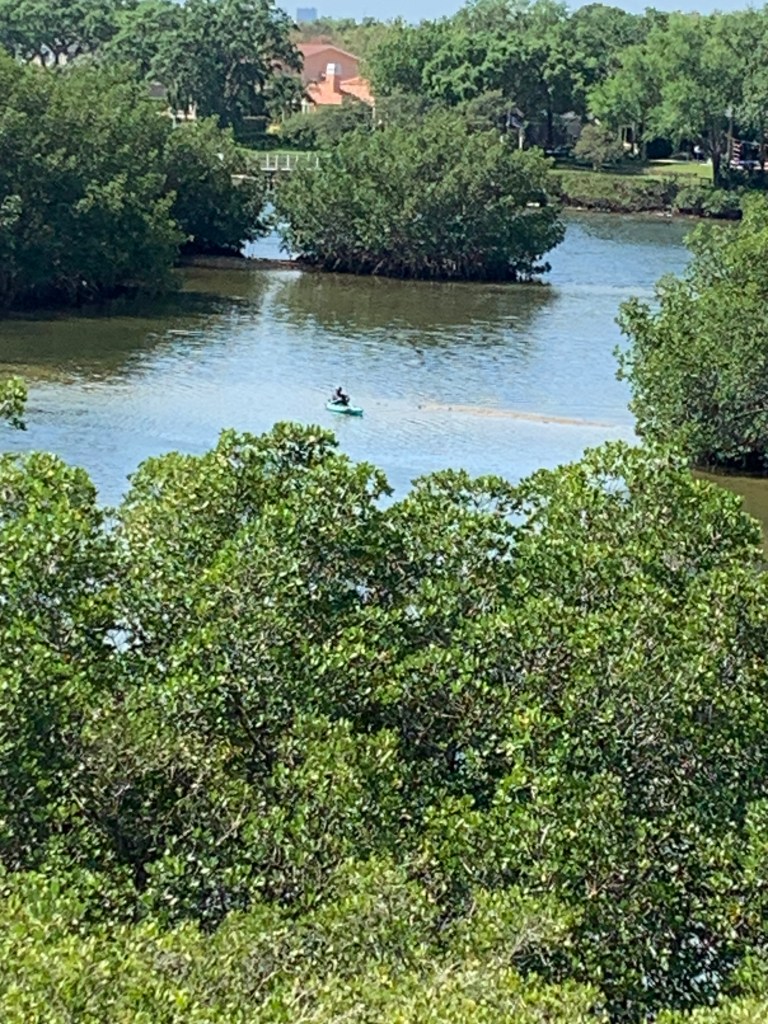
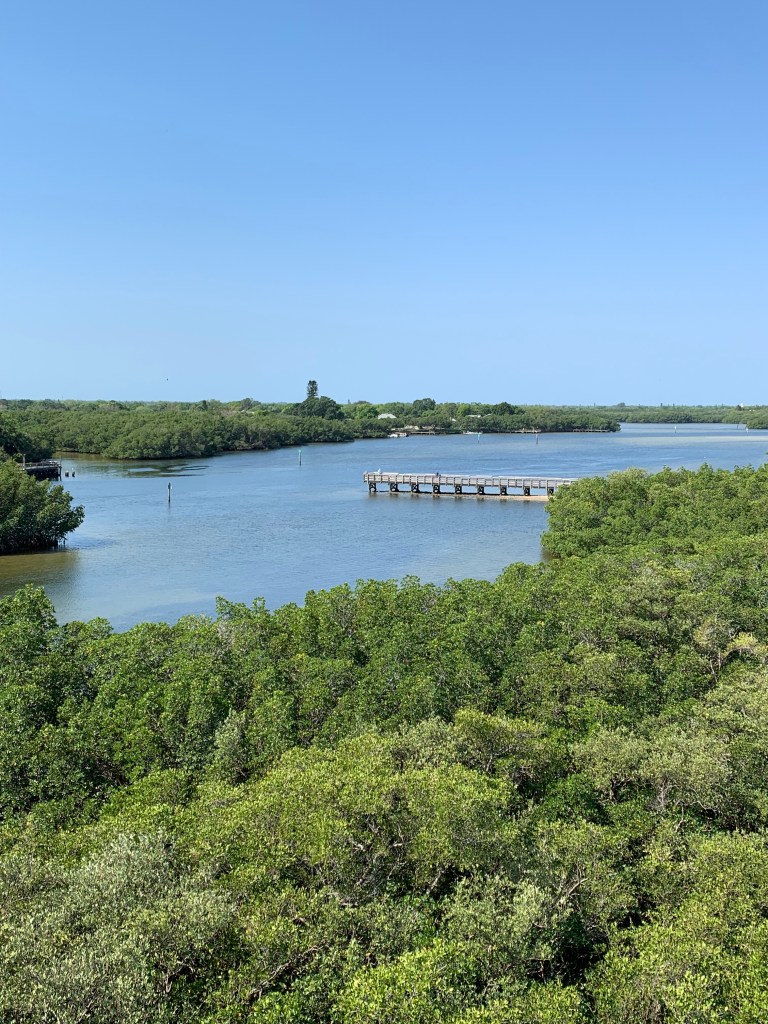
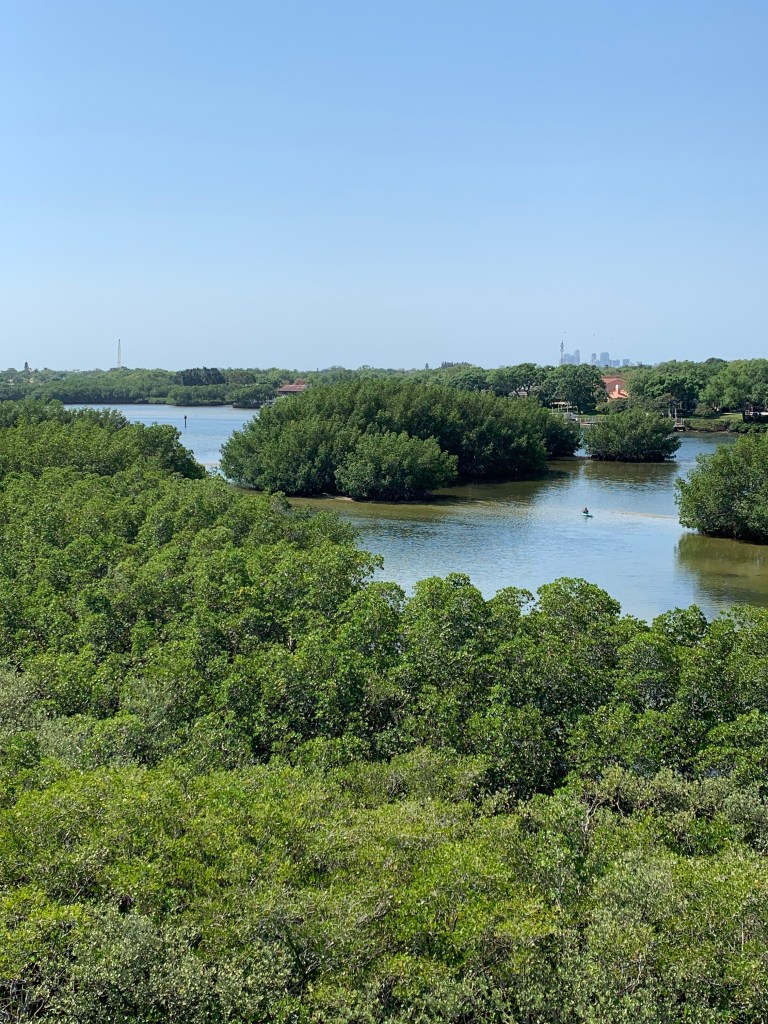
There are plenty of places to sit and rest along the boardwalks. I would suggest taking plenty of water as it gets hot. Also, there is one in particular (check the map you can get at the history center) that leads to a lookout tower. The view of the surrounding area is pretty spectacular and worth the climb.
- 1800 Weedon Drive NE, St. Petersburg, Florida
- http://www.weedonislandpreserve.org
- 727-453-6500
- Open daily 7 AM – 15 minutes before sundown
- Domestic pets are not allowed because there are wild animals
- There is no parking fee
- Wheelchair accessible except for the lookout tower
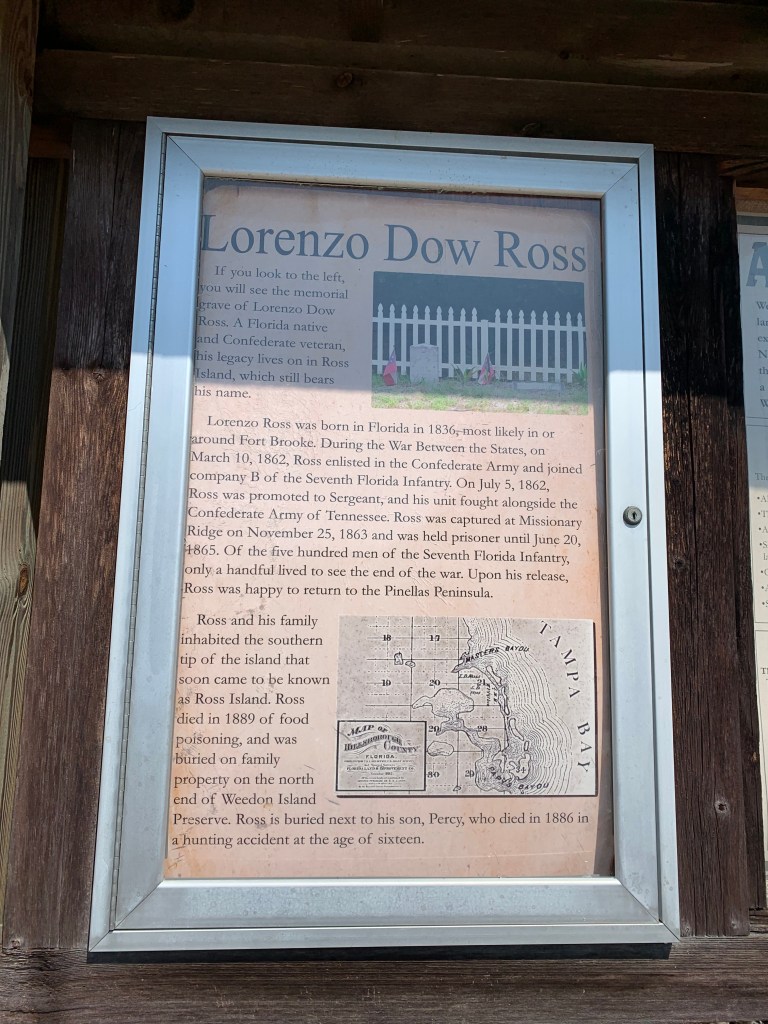
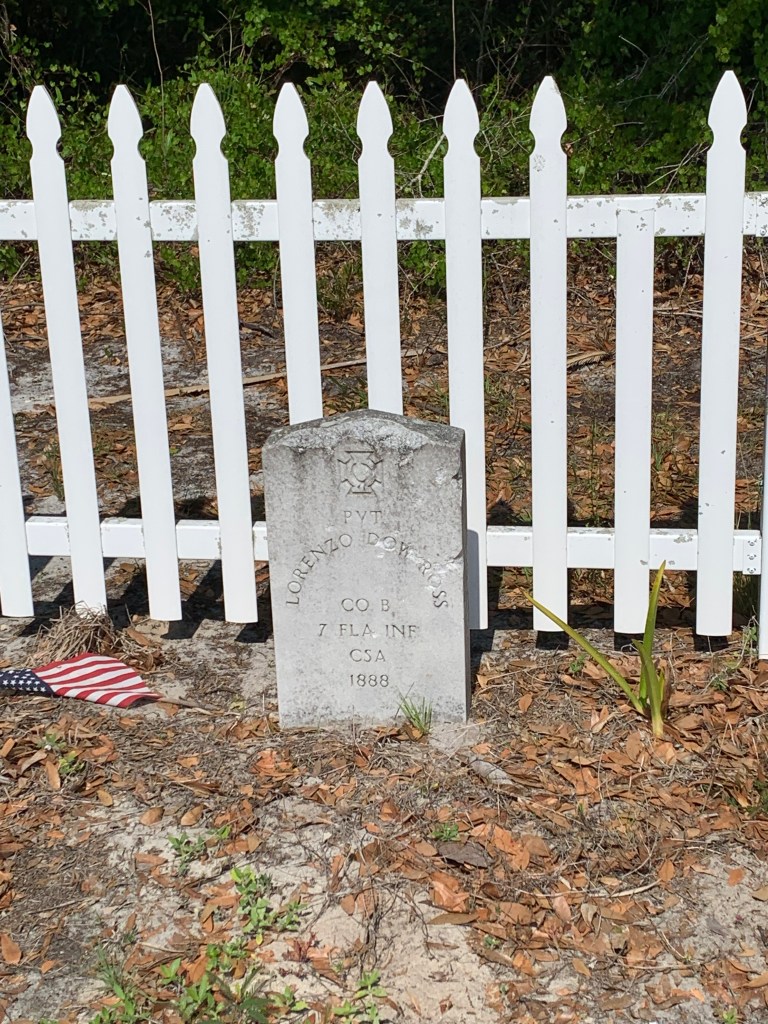
On your way out, stop by the gravesite on the side of the road. It belongs to Confederate Army officer Lorenzo Dow Ross. Born in 1836, he grew up in Fort Brooke (now the city of Tampa) and was one of only 452 people living there at the time.
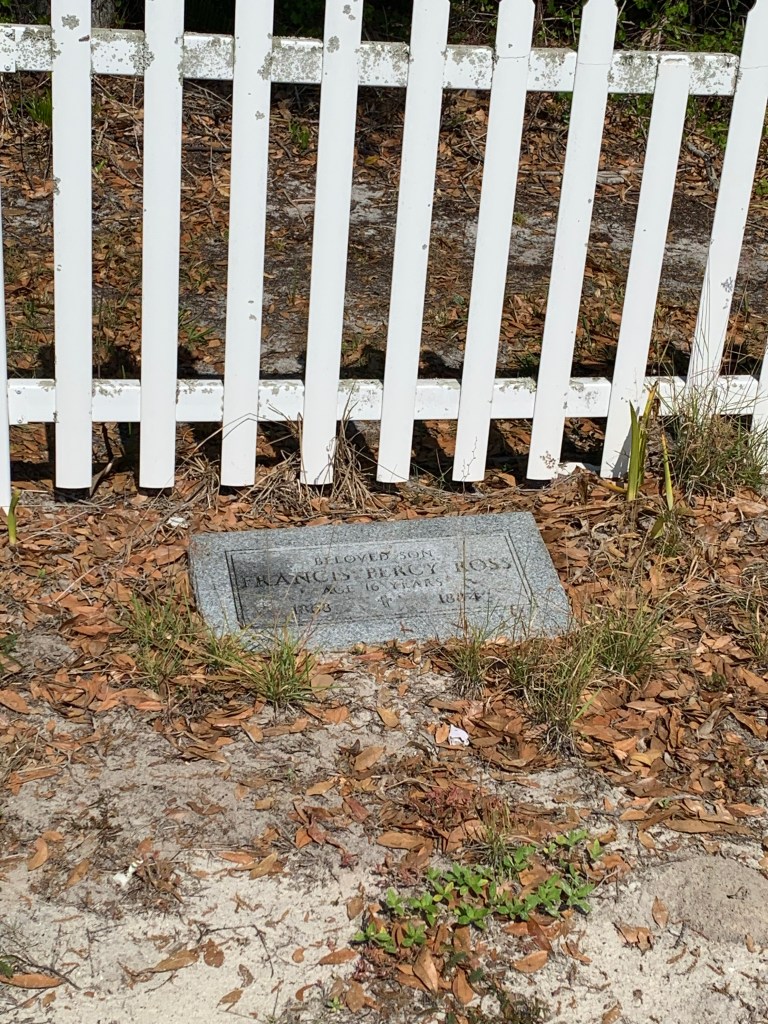
In 1856 he fought in the second Seminole war and then went on to fight for the Confederacy in 1862. He returned to Weedon Island in 1865, bought 300 acres and became a corn and potato farmer. He married and had six children. His eldest son, buried next to him, died at 18 as a result of a hunting accident. Lorenzo himself died three years later of food poisoning.
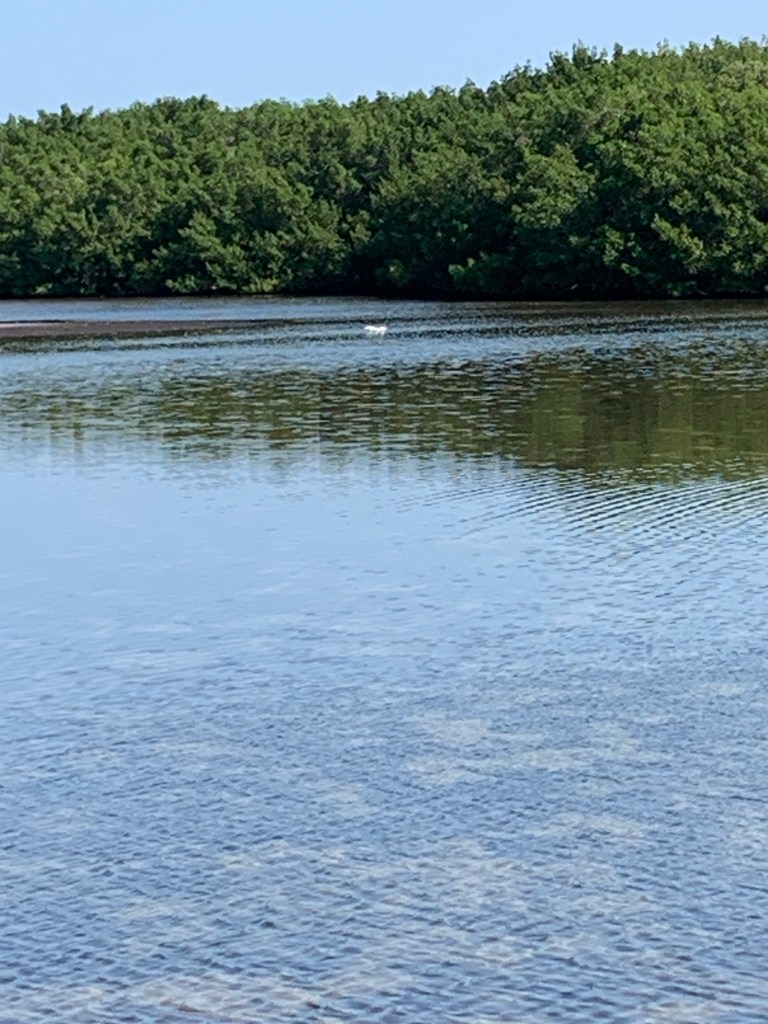
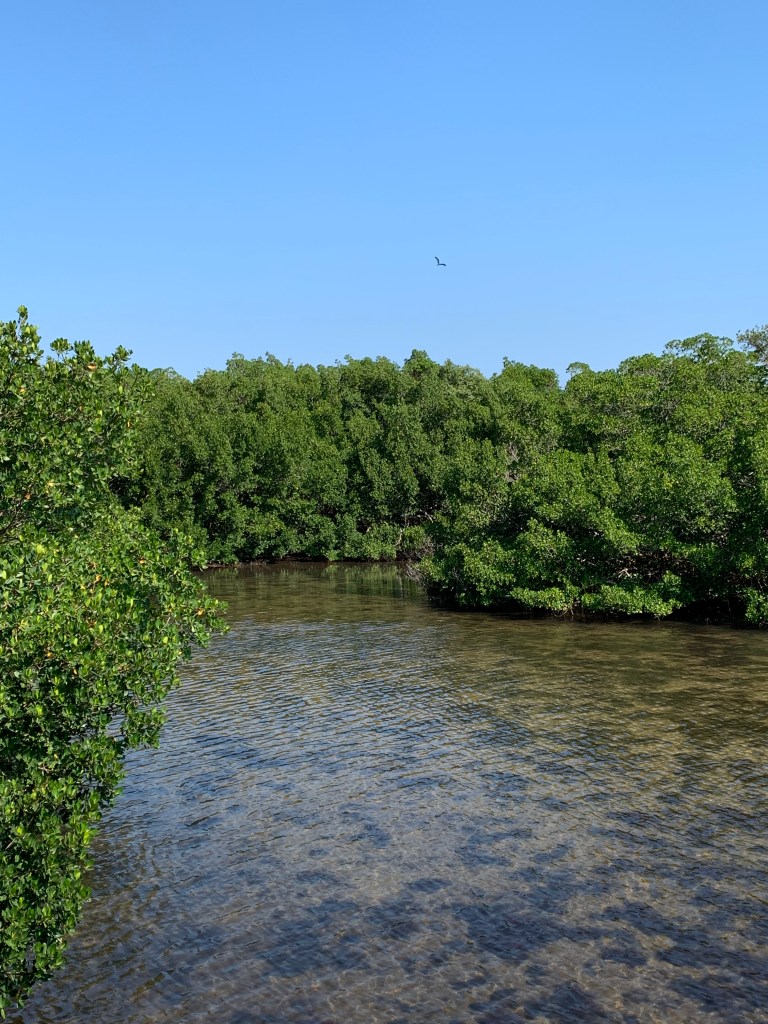
These are the stories that make up Weedon Island’s rich tapestry, and I thoroughly enjoyed exploring the area. You can look out over a vista of endless trees and meandering blue waterways, soak in the quiet, and wonder what made the early inhabitants decide this was the perfect place to settle. Why this spot? Why not the little alcove around the next bend? Why not further inland or down the coast in another state? It makes you appreciate all the decisions, large and small, that make places like Weedon Island Preserve so interesting.
 Lisa Browder
Leave a comment