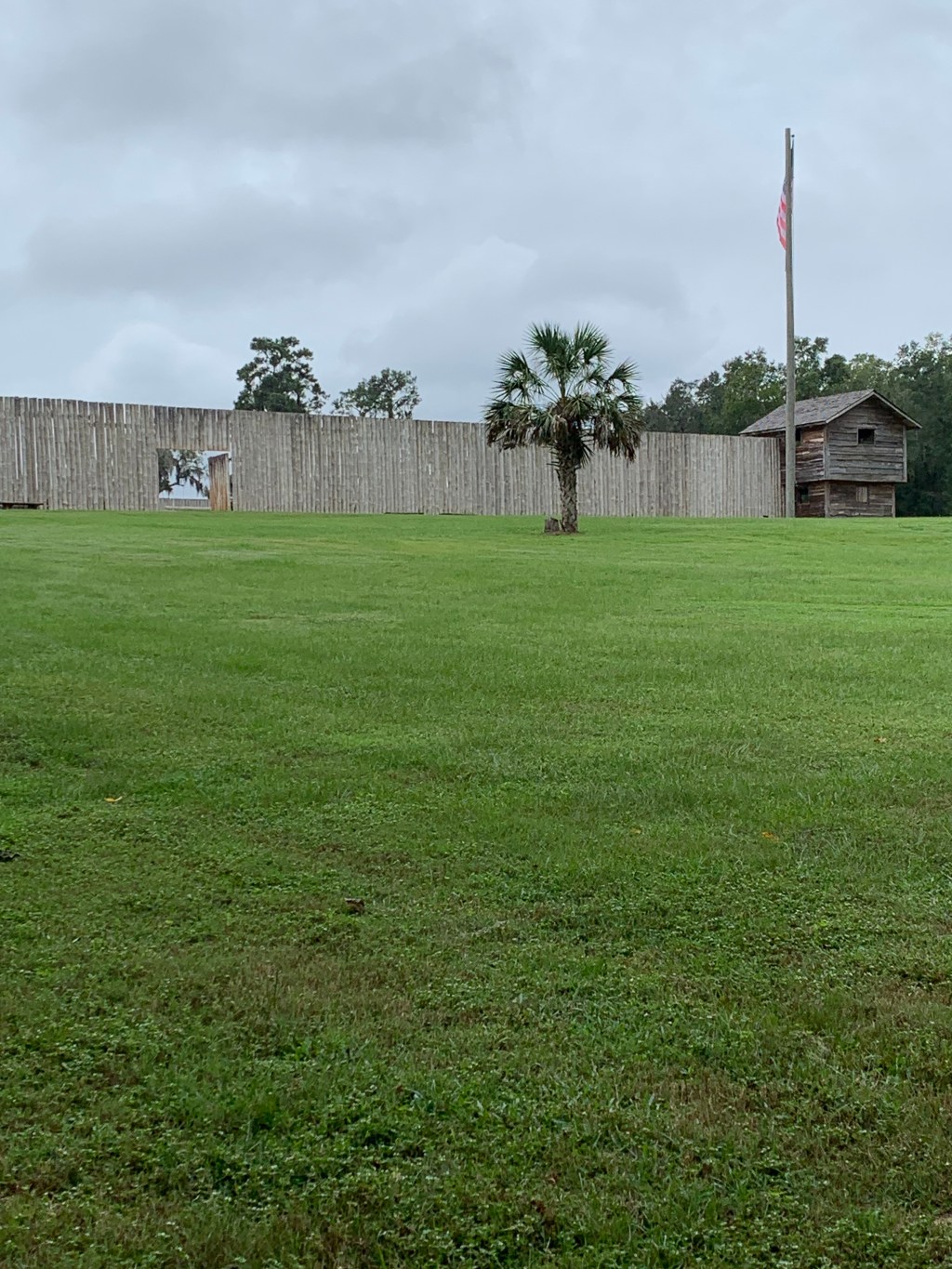
Fort King was built in 1827 to uphold the Treaty of Moultrie Creek. It was named for Colonel William King, who’d been appointed as the civil and military governor of the provisional government of West Florida. The treaty guaranteed prime land to the Florida settlers and, of course, kind of screwed the Seminoles. It gave fertile and productive lands tended by the Seminoles to the settlers. It moved the Seminoles to reservation lands that were not suitable for farming, cut them off from the coasts and prevented trade with the Spanish and English for weapons. The result was a decades-long war.
The original plans for the fort included barracks, officers’ quarters, kitchens, mess halls, and munitions magazines. Around the fort were a commissary, quartermaster’s store house, sinks, hospital, guard house, sutler’s store, stables and a blacksmith’s shop. I don’t know what half of those things are but know I wouldn’t have wanted to run anything outside the fort under the circumstances.
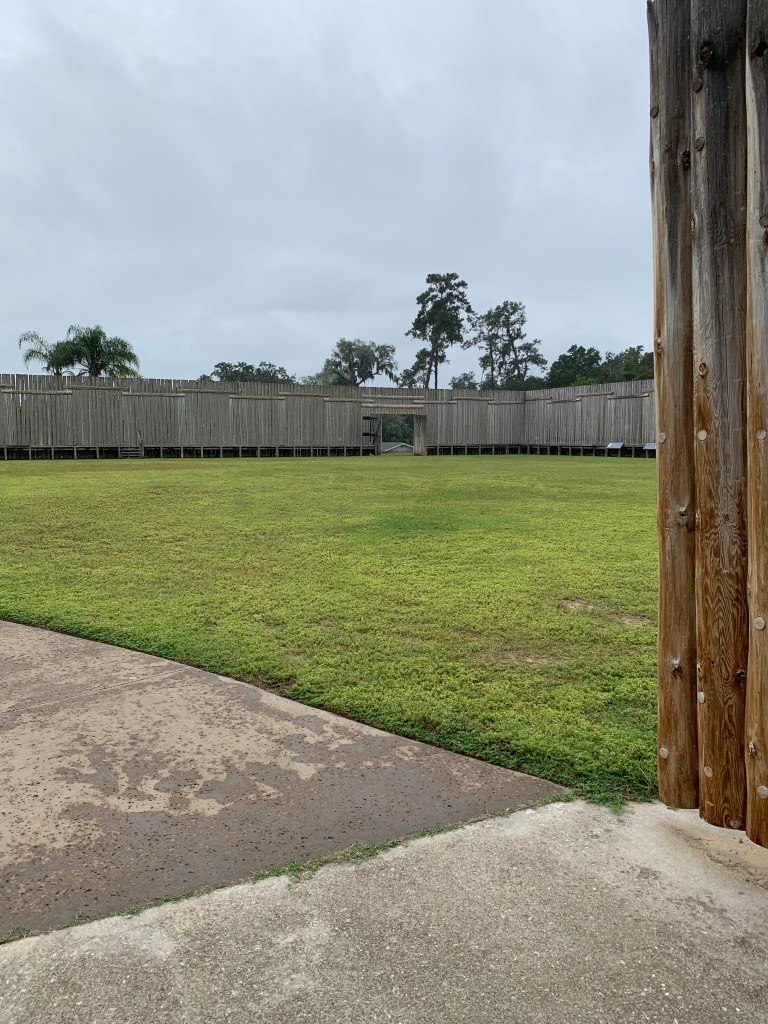
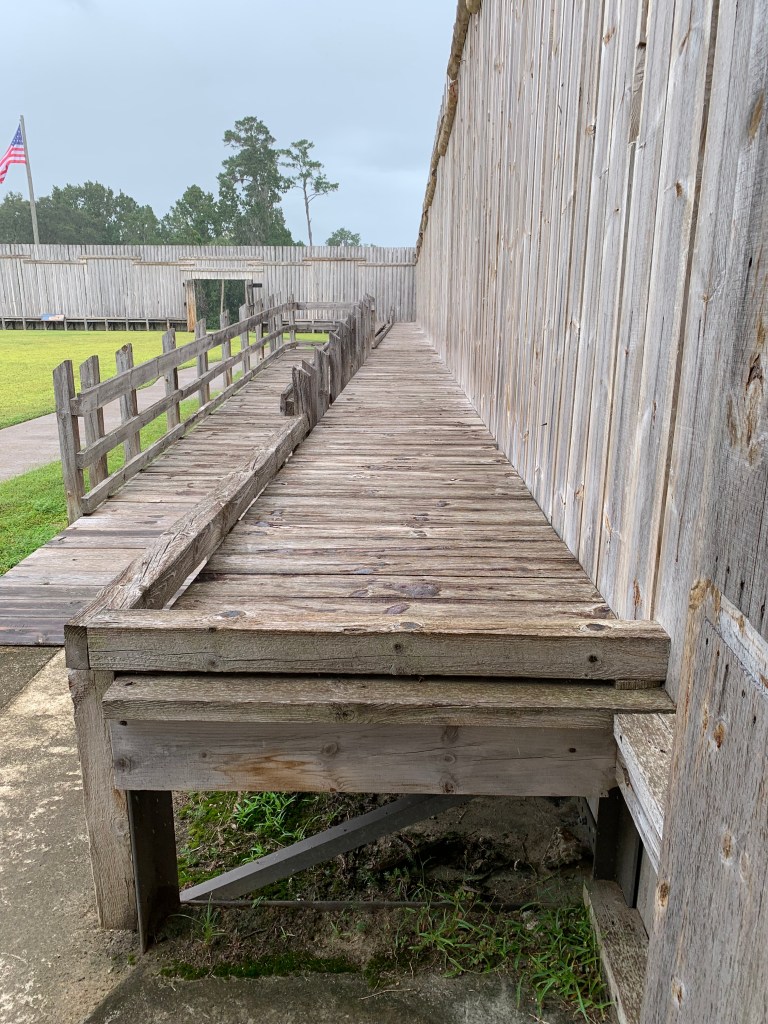
As you can see, there’s not much there today – just replicated walls, blacksmith shop and guard tower.
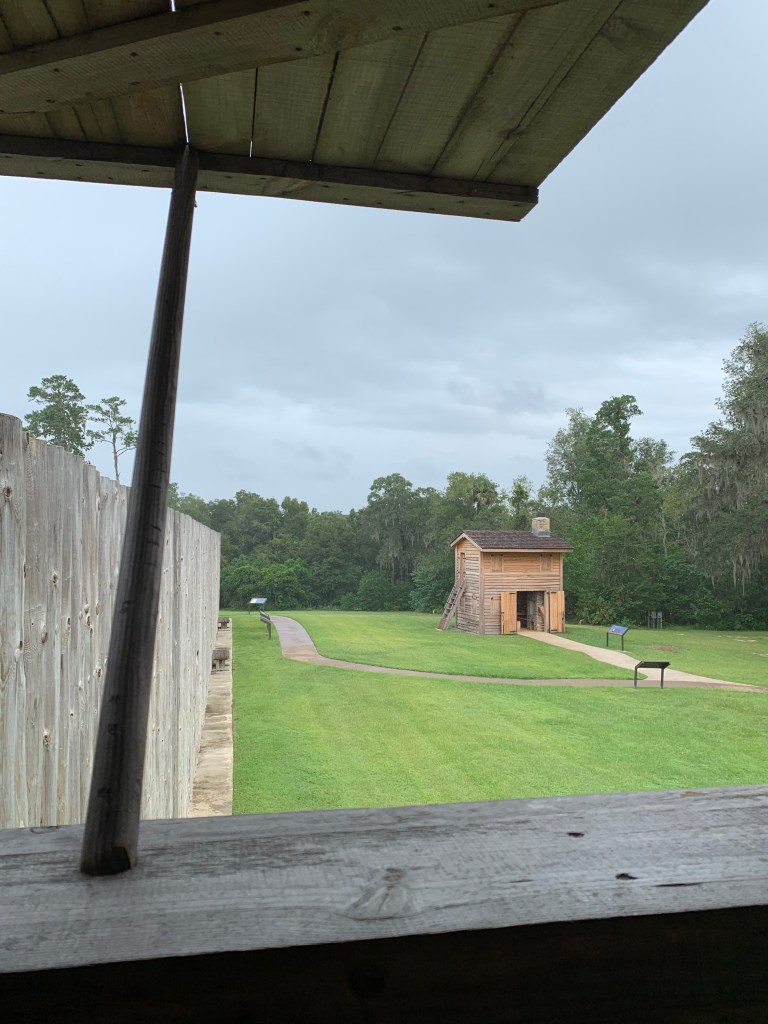

The original Fort King was abandoned in 1836 and burned to the ground by the Seminoles. However, the U.S. Army returned in 1837 amidst growing hostilities and rebuilt the fort. The war with the Seminoles was declared over in 1842 and the last of the troops were withdrawn in March 1843.
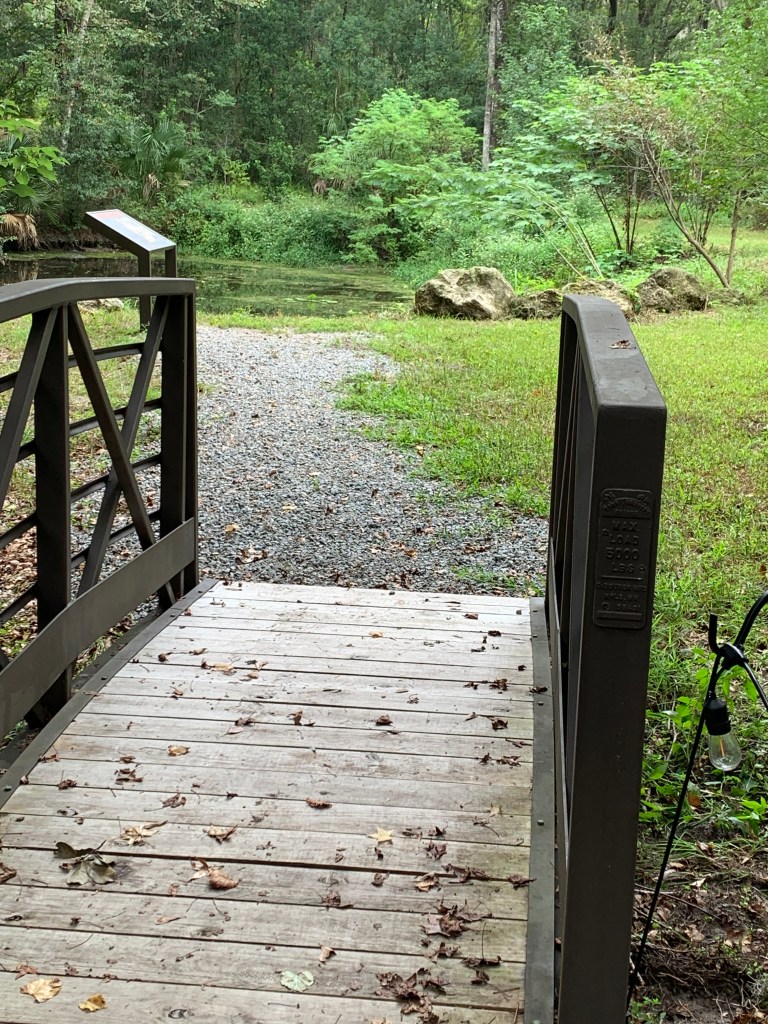
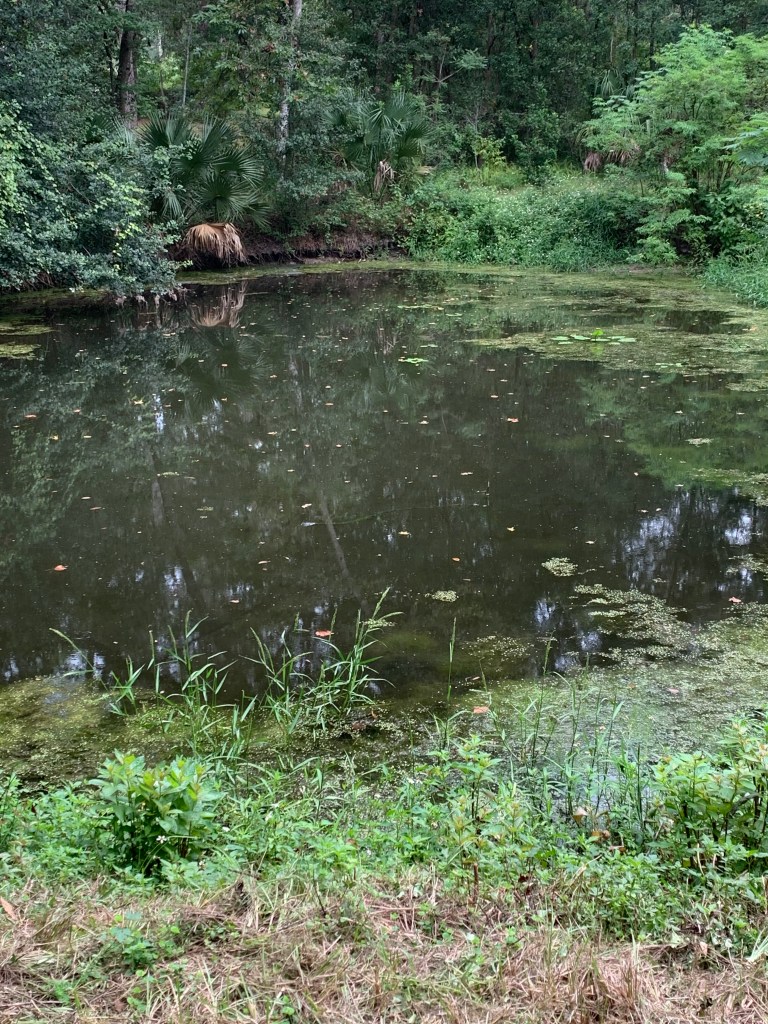
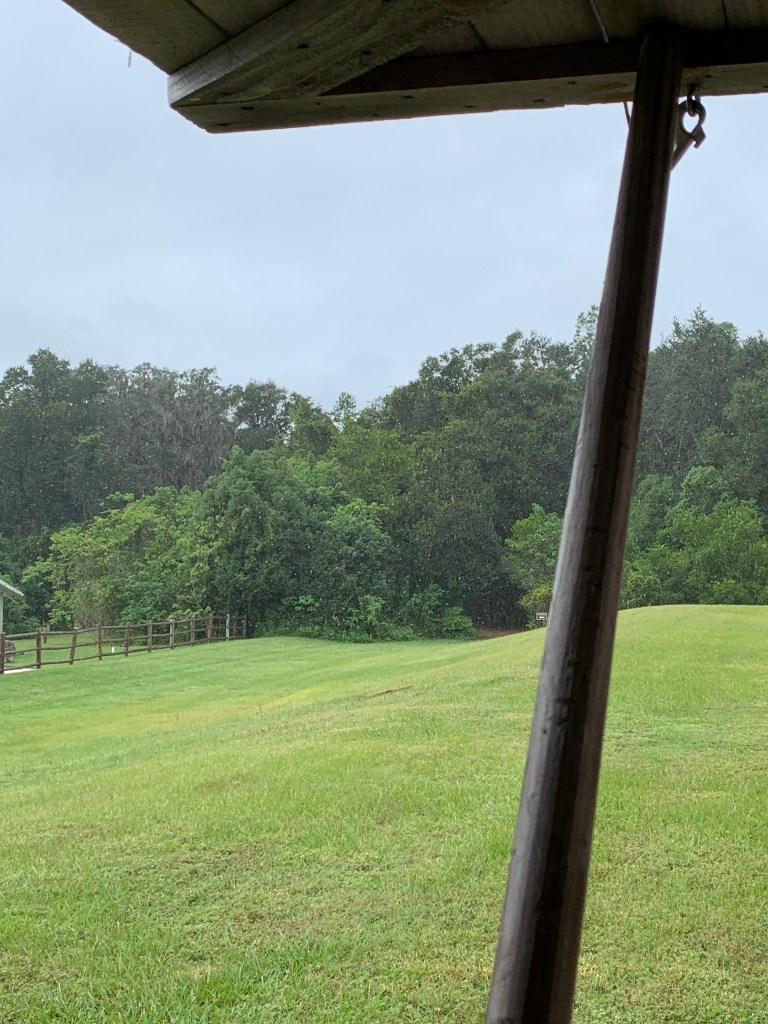
When you walk the grounds today, you find this lovely little tucked away scenic spot. However, the view doesn’t conjure the description on the nearby sign. It describes this as a “seep,” and says it’s a natural spring that has a continuous feed of underground water. It says the seep spring serves as a natural filtration system where the water passes through sand and small vegetation and then pools in a freshwater pond.
In 1827, this particular seep would have been much larger and would have provided enough water for bathing, watering livestock and for general consumption by the Fort King residents. Have a good look. Does this look filtered? Would you bathe in it? Hell, never mind bathing. Would you drink it?
There’s no consensus on the beginning and end of the Seminole Wars but historians have settled on 1816 to 1858. It spanned a little more than four decades and was characterized by broken promises and failed negotiations, raids and gruesome murders.
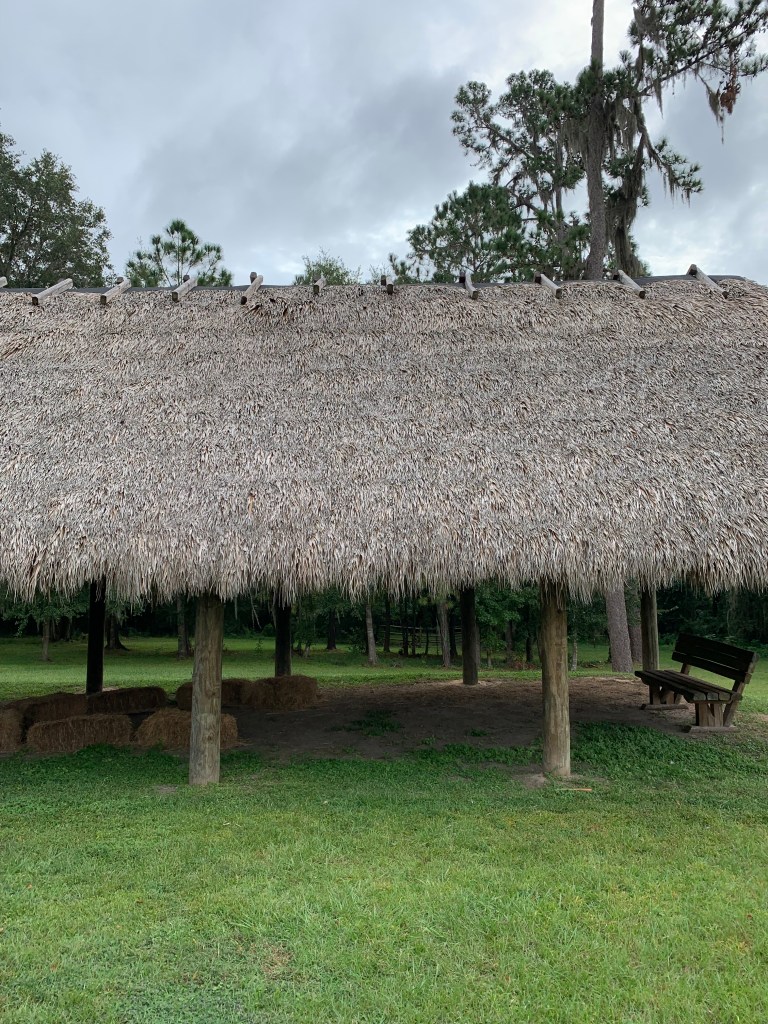
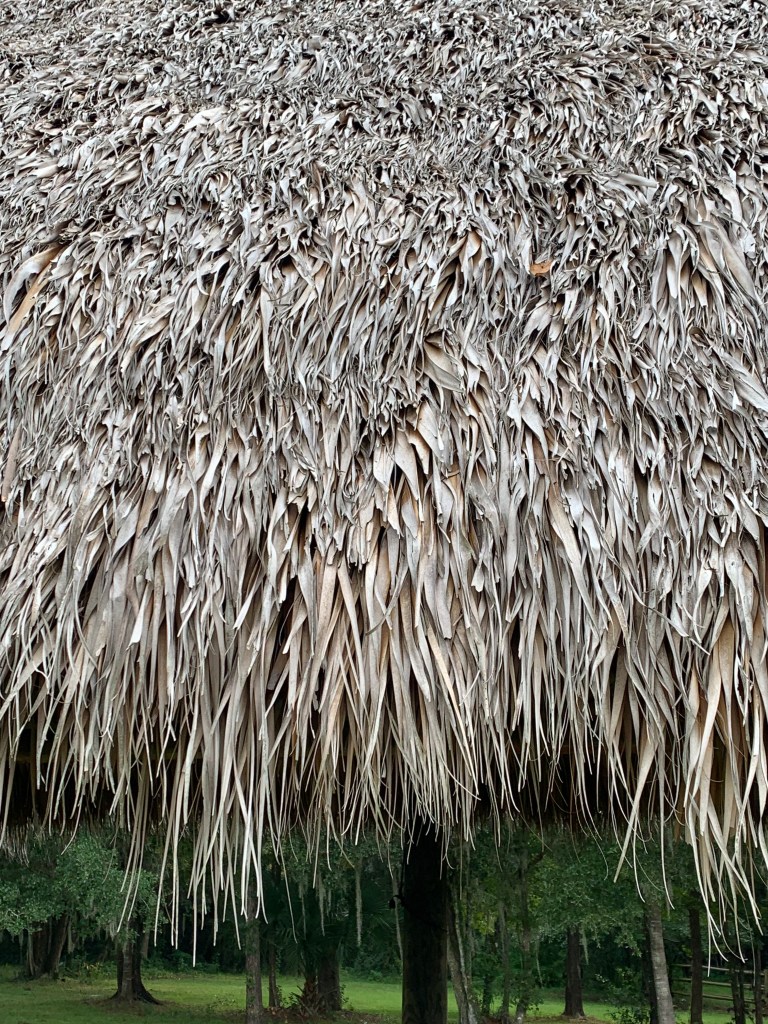
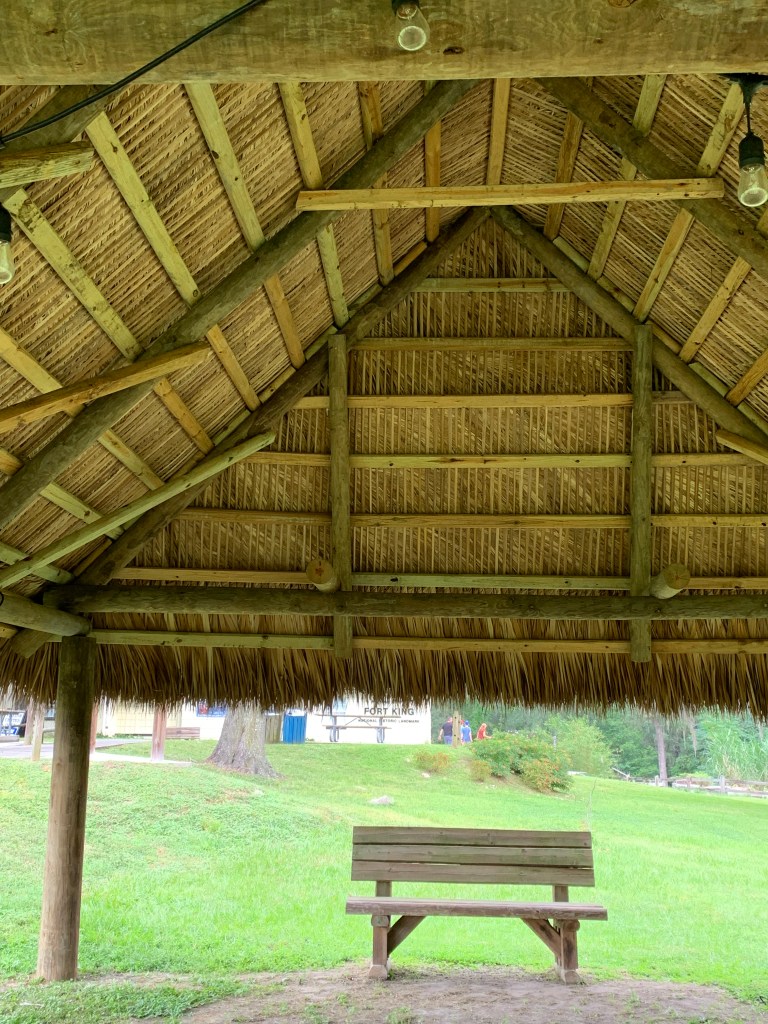
Today, work is being done to restore the fort and to showcase Seminole history as well. This structure, used today for teaching, is known as a “chickee.” The Seminole Indians developed this style of architecture during the early 1800s. Constantly pursued by U. S. troops, they needed quickly constructed, efficient, and disposable shelter. This style consists of palmetto thatch over a cypress log frame. It’s quite resilient and only needs to be rethatched every five years.
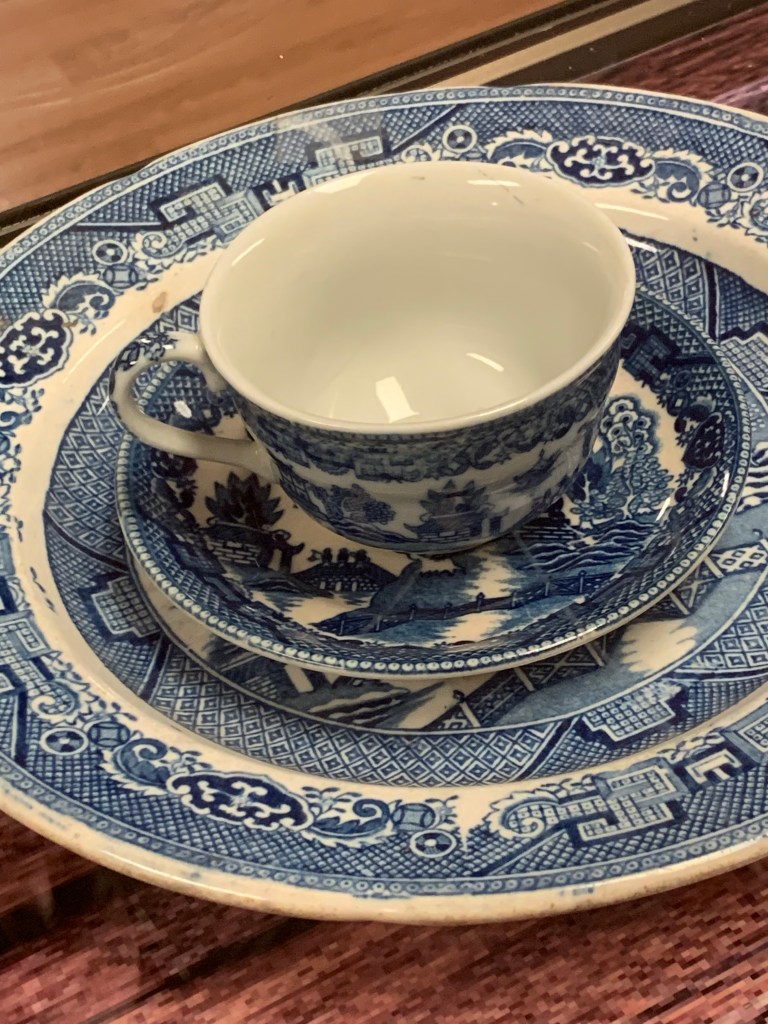
Although life at Fort King had some finer things like fine china for the officers, it was a miserable life in general. For one thing, uniforms were made of wool. I’ve only been in Florida for four years, but I’m sure I’ll never get used to standing still and sweating – and that’s in shorts and t-shirts.
Troops were exposed to insects and animals they’d never heard of or seen before, and food was rationed. Supplies were dependent on wagons traveling over rutted, muddy roads that were frequently raided.
Thirty-four soldiers died at Fort King. Although some were killed in raids or battles with the Seminoles, others are listed as having died from diseases like congestive fever and dysentery.
Since rations included alcohol, drunkenness was rampant and eventually stopped. They substituted liquor with coffee and sugar. Yeah, not quite the same effect. I wonder if there were any deserters.
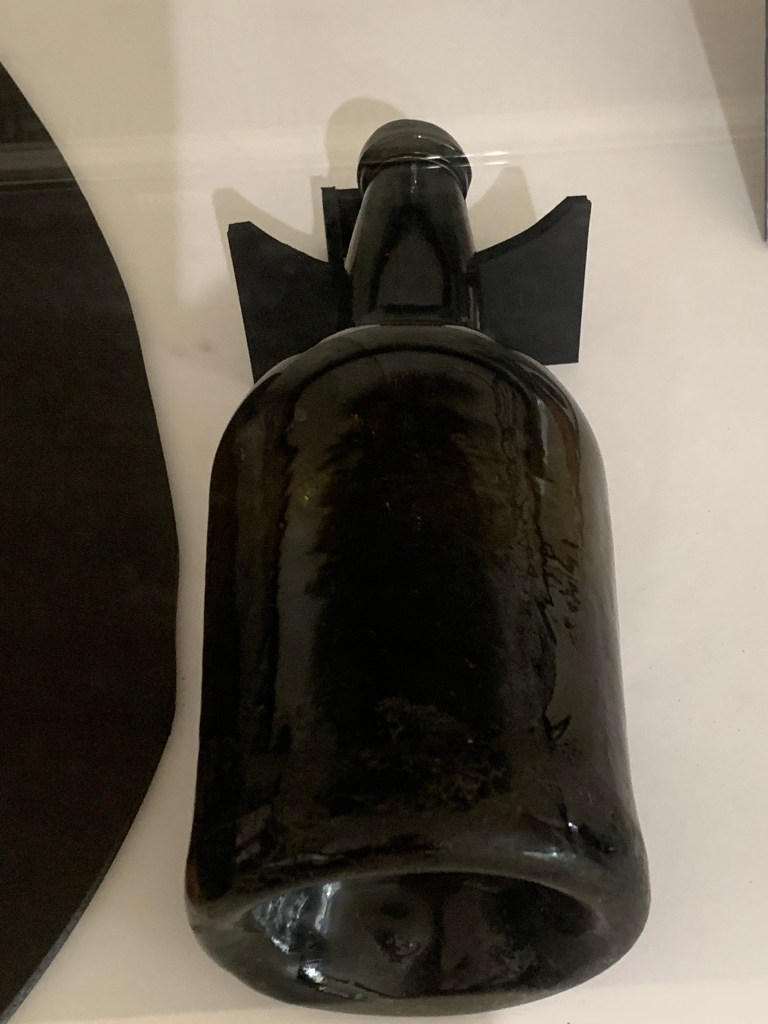
Take a look at the wine bottle below. It comes with a great story. It seems in 1968, Hurricane Gladys uprooted a giant pine tree on the fort’s site. Tangled in its roots were over 100 wine bottles, many intact. As there are plans for archaeological digs at the site, I’m quite sure more interesting artifacts will turn up in future displays.
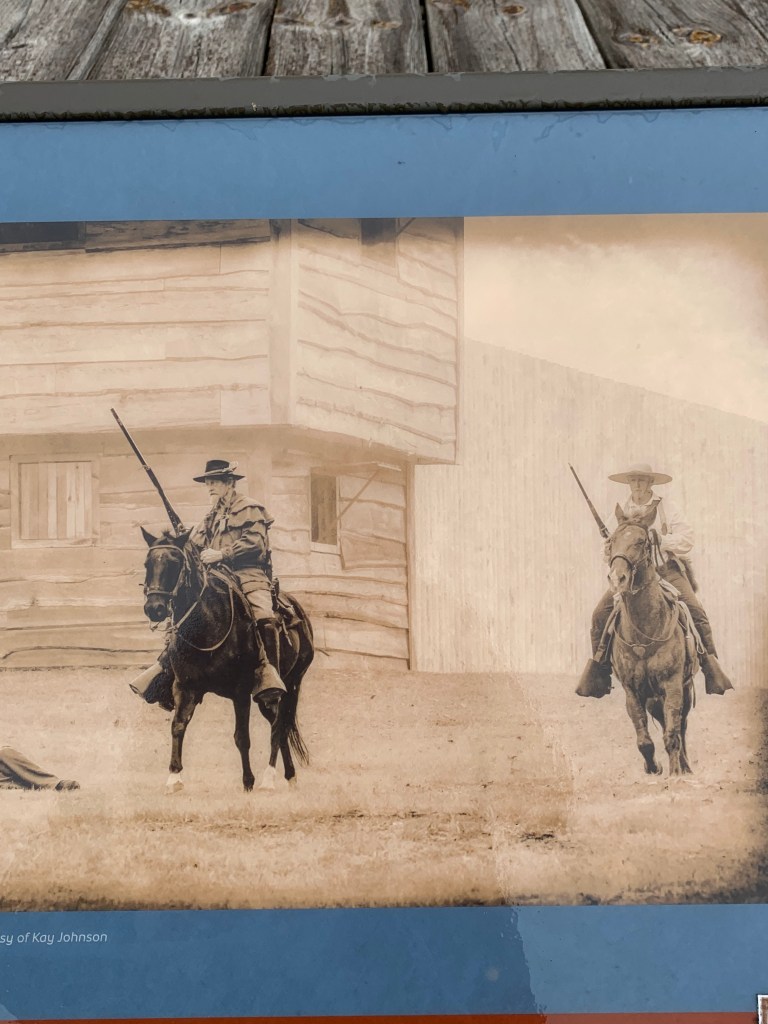
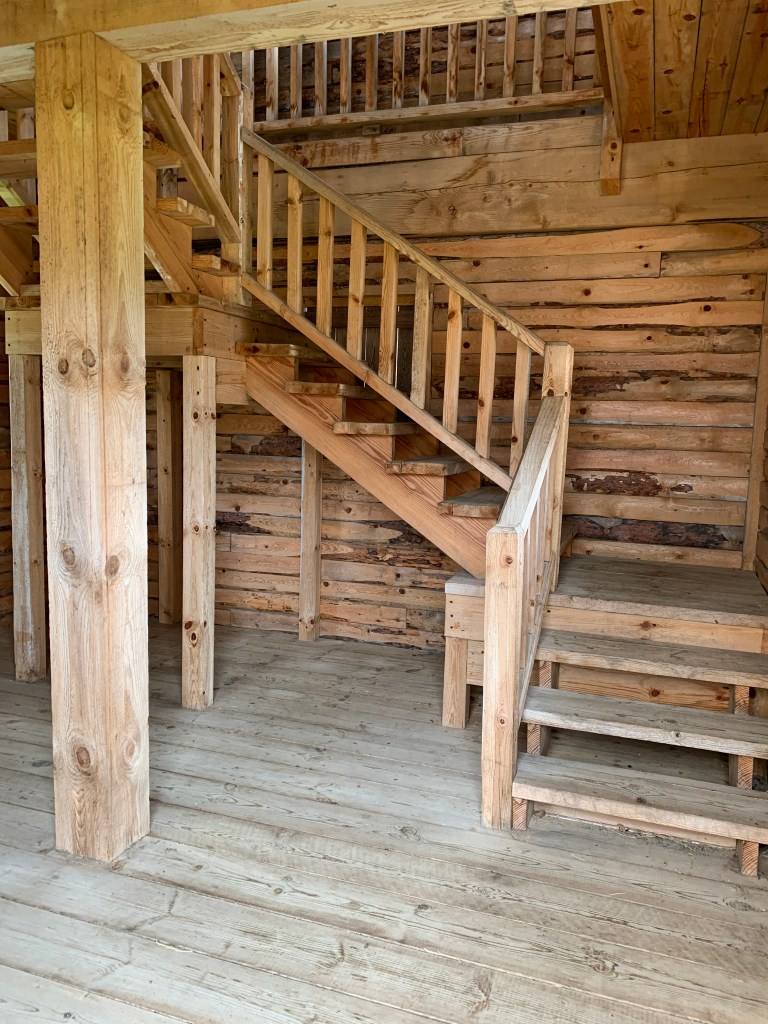
The history at Fort King is interesting but there’s not much to see. There’s nothing but grass inside the fort’s walls. The guard tower is a set of stairs leading up to an opening where, granted, the view is gorgeous, but that’s it. Now, I don’t really expect to see Indians skulking at the forest edge, or soldiers mustered for battle, but a few more artifacts or even a tour guide to tell stories about survival in Florida in the early 1800s would help.
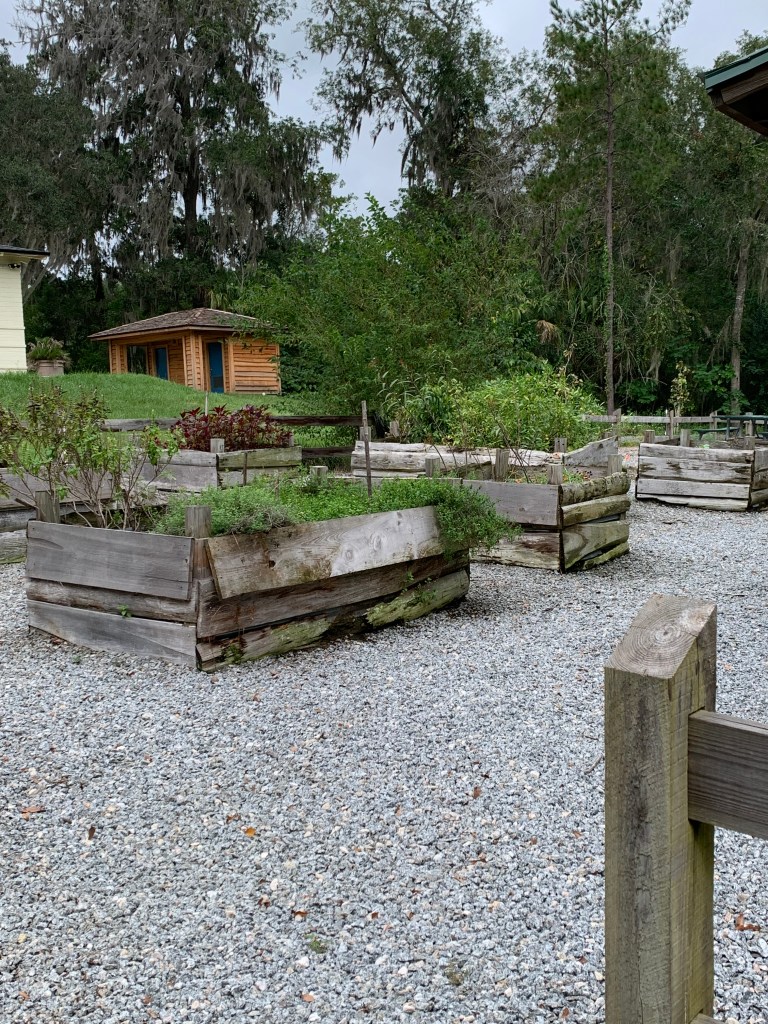
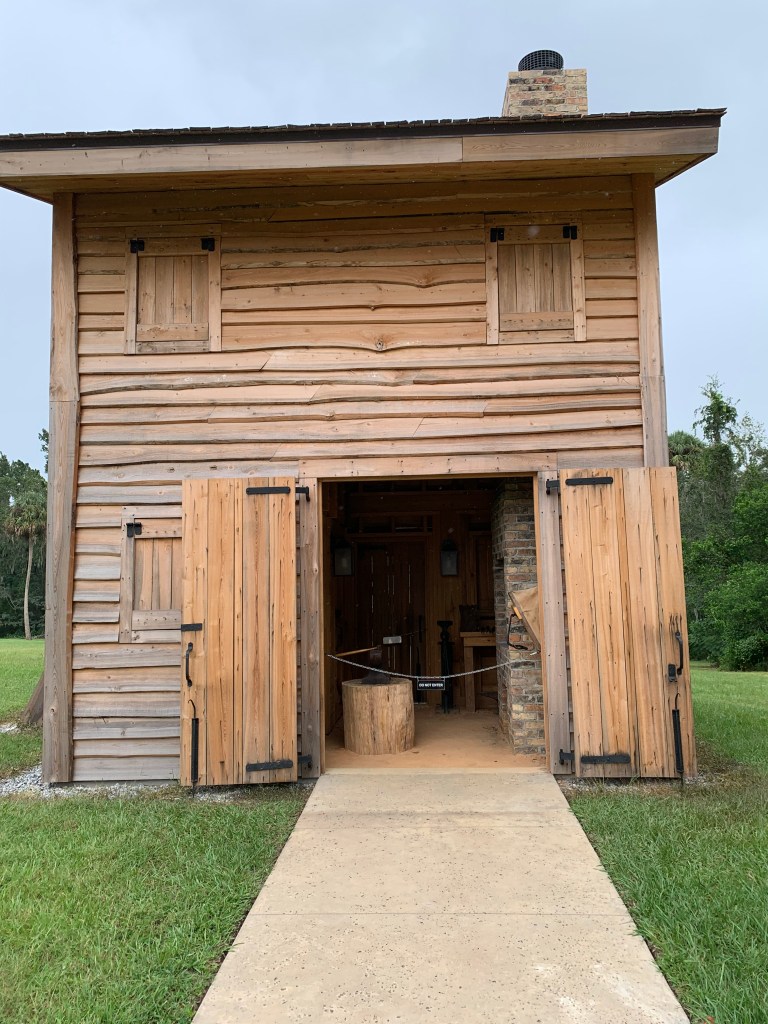
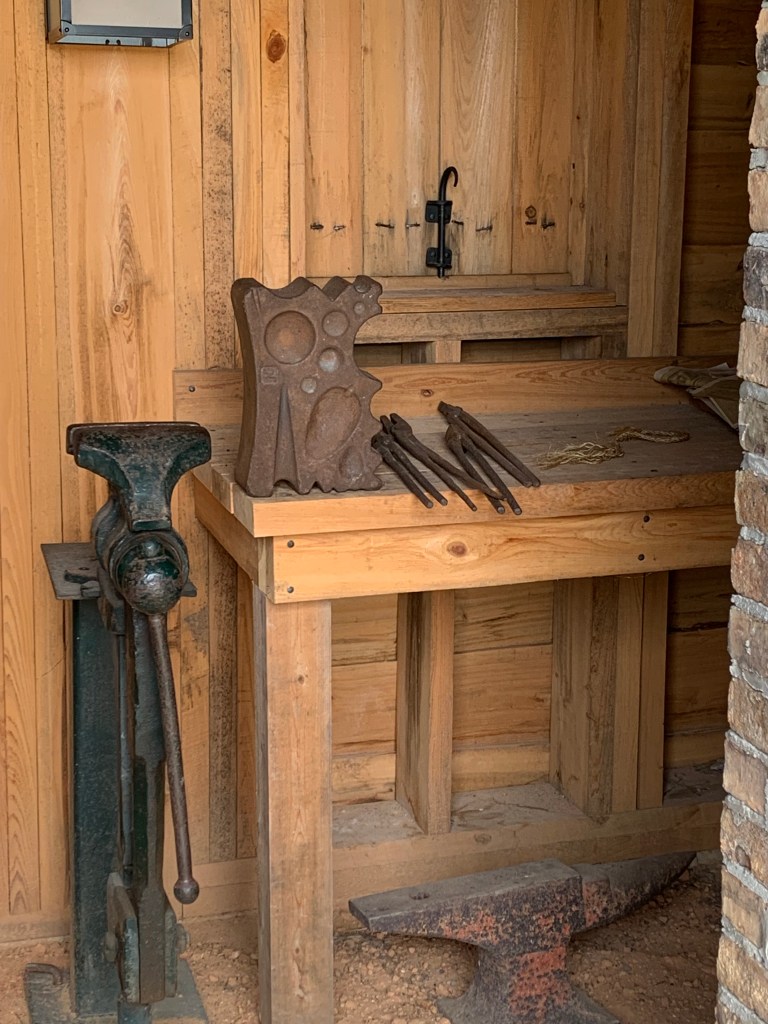
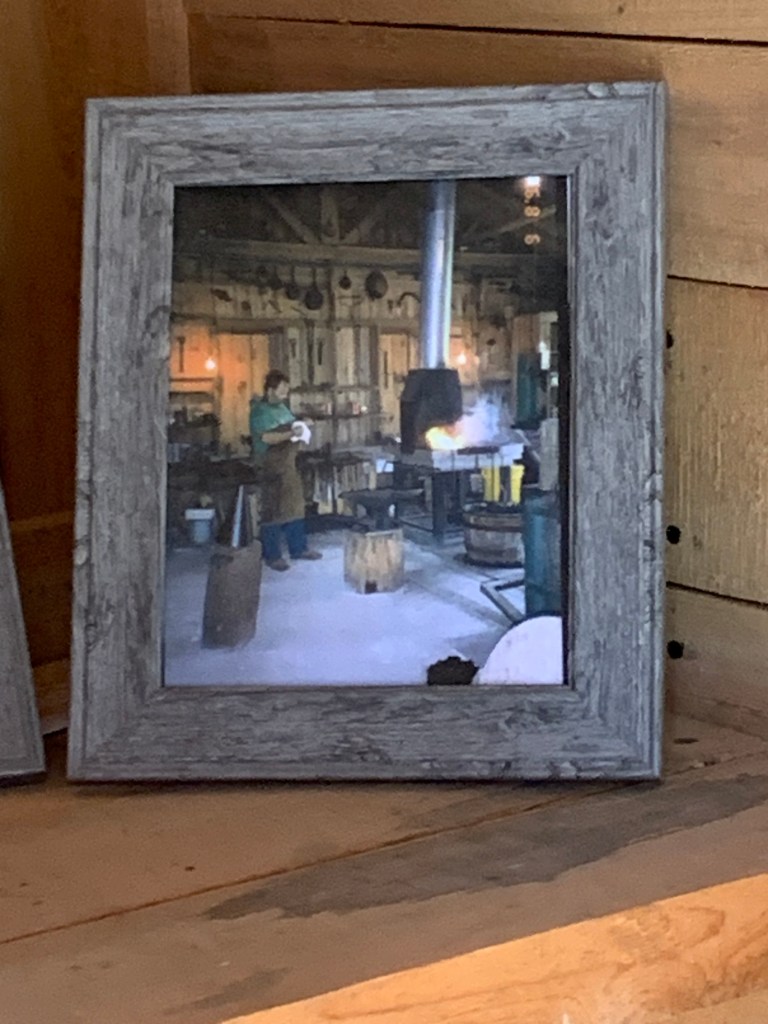
The most interesting structure was the blacksmith shop. Unfortunately, tourists are not allowed inside. It was a small space but it has been recreated quite effectively and has all kinds of fascinating tools that would’ve been common at the time. There’s even a photo of the man who helped build the shop. I’d have loved to talk to him.

Not even the cemetery has much to see. The soldiers’ bodies were reinterred at the St. Augustine National Cemetery along with 1,400 others who died during the war. According to the docent in the Archaeological Center there aren’t even gravestones remaining. Since it was drizzling, I’d already trudged around the fort and outside grounds enough to be pretty soggy, I decided not to cross check that information.
I think a great deal of the area would be challenging for wheelchairs and the signage is not particularly clear. Although I found the place interesting, and the stories from the docents are good, there’s not yet much to see. Keep checking their website for new archaeological finds and future reconstructions that might make it more engaging.
- 3925 East Fort King Street, Ocala, Florida
- 352-368-5533
- fortkingocala.com
- I think wheelchairs would find some of the paths challenging and I didn’t see any access to the upper floor of the guard tower.
- Open daily sunrise to sunset but the Archaeological Center is only open on Fridays and Saturdays.
- Parking is free
 Lisa Browder
Leave a comment