
Did you know the closest relative to manatees is the elephant? Sounds about as plausible as saying hummingbirds are related to polar bears, right? But it’s true. Our guide said if you look carefully at the very ends of their flippers, you’ll see what appears to be remnants (or beginnings?) of giant elephant toes. I tried to get a photo and although I could see what the guide was talking about, it didn’t photograph well. Anyway, they’re the sweetest, most rotund and lovable creatures you can imagine. You can see them at the David A. Straz, Jr. Manatee Critical Care Center at ZooTampa.
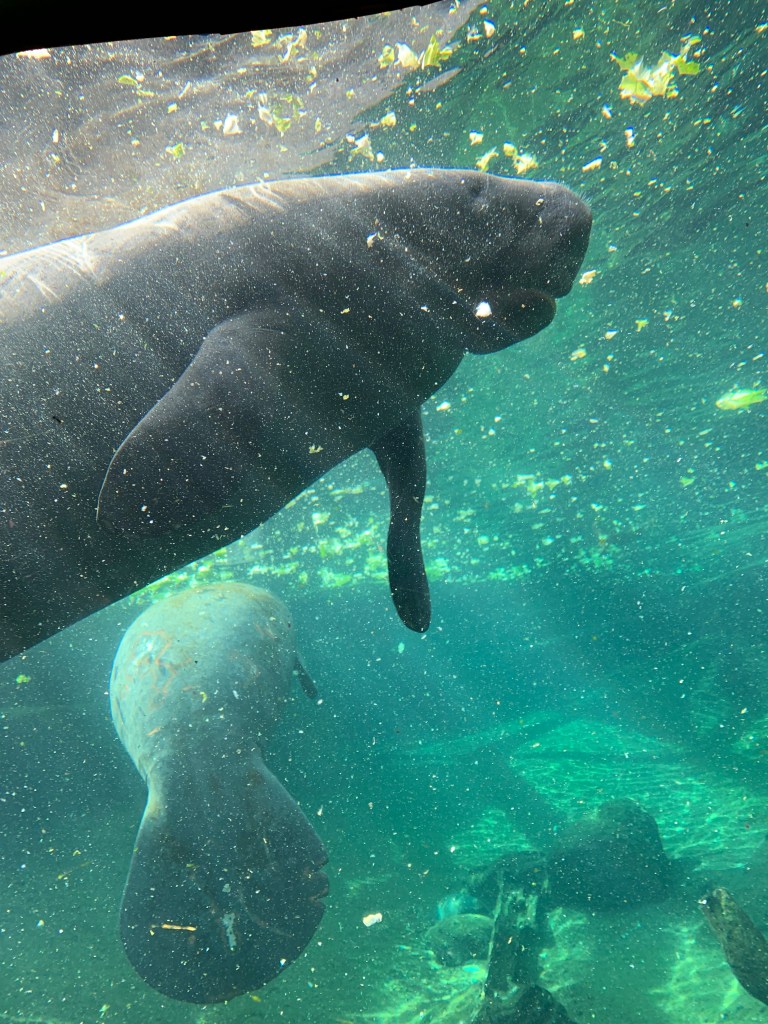
The four most common reasons manatees end up in critical care are:
- Water craft strikes – photo to follow of the damage
- Orphaned calves - (not that the mother abandoned them but that they were hit by boats or are sick from red tide)
- Red tide – an algal bloom where the algae is out of control. It not only harms the seagrass the manatees eat, it produces a toxin that can affect the central nervous system.
- Cold stress – any time the water temperature drops below 68 degrees, manatees are susceptible to cold stress. It can cause skin bleaching, weight loss, abscesses and unresolved sores.
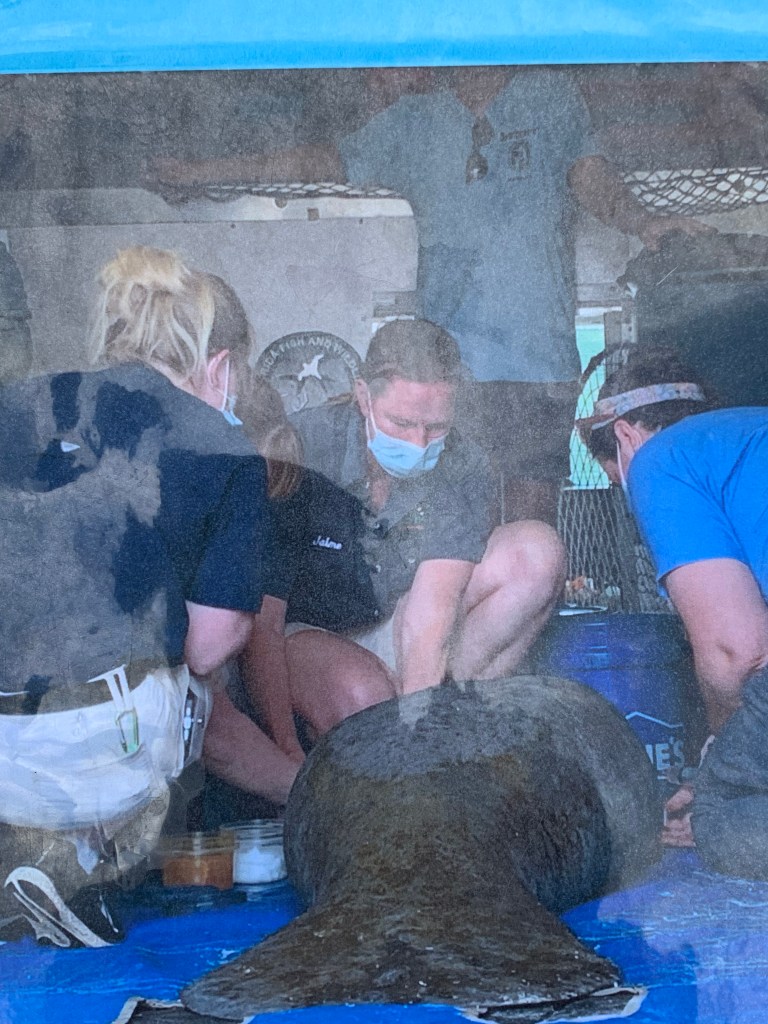
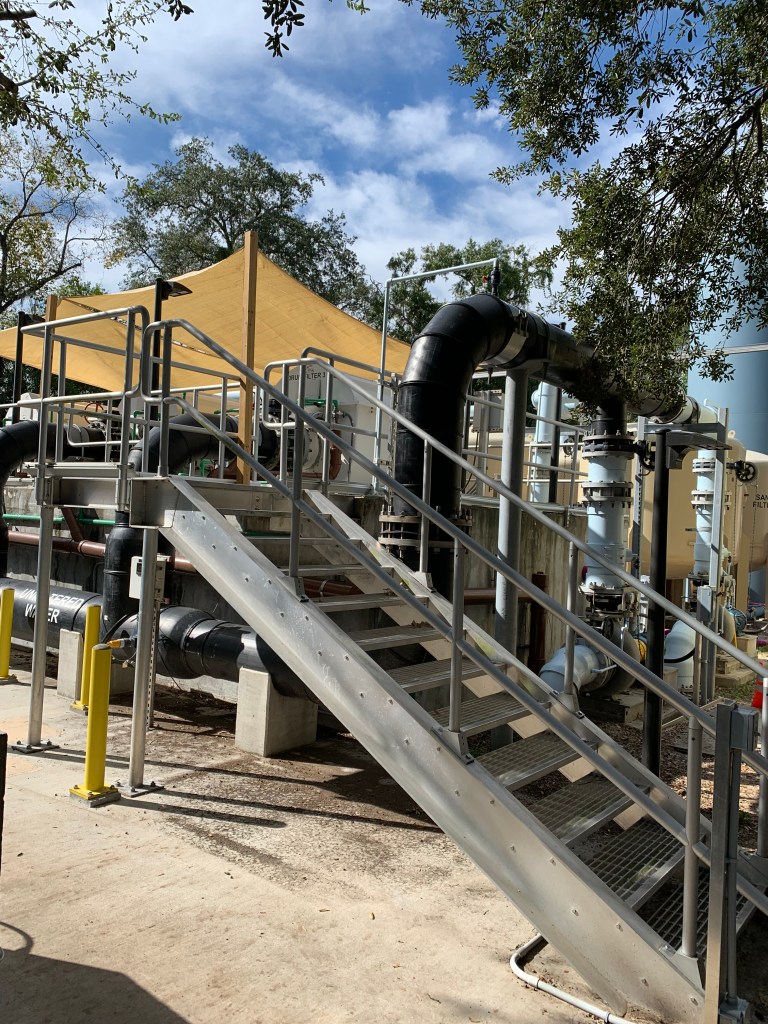
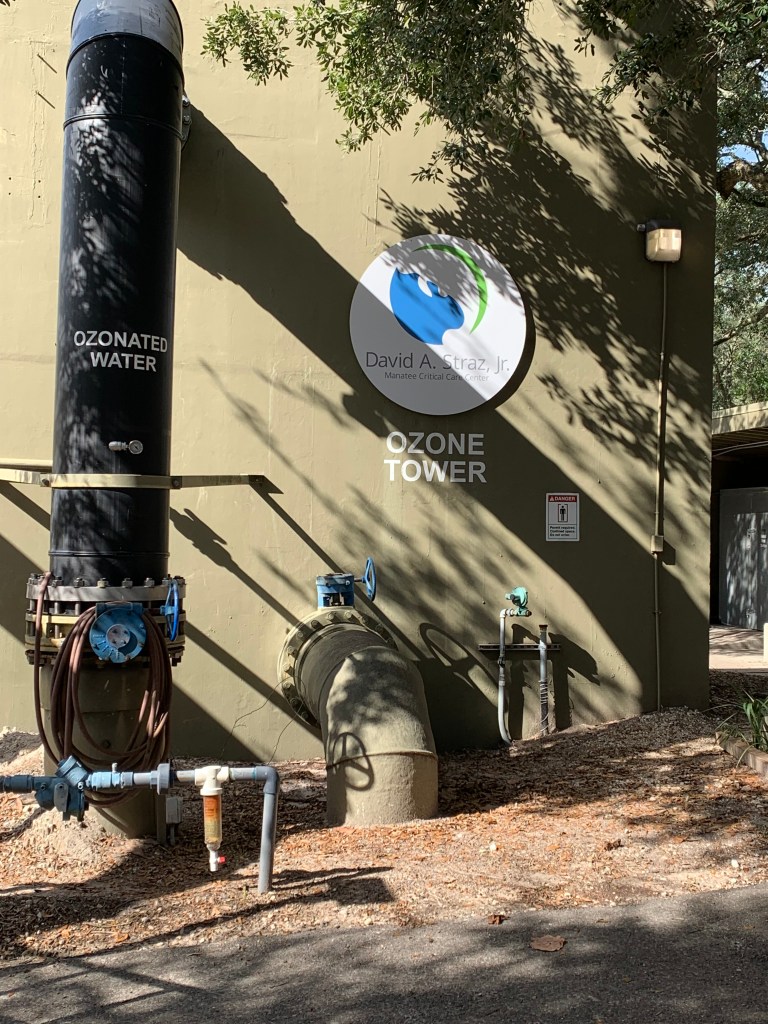
When someone reports an injured, sick or abandoned manatee, the critical care unit sends out a vehicle to rescue the animal and transport it back to the its facility at ZooTampa. It is then lowered into one of the isolation pools. Each pool has a floor that can be raised so veterinarians have easy access to the manatees. The water is continually put through giant filters and then flows through the ozone tower where any remaining contaminants are filtered out.
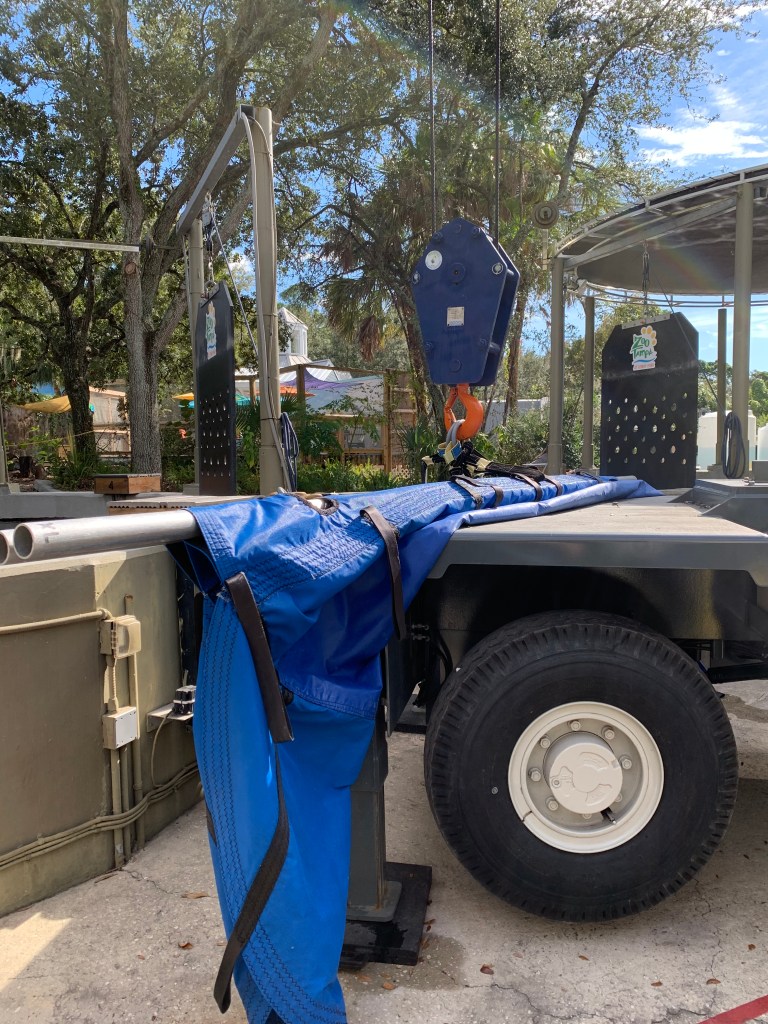
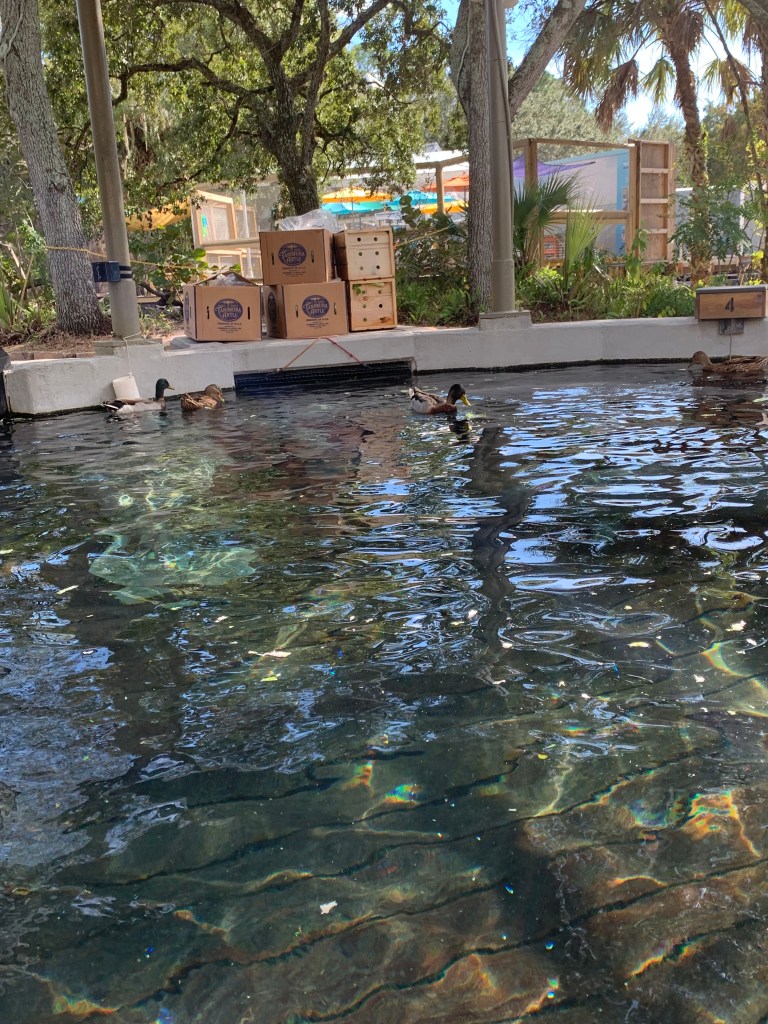
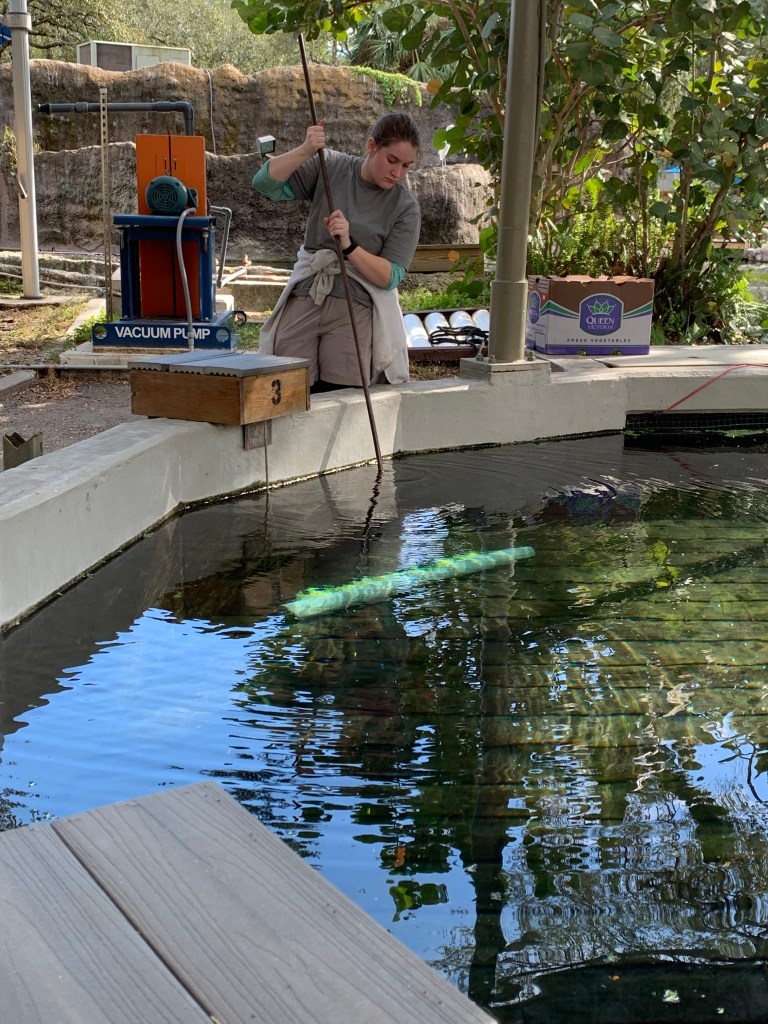
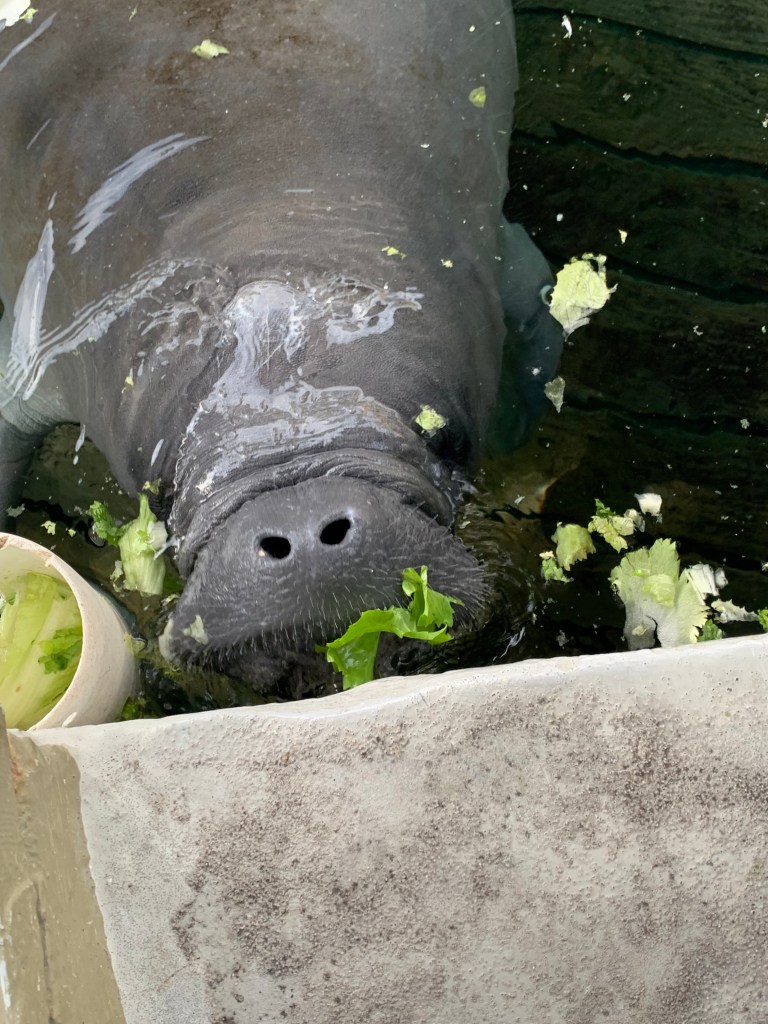
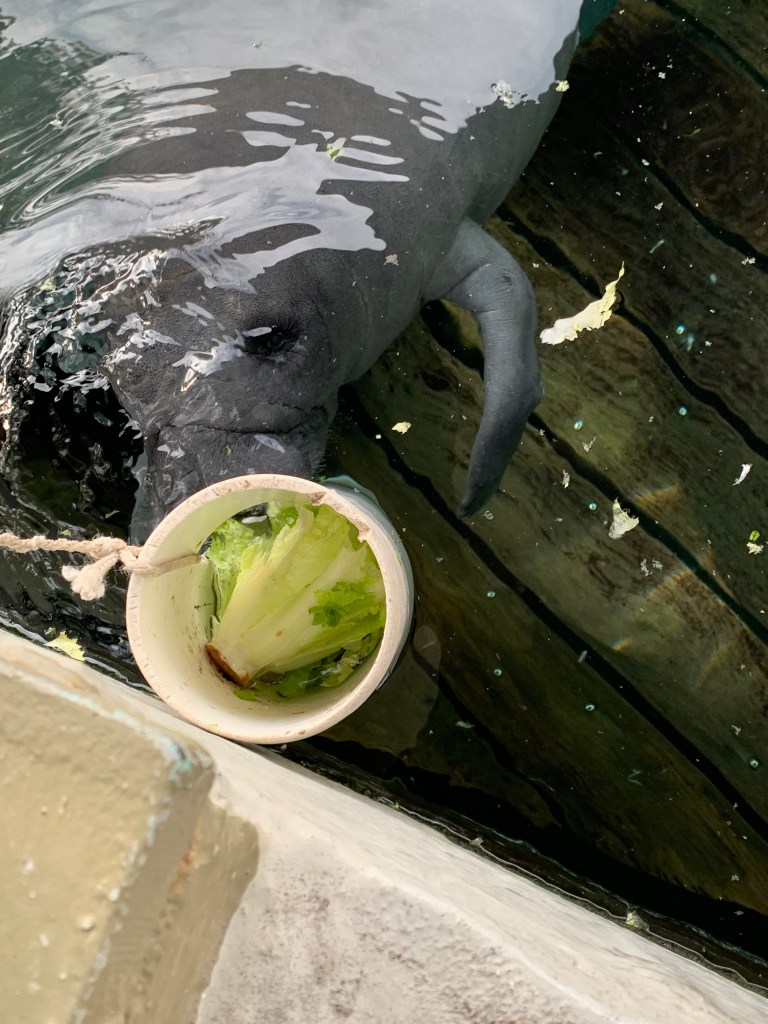
In the critical care pools, manatees have two feeding methods: one is free-floating romaine lettuce and one is a contraption that is filled with the lettuce and then lowered to the floor. Manatees eat plants from riverbeds so aren’t initially aware that something floating on the surface might be their food.

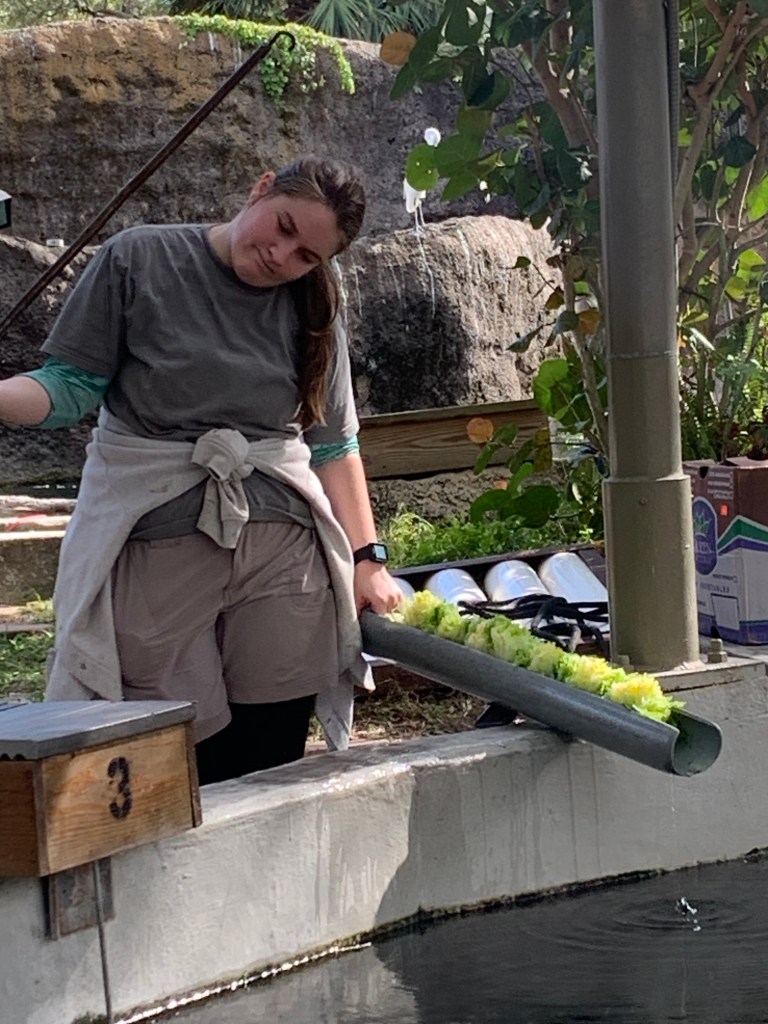
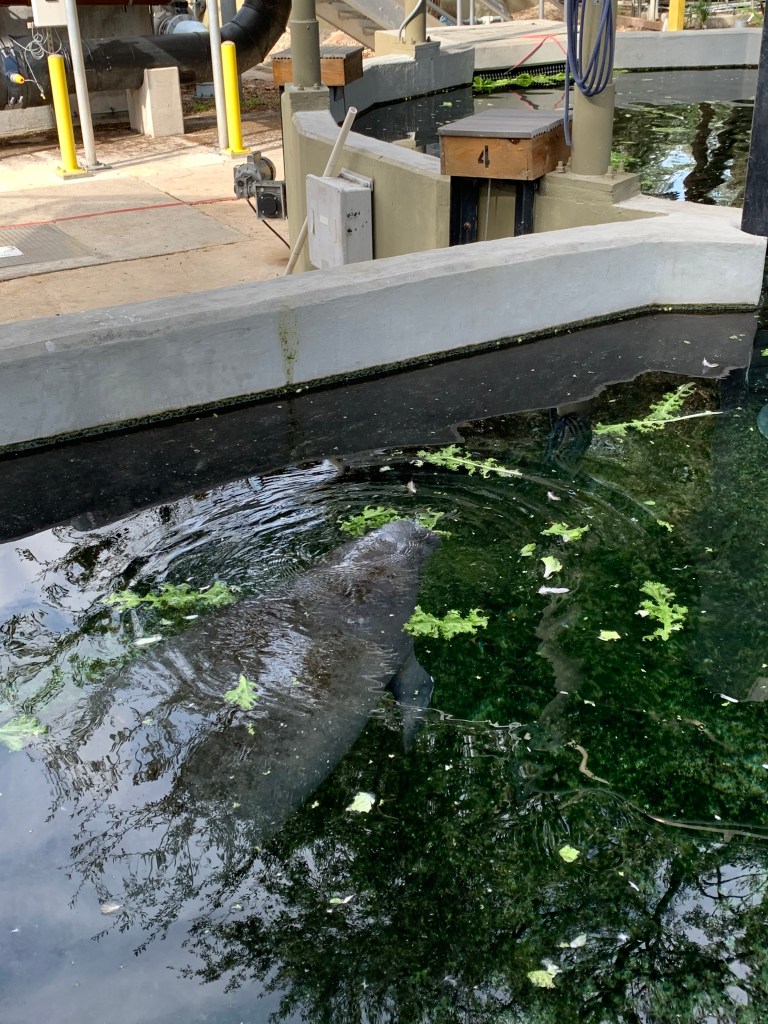
A manatee eats 10% of its body weight every day. For the critical care unit, that means 150-200 pounds of romaine lettuce per manatee each day. It costs them about $2,000 a day to feed the current 19 manatees.
It’s jarring to see big white gashes across the backs of these giant animals. I try not to imagine how long they suffered before someone reported them as injured so they could be rescued.
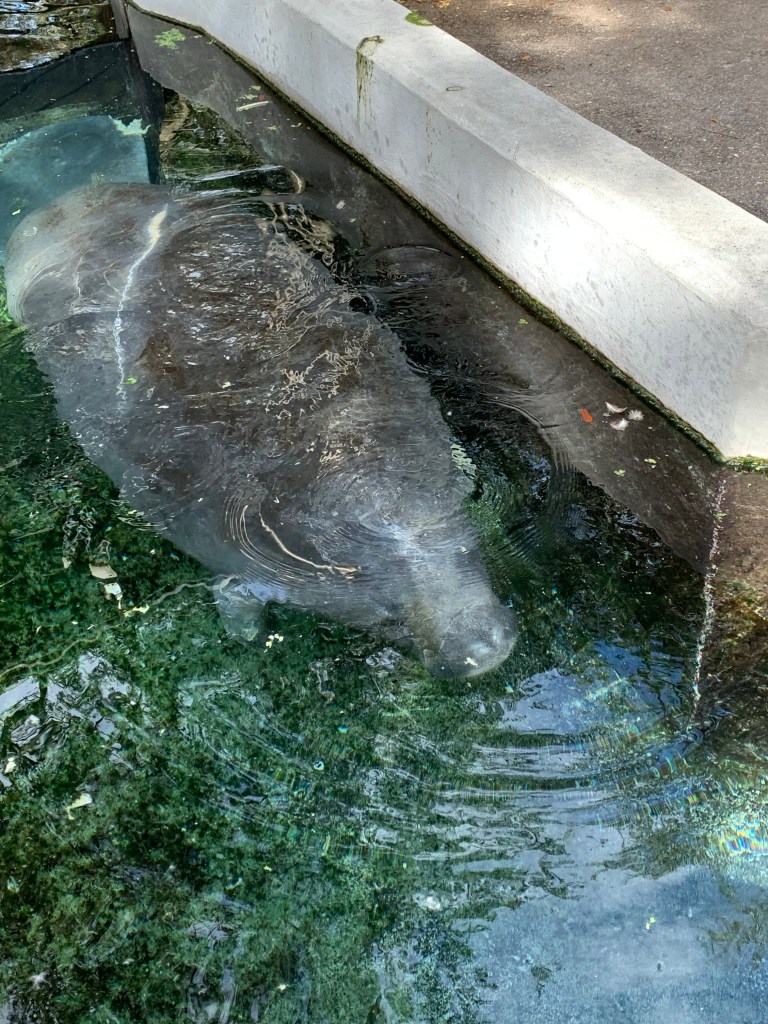
I never thought to look too closely at the manatees in the pool enclosure the public sees but that’s where the recovering manatees go from the critical care pools. This means they’re almost ready to be released back into coastal waters. If I go back in a few weeks to check, I hope to see they manatee with the giant gash gliding lazily past the window.
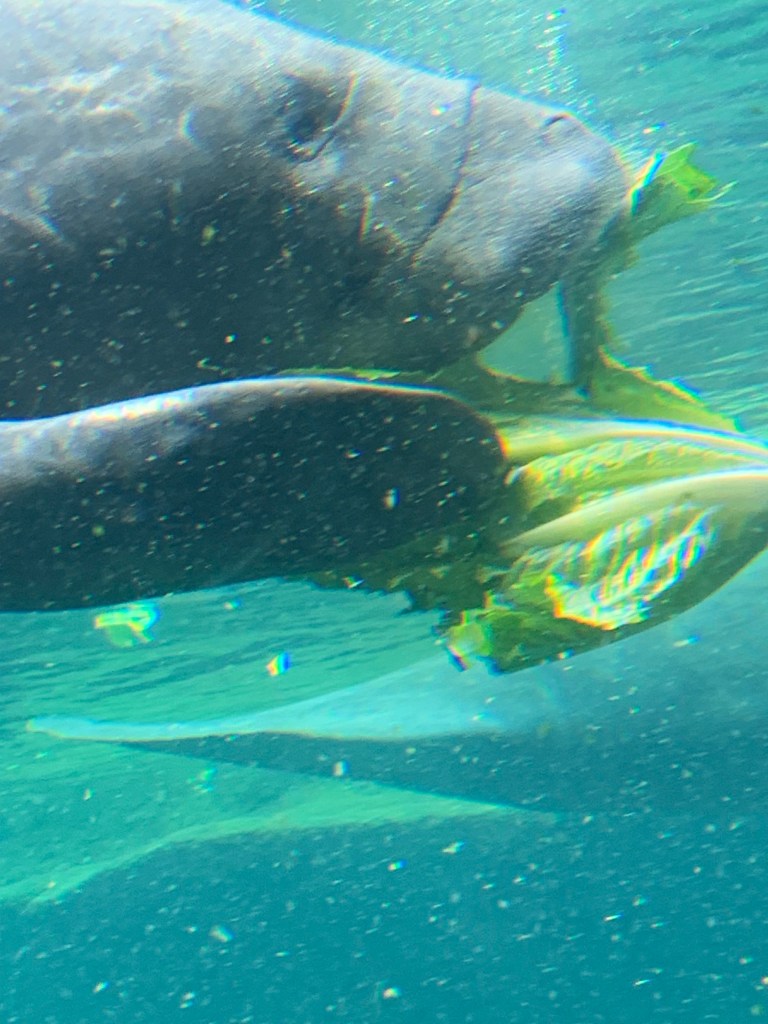
Once released, the orphans are tracked by the Florida Wildlife Commission for one year to make sure they’re thriving. The orphans are released in warm water sites with other manatees so they can learn migration routes their mothers were unable to teach them.
If booking the tour online, please be aware that you will have to pay an additional $47 to get into the zoo once you get there. The tour itself was only $20.
- David A. Straz Jr. Manatee Critical Care Center inside ZooTampa at Lowry Park – 1101 W. Sligh Ave.
- 813-935-8552
- http://www.zootampa.org
- Open 7 days a week from 9:30 AM – 5:00 PM
- You can see the manatees in the public viewing area any day and can observe the critical care facility from the walkway above. You will need to book a tour to be guided any closer than that and to be able to ask questions and get all the information about how the center works.
 Lisa Browder
Leave a comment