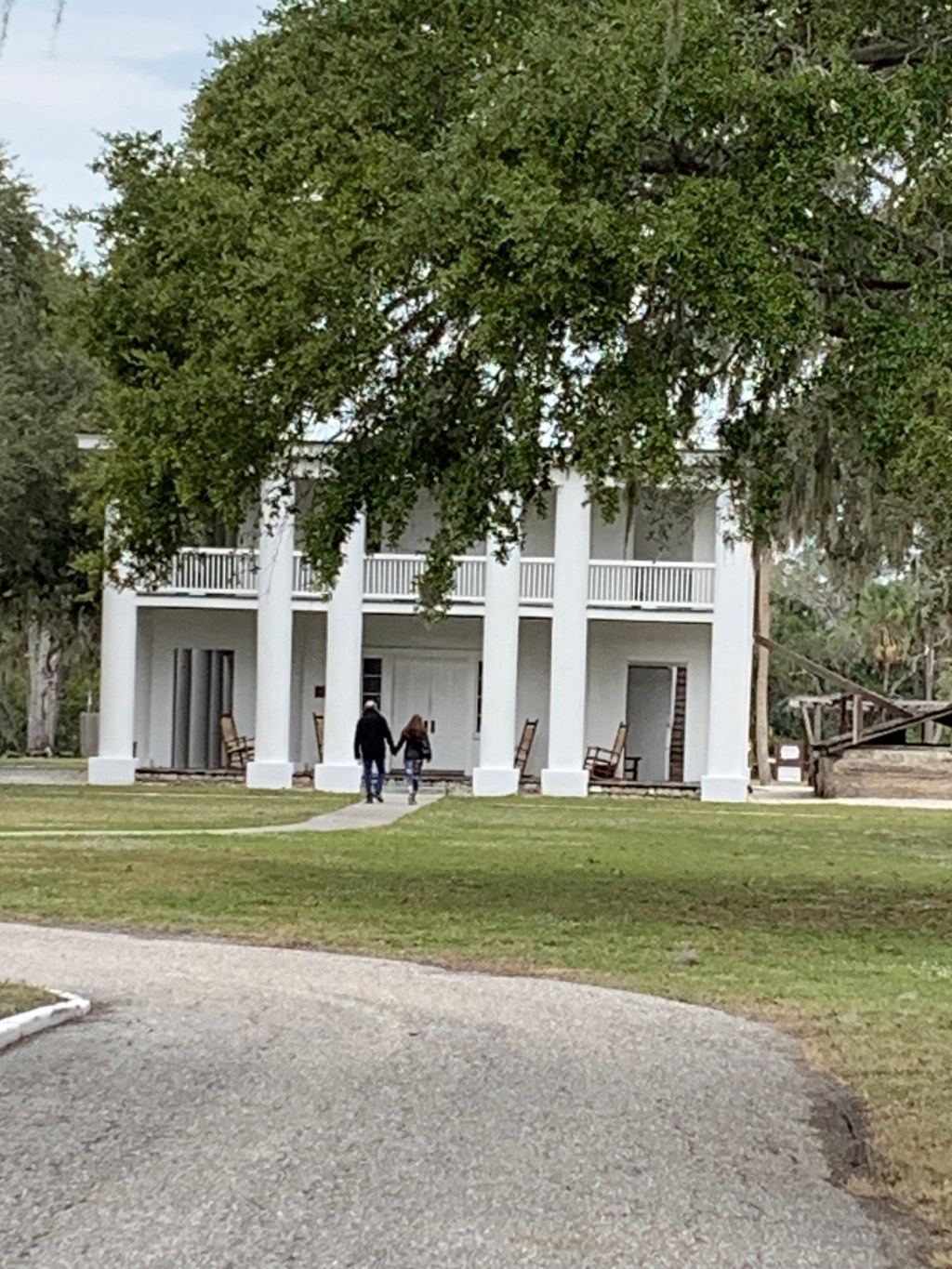
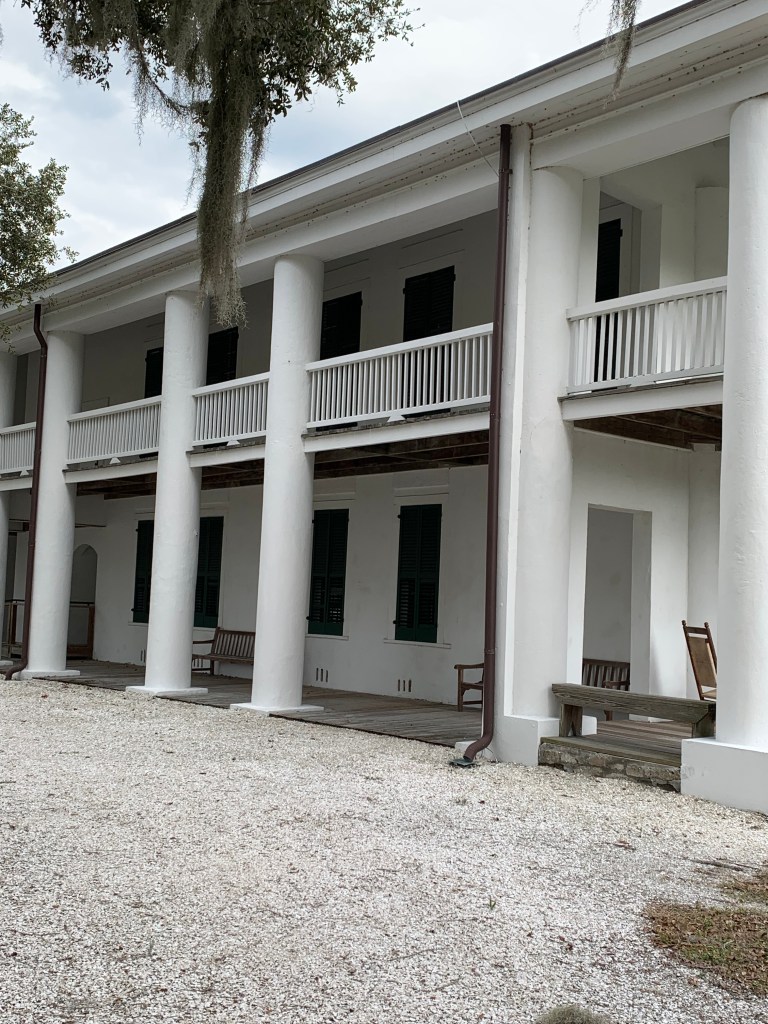
Major Robert Gamble, Jr., a bachelor, homesteaded 160 acres along the southwest coast at Ellenton, Florida, just inland from the Little Manatee River. He used slave labor to build a two-story, ten-room mansion over a six-year period. Begun in 1843, the Gamble mansion took six years to complete. Although Gamble used the acreage to start a sugar plantation, the economic woes of the Civil War caused the venture to flounder. Union troops burned the sugar mill to the ground. The property was sold in 1859.
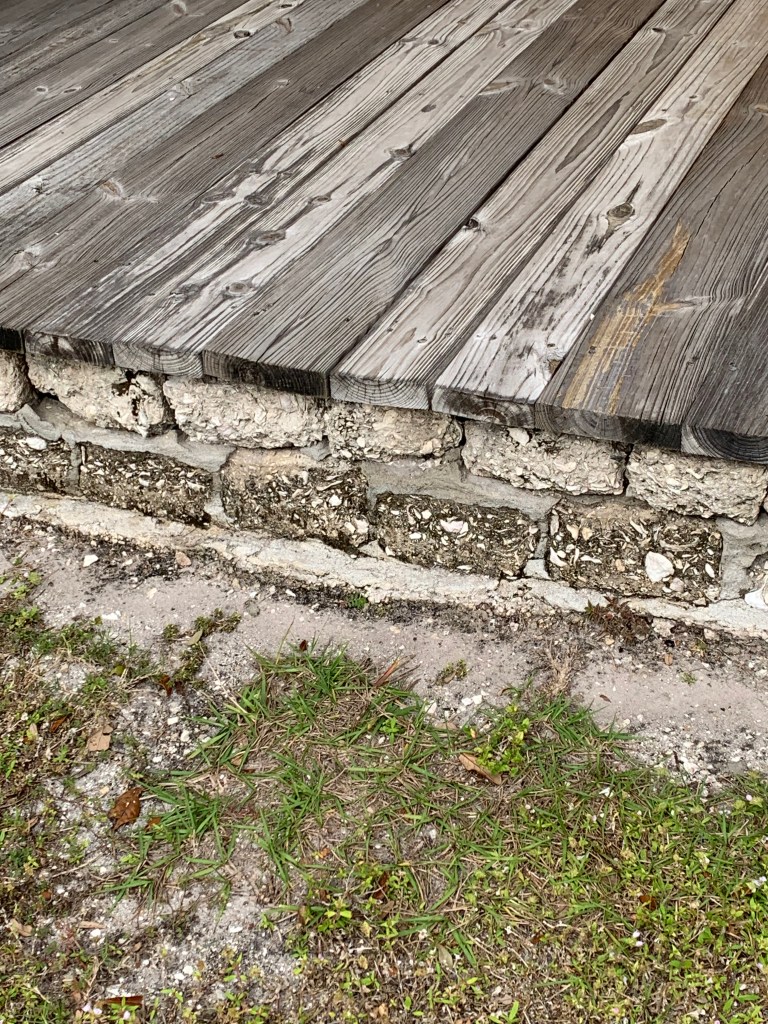
Although the wood on the porch is not original, the “tabby” underneath it is. Tabby is a type of concrete made when oyster shells are burned to create lye and then mixed with water, sand and ash. It’s far less sturdy than concrete and deteriorates over time.
The oyster shells were likely from Seminole middens (shell heaps) and were plentiful along the riverbanks.
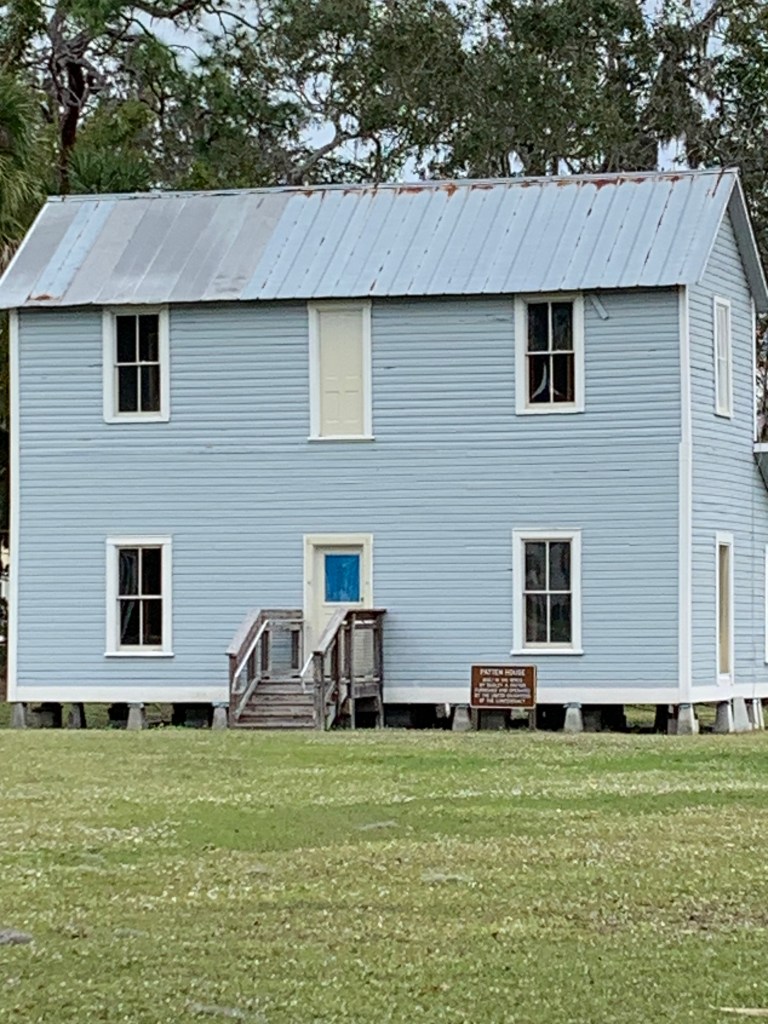
Subsequent owners, George and Ada Patten lived in the mansion for a short while but found it needed too many repairs. They built a Victorian home on the grounds and both properties have now been restored and are overseen by the United Daughters of the Confederacy.
That, in itself, gives me pause. It’s one thing to want to know about and remember your ancestors, but I get the impression from carefully worded descriptions of this organization online, that it’s perhaps a tad more than that. I’ll leave that rabbit hole alone. Moving on . . .
Our tour guide told us that the Confederate Secretary of State, Judah P. Benjamin, knowing he was likely to be tried for treason, hid out at the mansion until he could be spirited away by boat. I wonder if he roamed freely in these elegant rooms or if there’s some secret hidey-hole we weren’t shown? With the help of friends, he was eventually spirited away by boat and made it to England where he became a successful barrister.
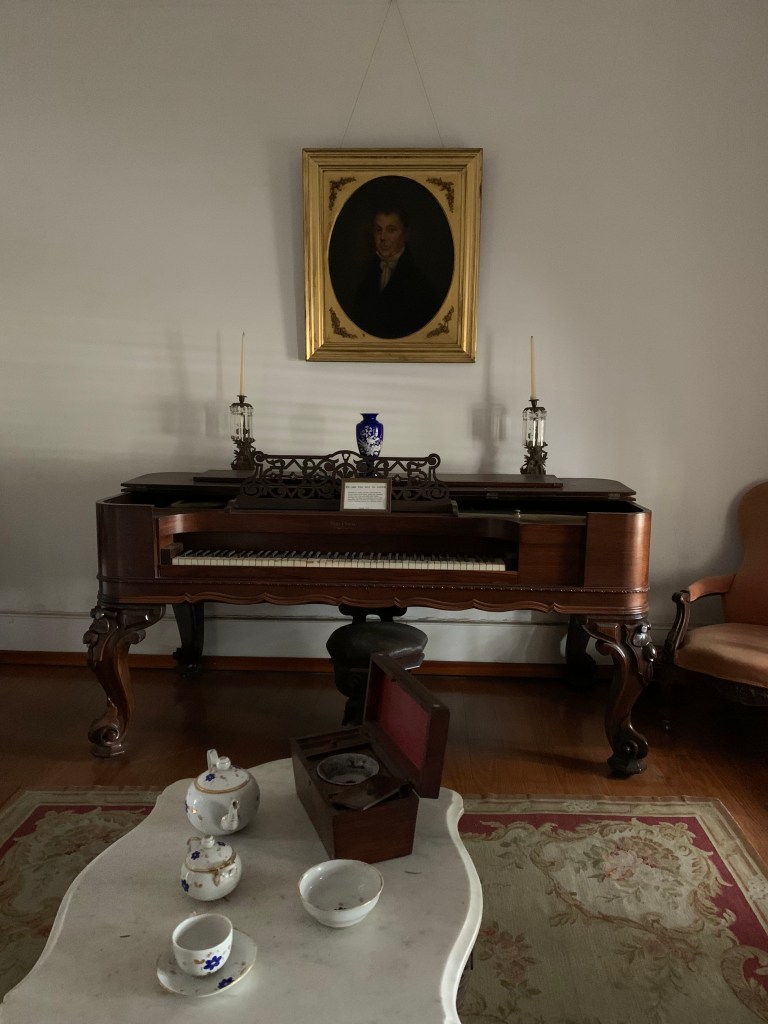
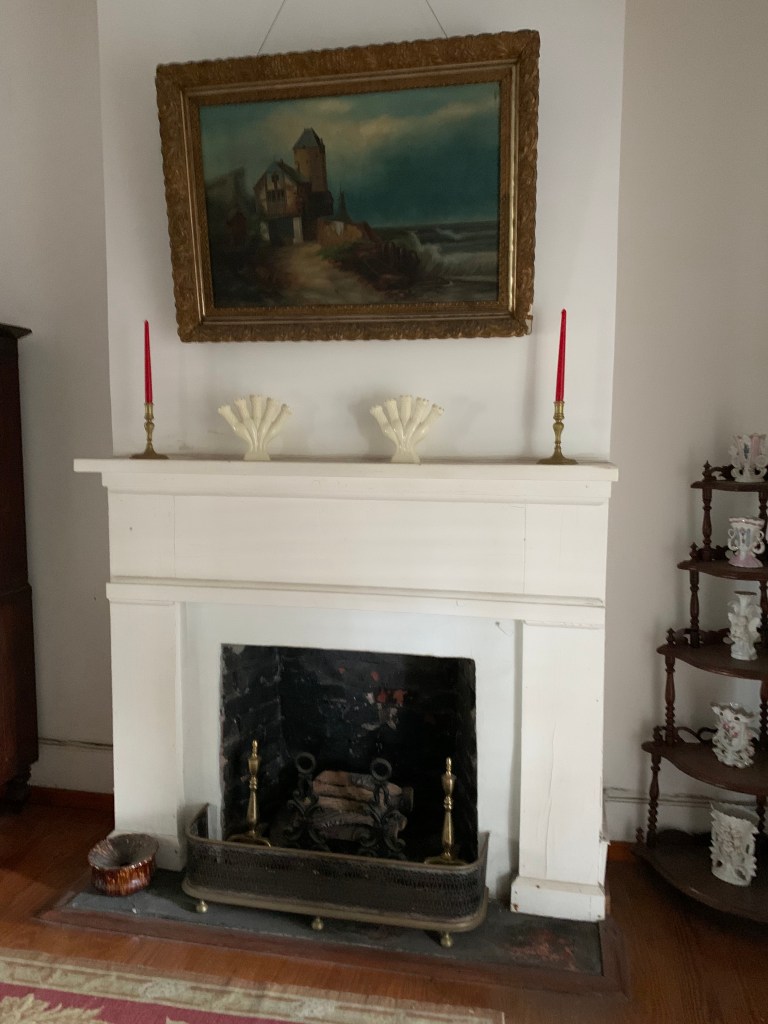
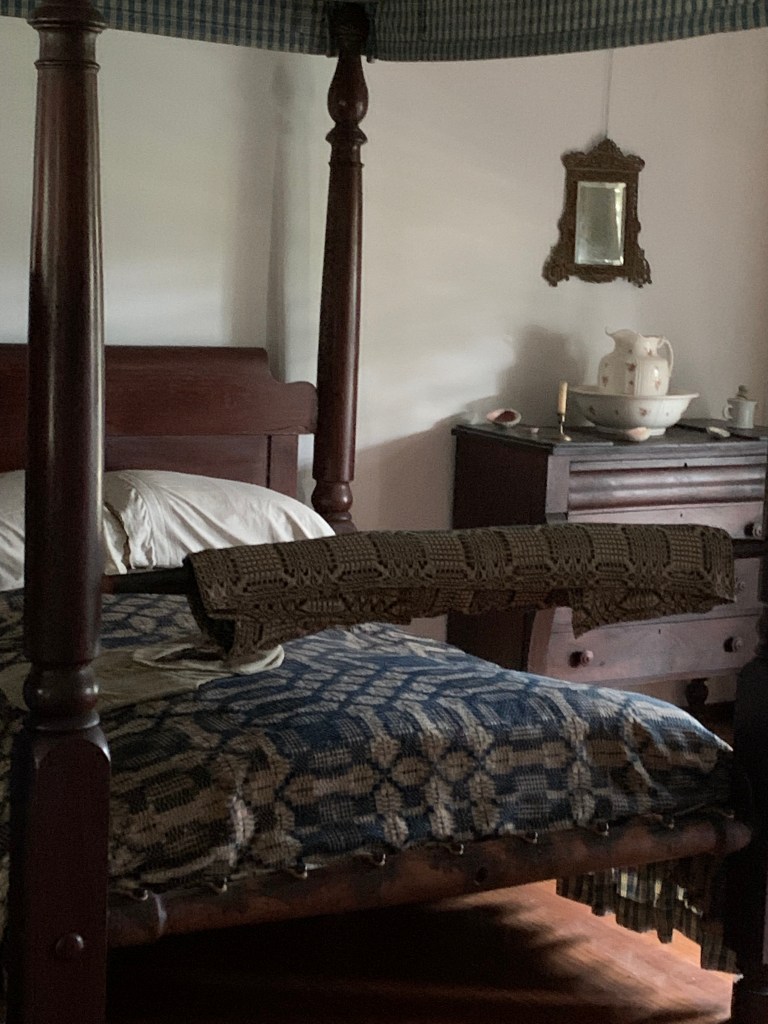
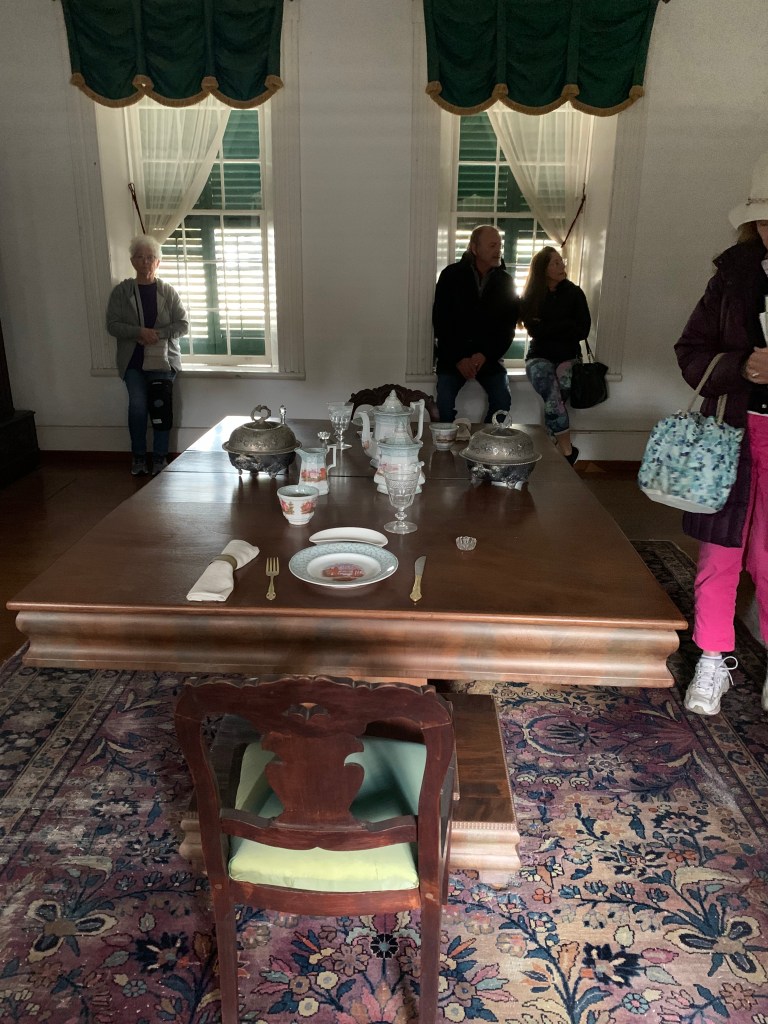
Although none of the furniture in the house is original, it is all from the same time period. The artifacts manage to tell a story of life during the Civil War. On the dining room table, placed upper right of the plate, is a small crystal container. It would’ve been filled with salt so Gamble’s visitors could liberally sprinkle it on their meals. There’s a loom for weaving cotton garments; a clothes press that looks like it would require several people to lift (so imagine spending hours ironing clothes each day); a coffee grinder; pots and pans by the kitchen fireplace; and a mattress paddle used to coax the lumpy mattress back into shape before the owner retired for the night.
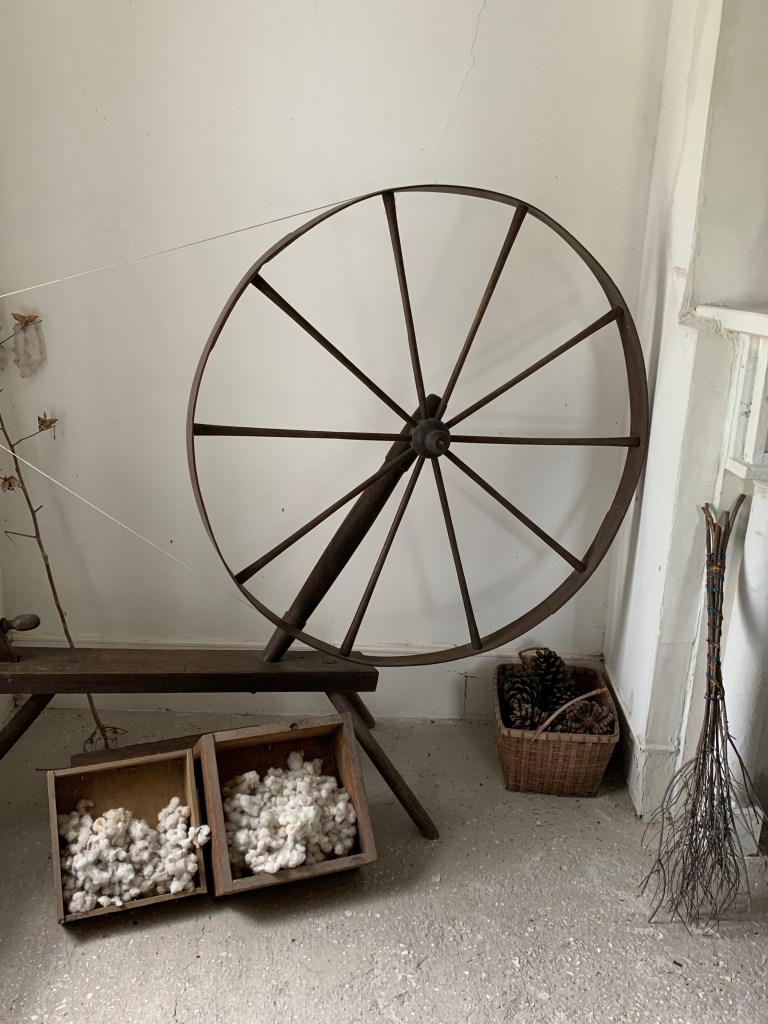

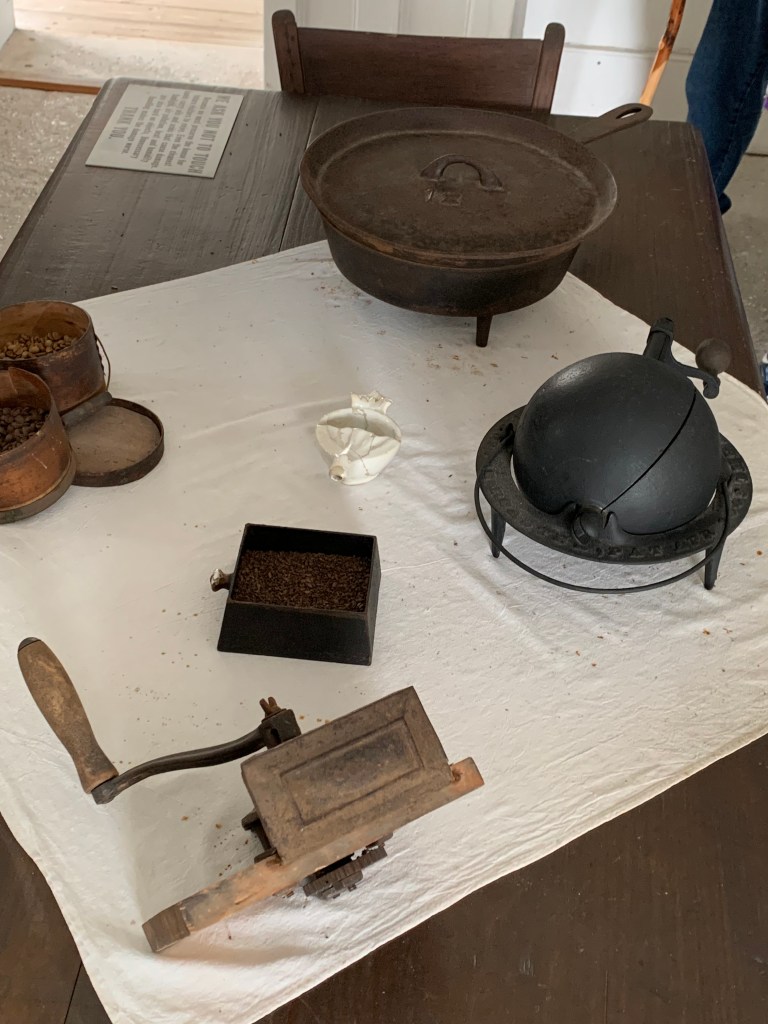


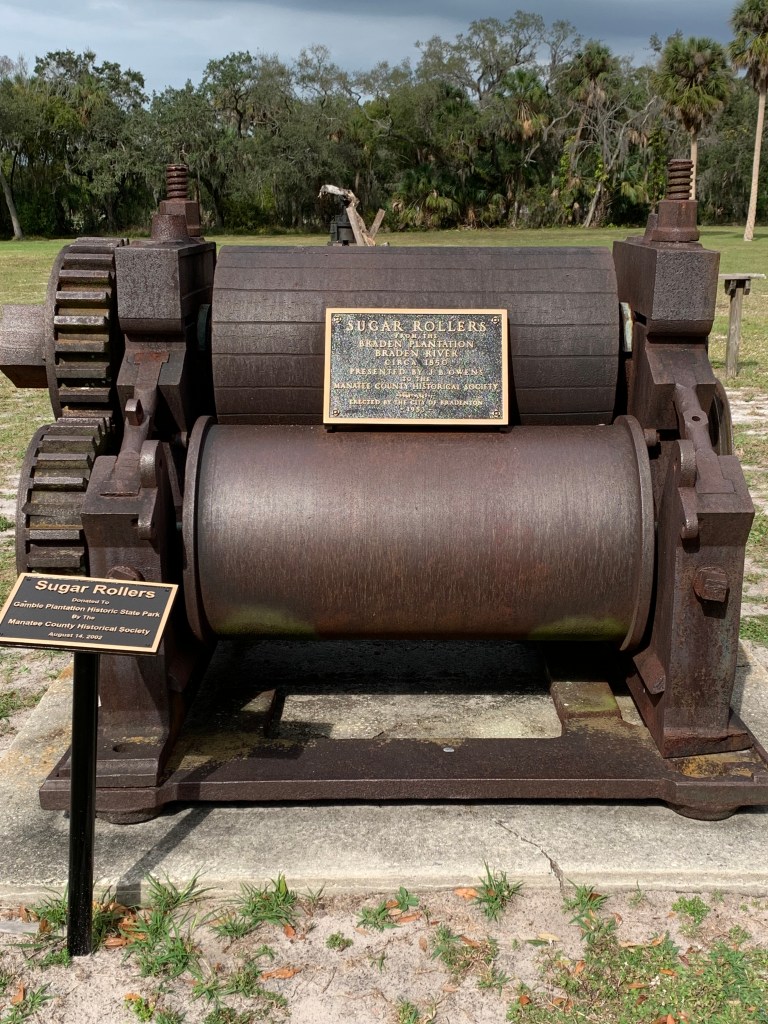
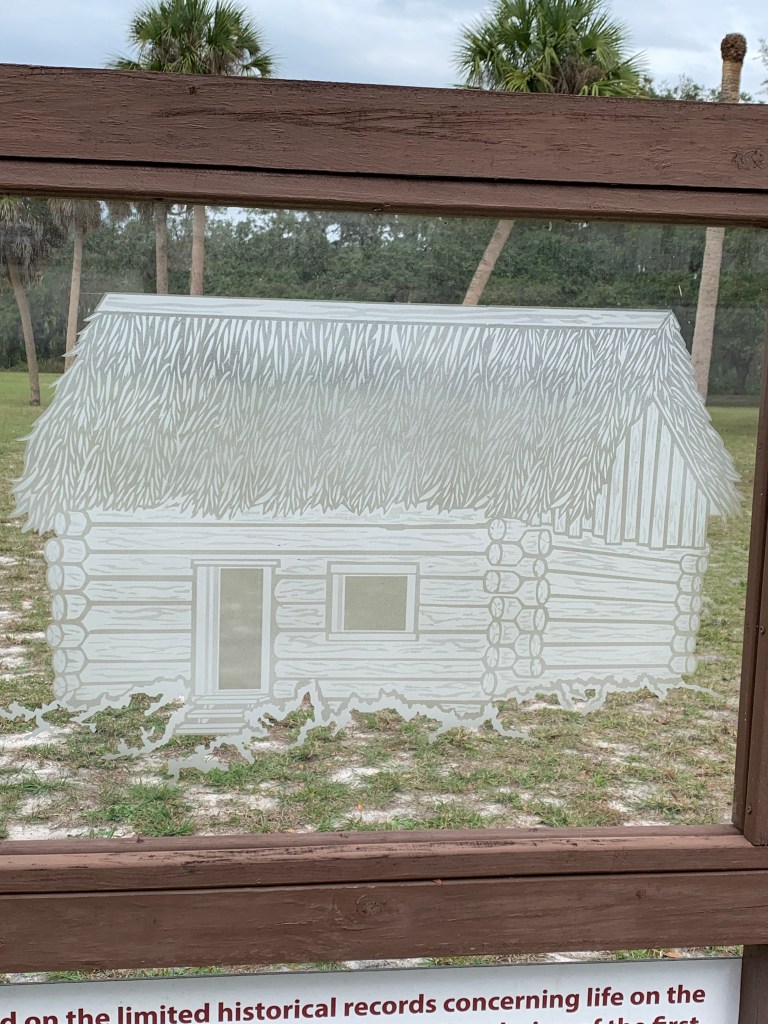
This was an interesting insight into life during the Civil War. There are no sugar mill remains at all but there’s part of a sugar press and a drawing of what the slave quarters probably looked like.

- Gamble Plantation Historic State Park
- 3708 Patten Avenue, Ellenton, Florida
- 941-723-4536
- http://www.floridastateparks.org
- Thursday – Monday 9:00 AM to 11:45 AM and 12:45 PM to 5:00 PM. Tours are at 9:30 AM, 10:30 AM, 1:00 PM, 2:00 PM, 3:00 PM and 4:00 PM
- Tours are $6 (you cannot explore the mansion without a tour guide)

 Lisa Browder
Leave a comment