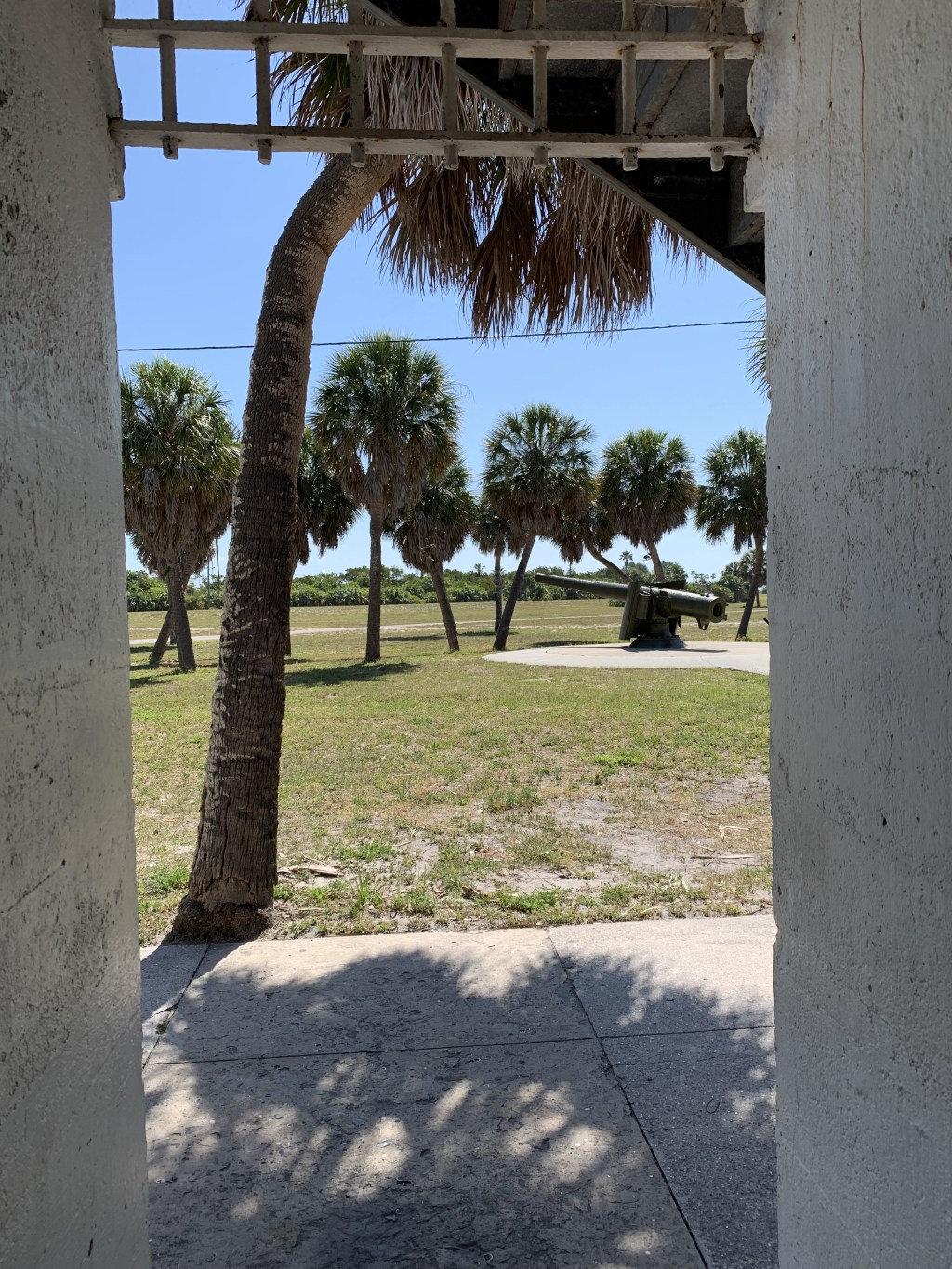
In 1849, a contingent of U.S. Army engineers (including Brevet Colonel Robert E. Lee), surveyed Florida’s coastline for possible defense areas. Subsequently, Mullet Key was recommended as a good location for a military installation, but at the start of the Civil War in 1861, nothing had been built.
Construction finally began in 1898 with America’s entry into the Spanish-American War. The new installation was named Fort DeSoto. It consisted of 29 buildings, including barracks, a guardhouse, hospital, bakery, stables, mess quarters, kitchen, administration office, storehouse and workshops.
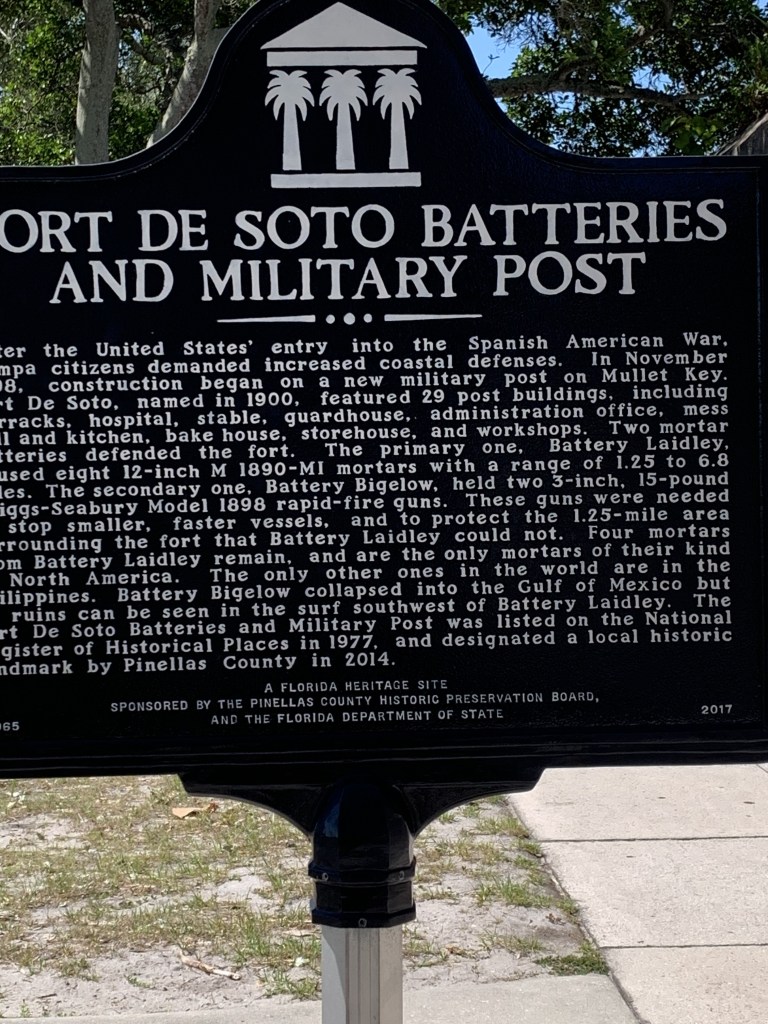

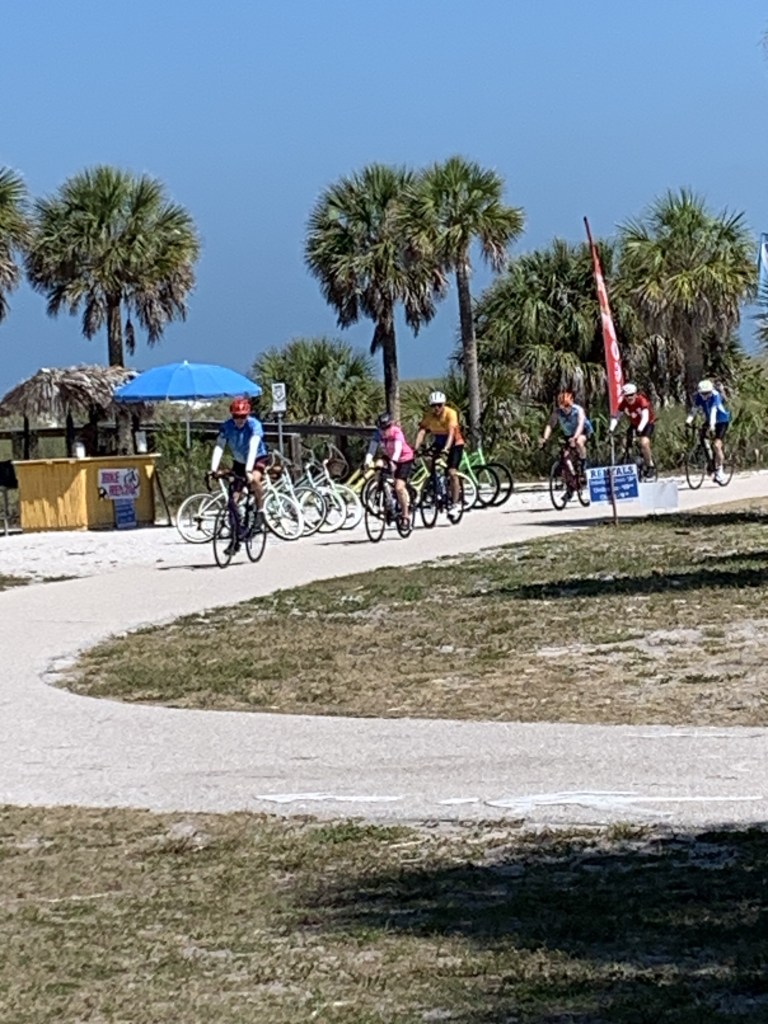
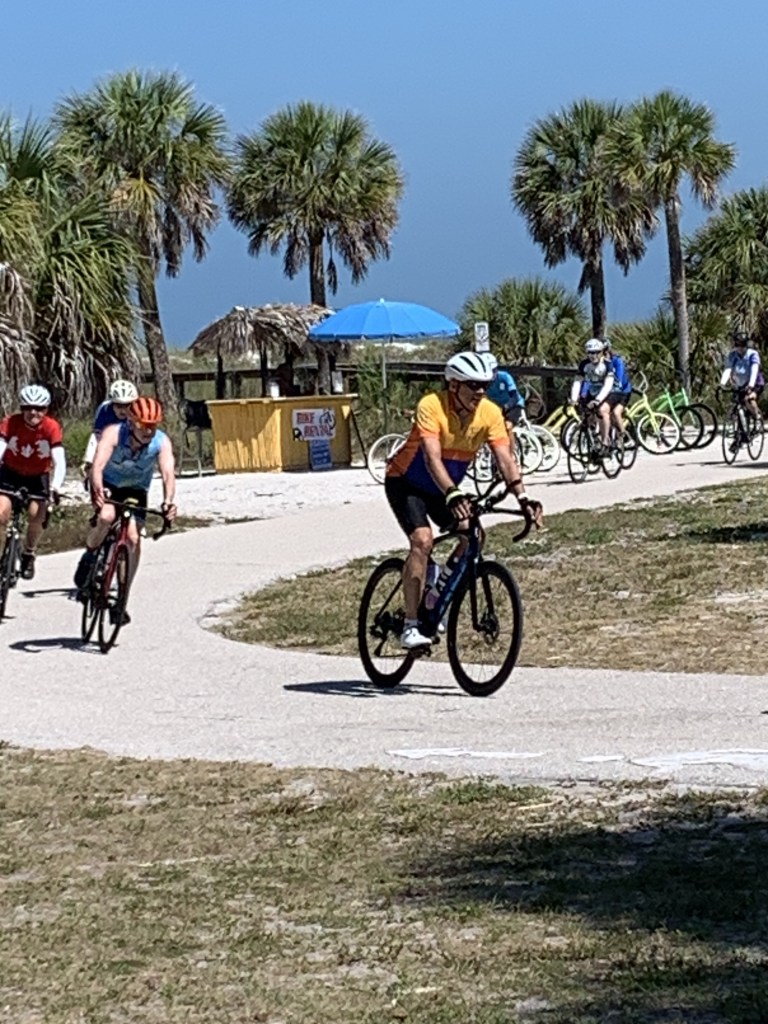
Not much remains today and for me, there wasn’t much to explore. Although there’s plenty of nearby beach and miles of bicycle trails, I don’t sunbathe and have no business biking at my age.

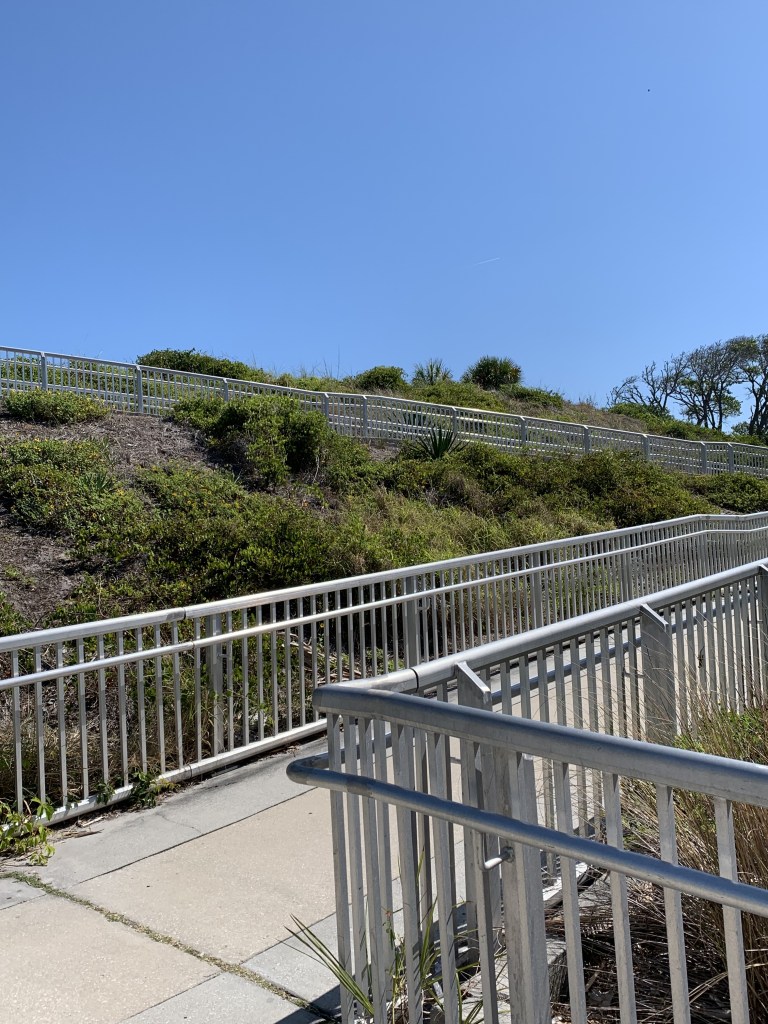
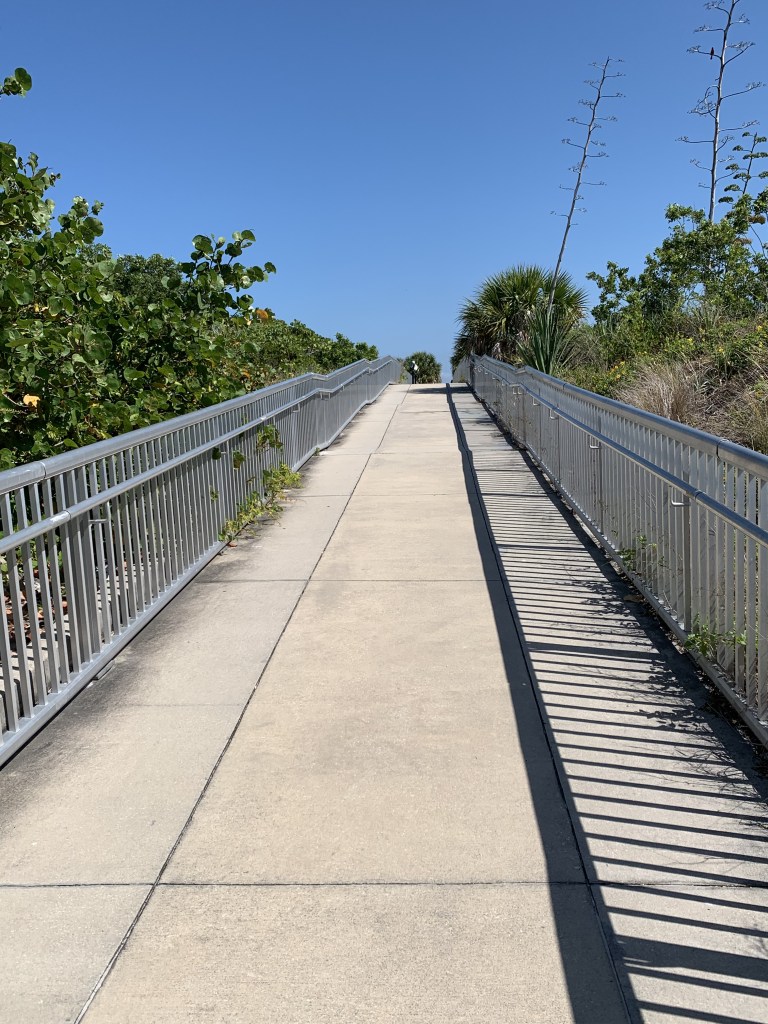
I started with the switchback ramp that led me over the top of the bunkers. The ramp might be a challenge if you have physical limitations, but the view is worth the effort. If I could paint, I’d have a dozen or more shades of blue on my canvas.

Back at ground level, I prepared to find all sorts of interesting “fort life” artifacts. Turns out, there was nothing much for me to see. If you like concrete and cannons, you’ll love it, but padlocked bunkers and gray exteriors didn’t hold my attention or interest.

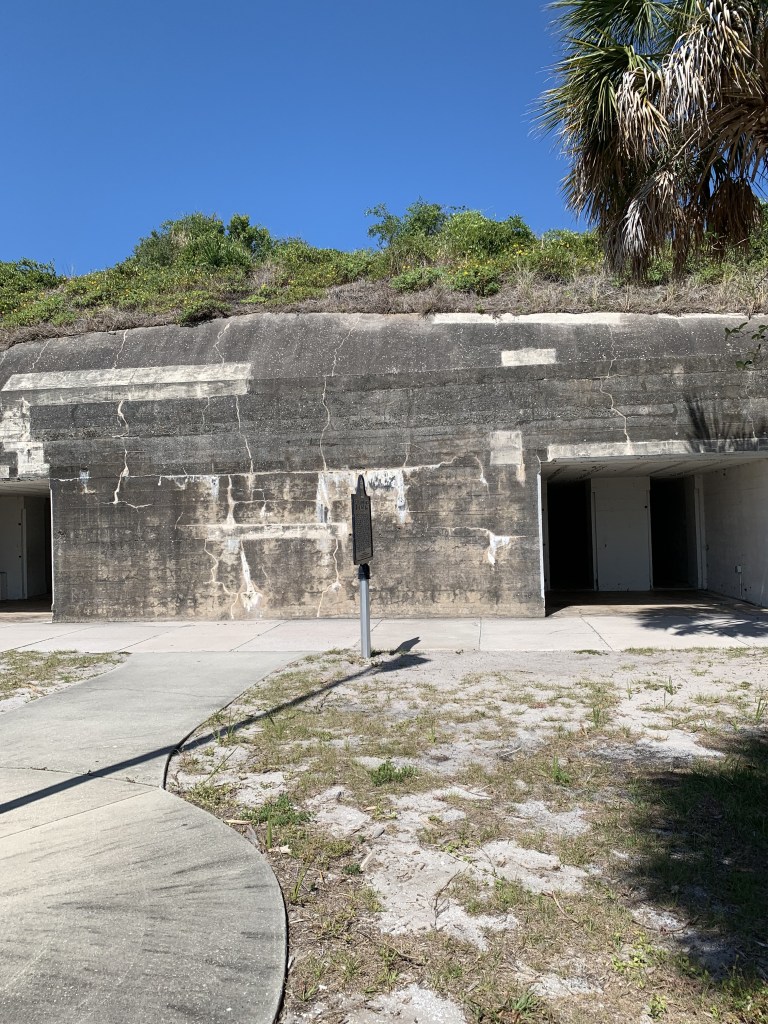

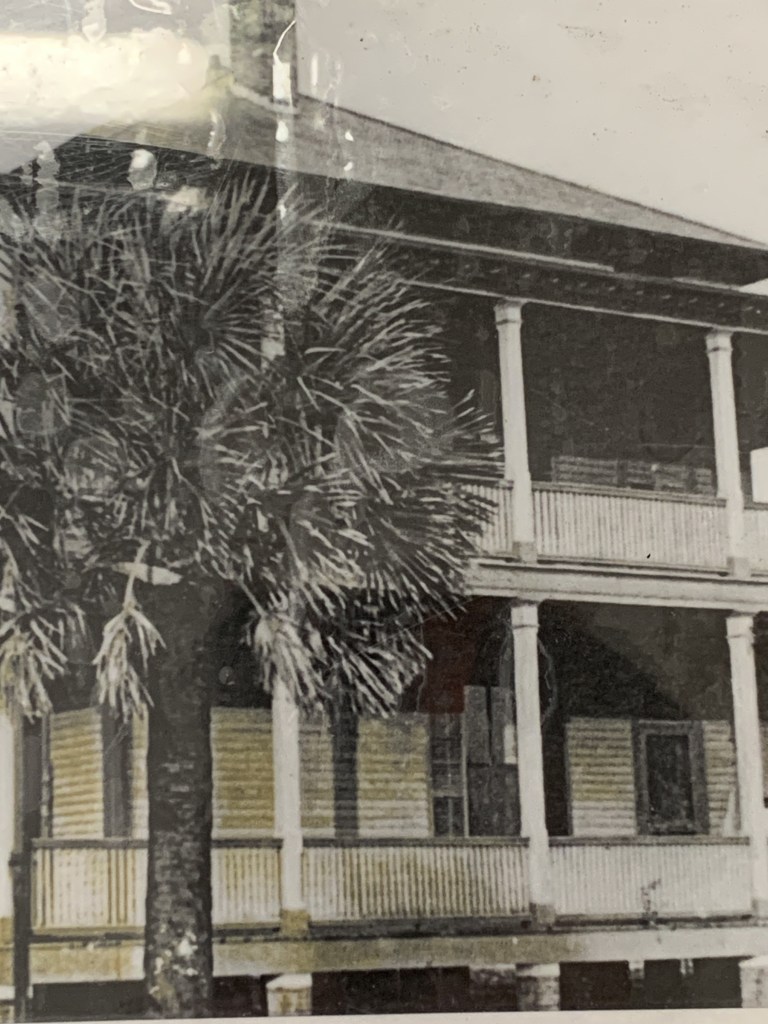
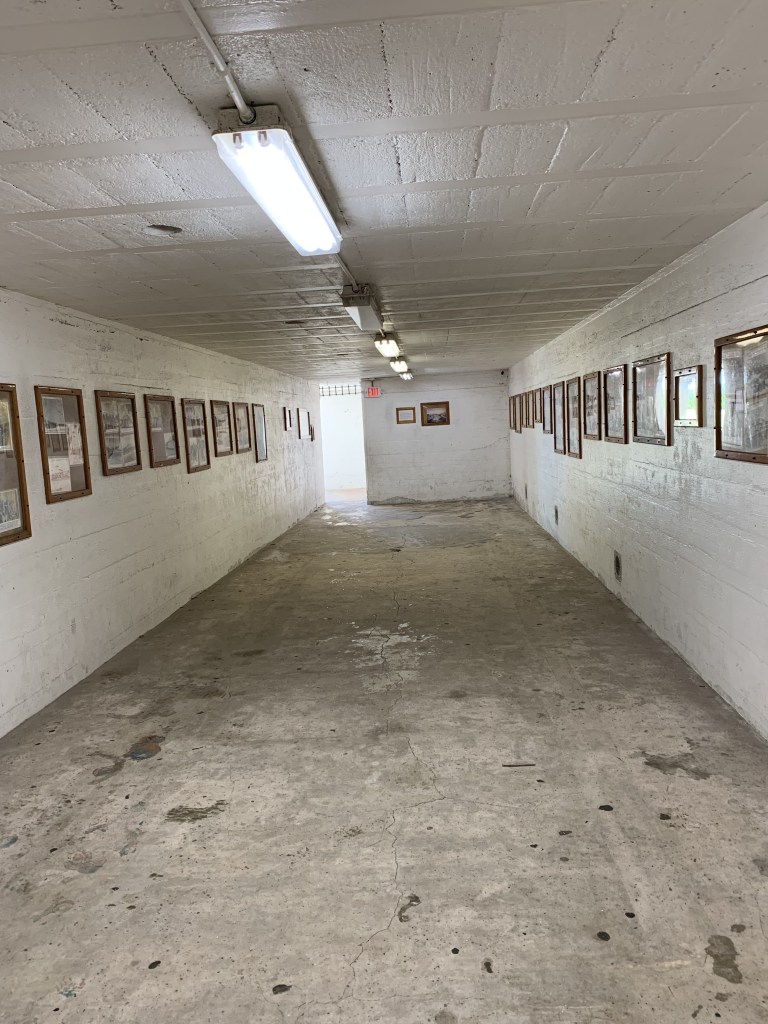
There was only one room open to the public. It had photos of many of the original 29 buildings. I had seen signs pointing out trails to those buildings, so I thought maybe that was where I’d get a taste of what 1900s fort life was like.
Since there was nothing else to see at the bunkers, I headed for the Quartermasters Museum on the far side of the parking lot and the trails beyond it.
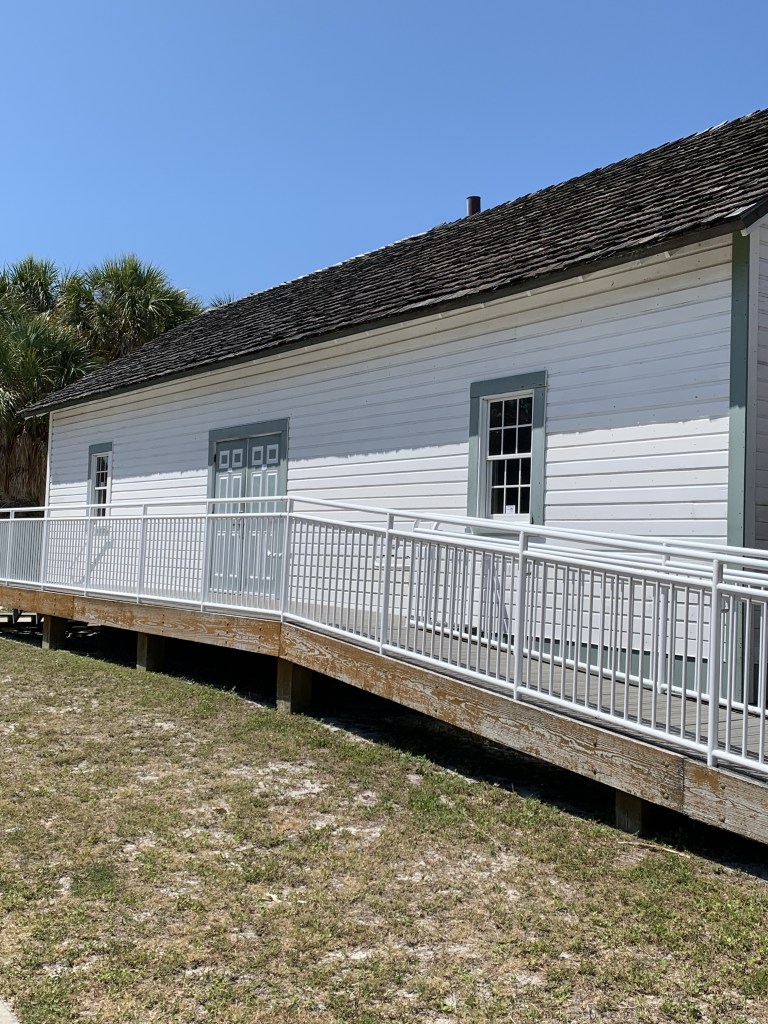
I walked up the ramp, grasped the doorknob, and found the building locked up tight. What’s the point of a locked museum?
Things were not going well.
I turned my attention to those trails at the far end of the museum. I love exploring old architecture and the accoutrements of everyday life from bygone eras. I hoped this would be the saving grace to an otherwise wasted excursion.
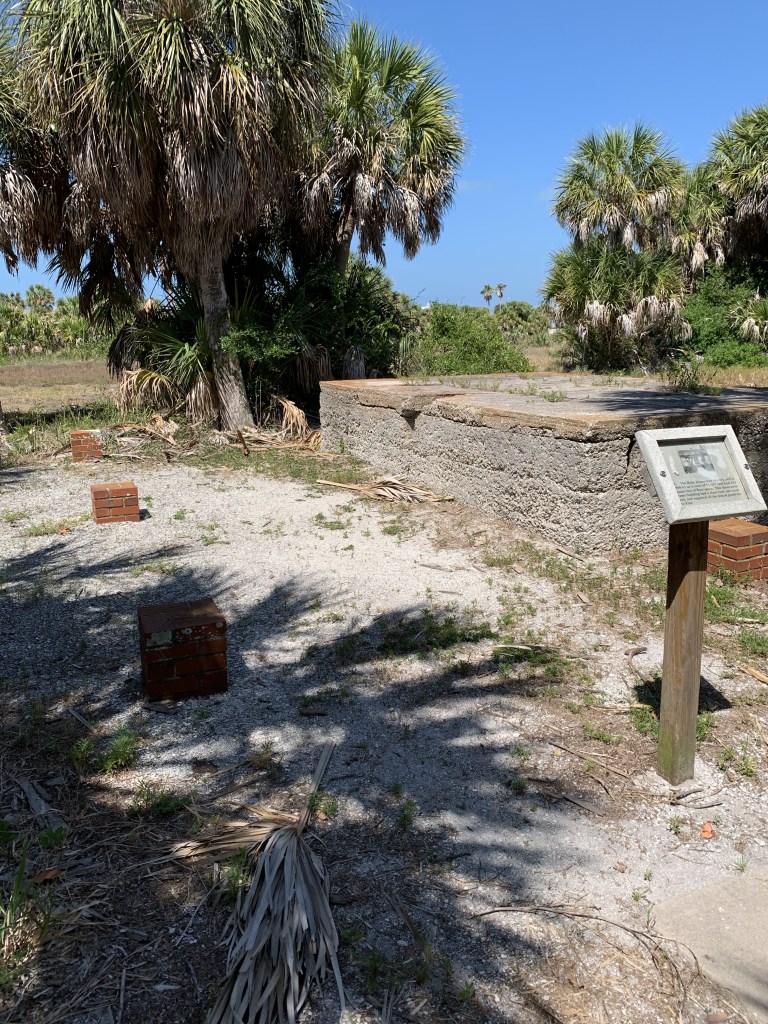
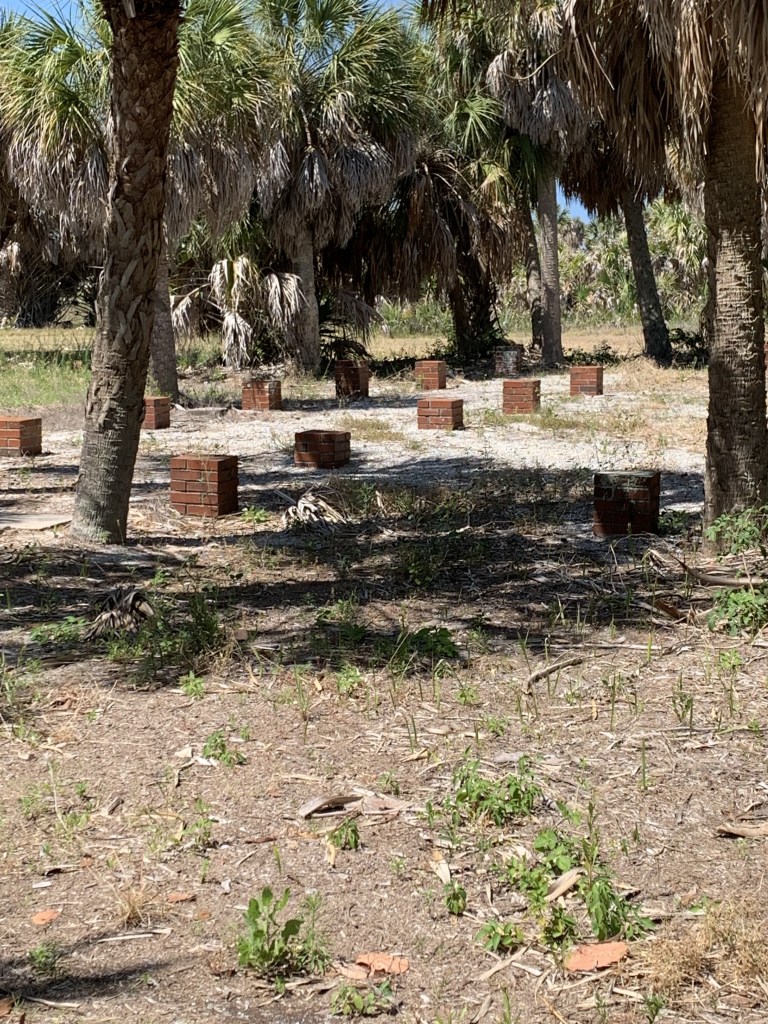
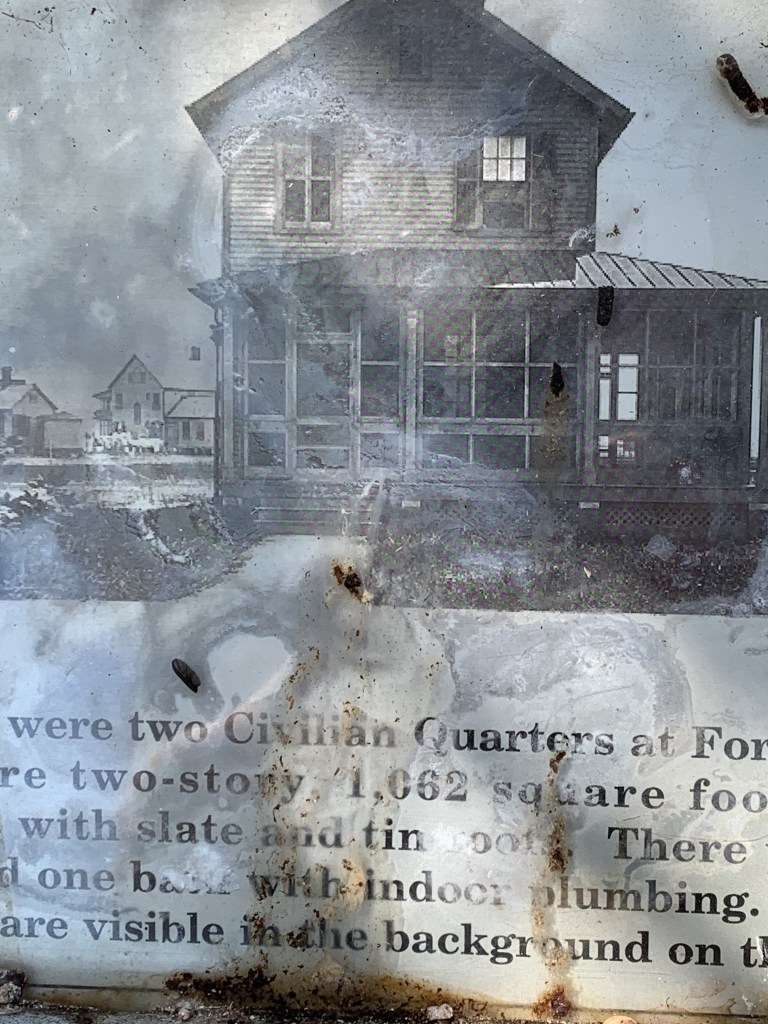
But no – no furniture, no closets with period clothing, no pots and pans, hell, not even walls. The only thing left from any of the original buildings was the brick and/or concrete foundations. Each site had a plaque with a worn and yellowed photo of what had existed there once upon a time and that was it.
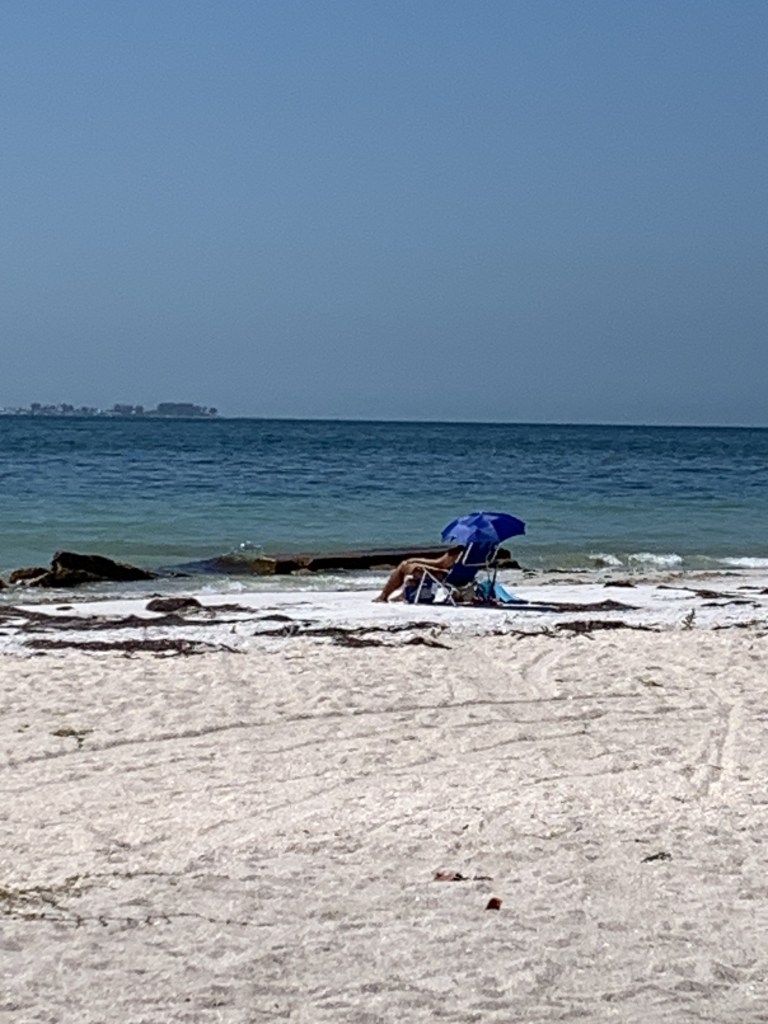
I stepped off the end of the trail and walked down to see the beautiful beach beyond. I may not be a sunbather, but the views of the water were worth the walk . . . and maybe even the entire trip.
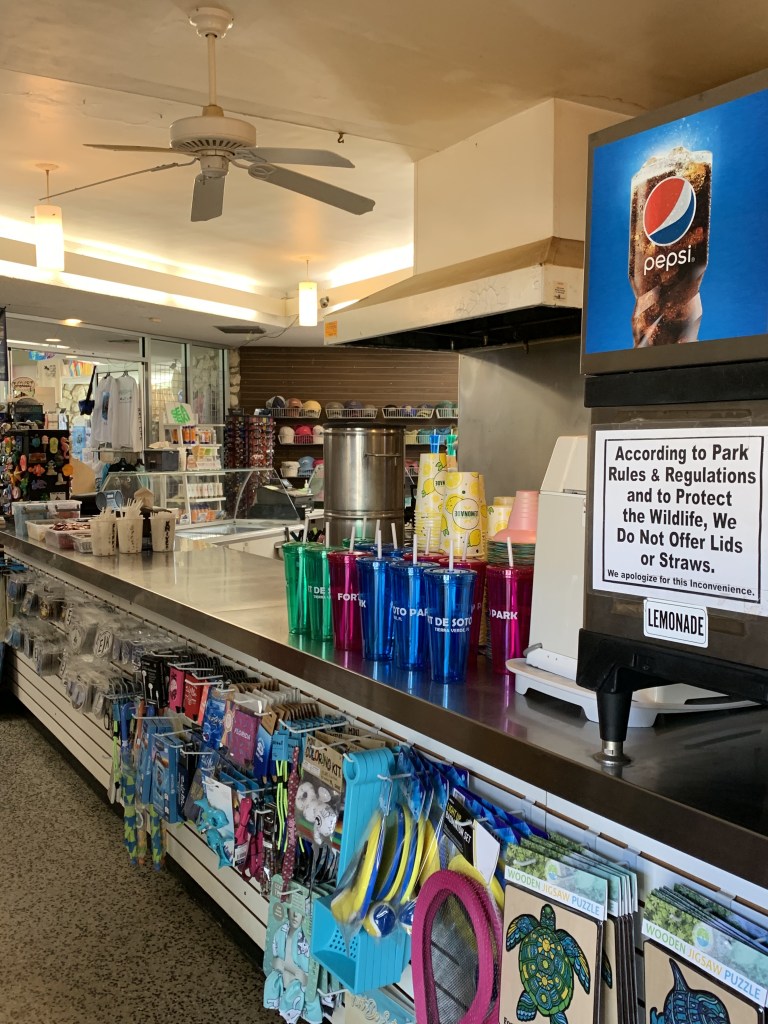
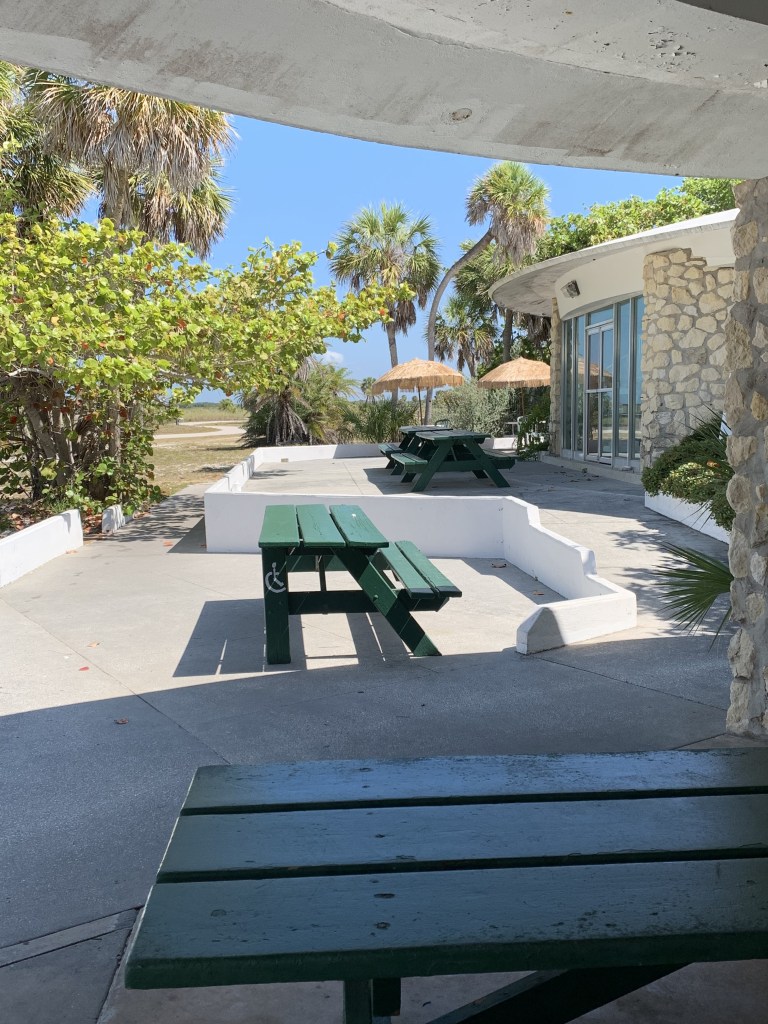
While there, be aware that Fort DeSoto also has a snack bar, gift shop, and shady outdoor space that would be a great spot for a picnic. It’s near the bicycle rentals and the beach.
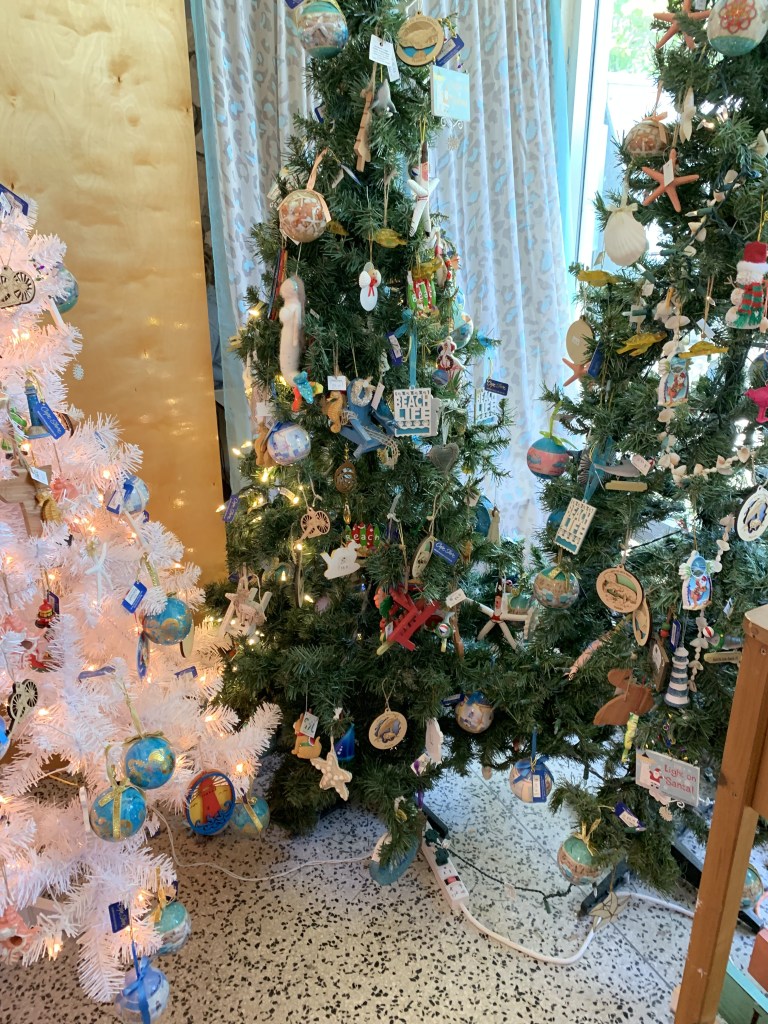
And if you like planning ahead, you can pick up your holiday Christmas tree while you’re there – even in May.
Overall, I found Fort DeSoto to be a disappointment. But, as I said, if you’re into cycling or leisurely family picnic sites with great beaches, nearby bathrooms, food and water, and no alligators, this might be the spot for you.
- 3500 PInellas Bayway South, Tierra Verde, Florida
- http://www.fortdesoto.com
- Hours: Open 7 days a week from 7:00 AM – Sunset
- Wheelchair accessible
 Lisa Browder
Leave a comment