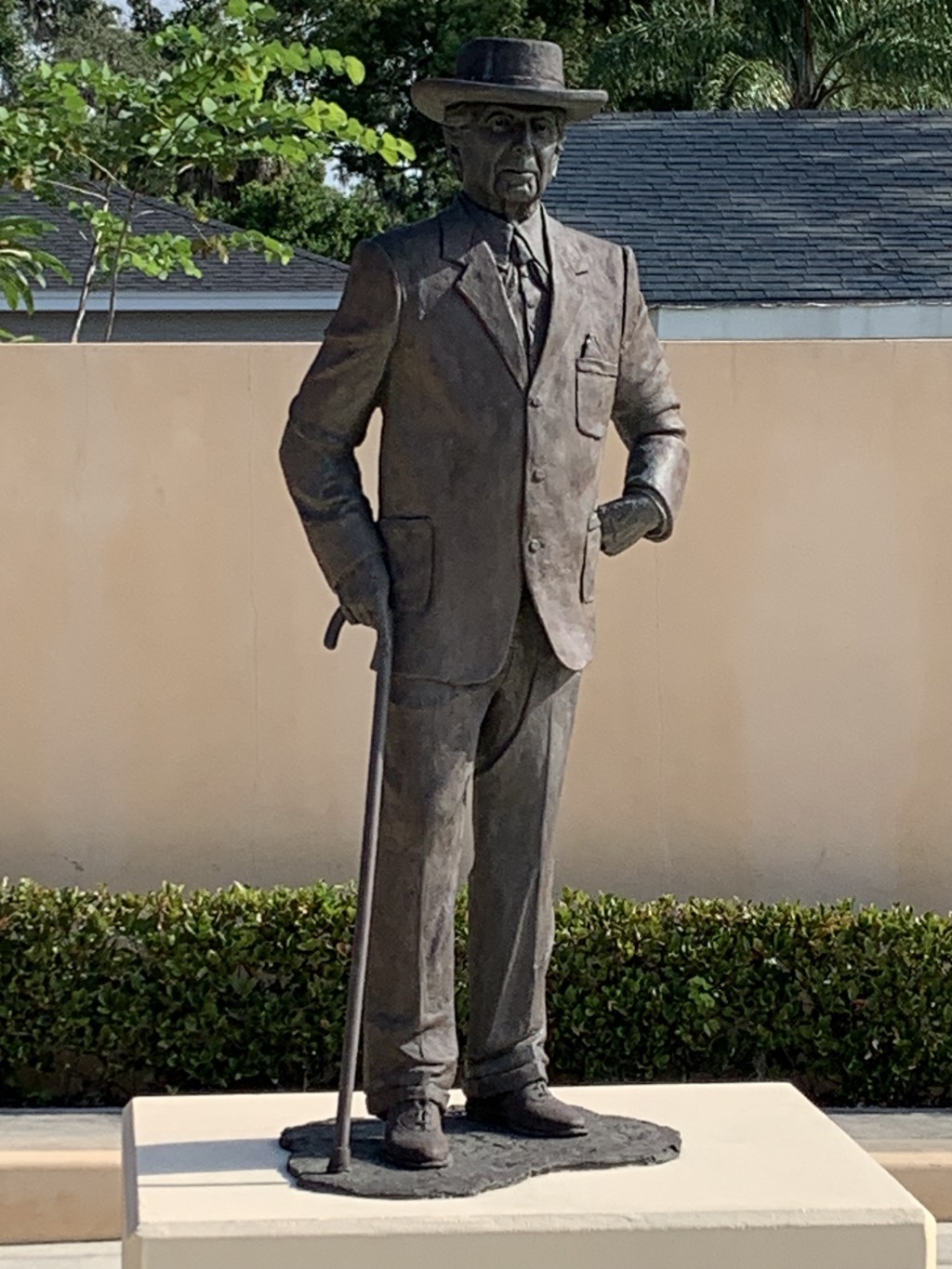
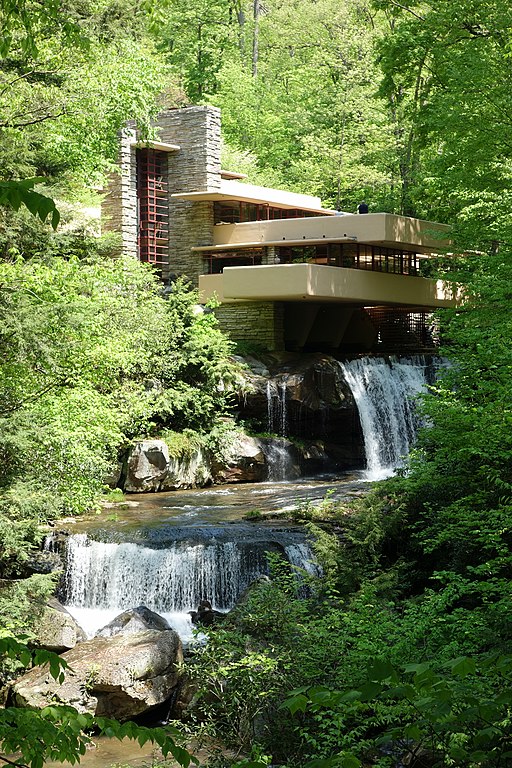
I have no idea how or when I was first introduced to Frank Lloyd Wright’s architecture. I’m sure the first thing I ever saw was Fallingwater in Mill Run, Pennsylvania. Coming from a small town where houses were a series of right angles perched on a spit of grass, with a tree here and there, and perhaps one or two manicured flowerbeds flanking the front entrance, the whole concept of a home that looked like it was etched into the landscape without disturbing a single blade of grass, was mind blowing.
I loved it. I wanted one just like it.
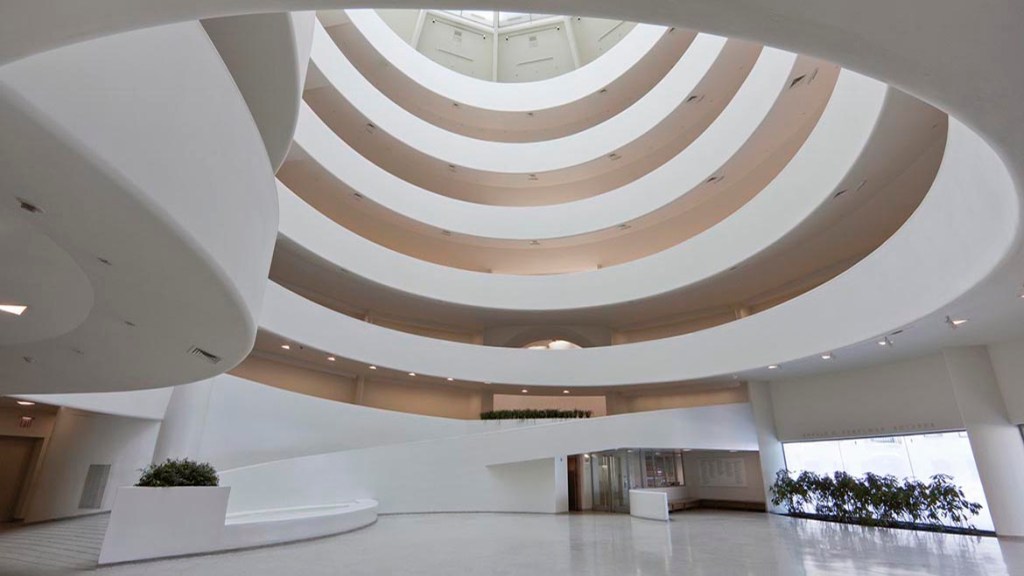
And then along came the Guggenheim Museum in New York with its sensuous, curvaceous lines. I couldn’t wait to see it in person one day. Pictures are nice but details “up close and personal” are far more revealing about an artist’s creation process and vision.
Decades later, I learned that back in the 1930s, Wright was commissioned to create 18 structures on the campus of Southern Florida College in Lakeland. Thirteen were eventually completed. And since I’m now a Floridian, I booked a tour.
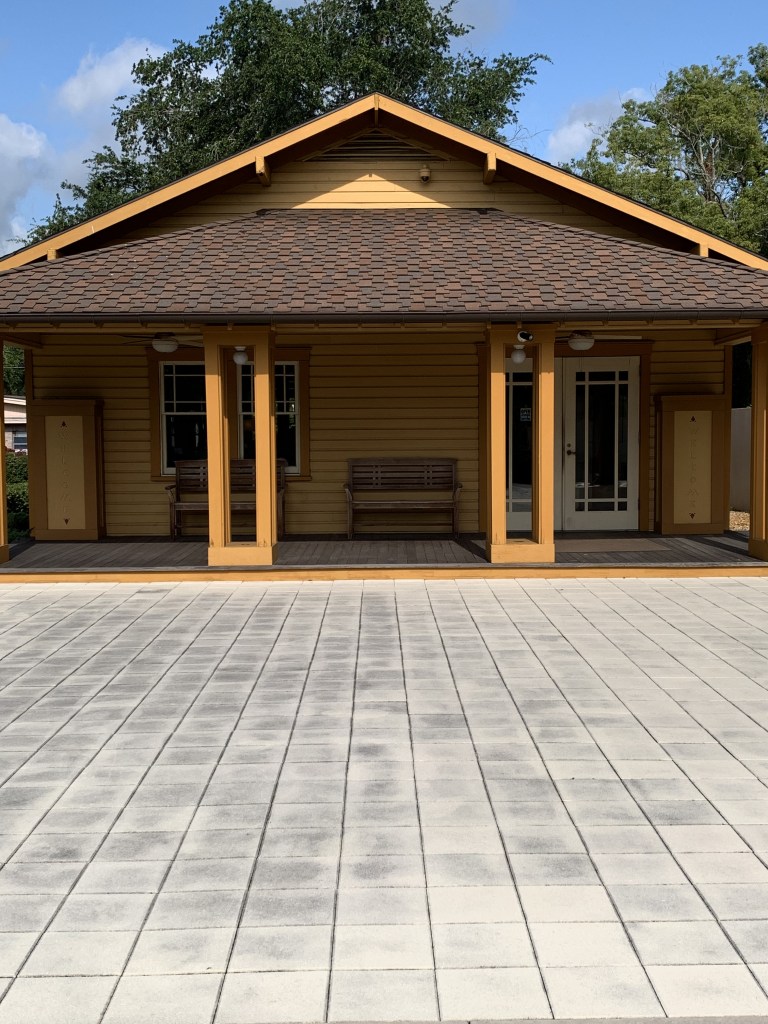
The first stop was the Visitor Center. It’s oddly difficult to find. The signage isn’t great and it’s set back on a lawn with a front door that’s sideways to the street.
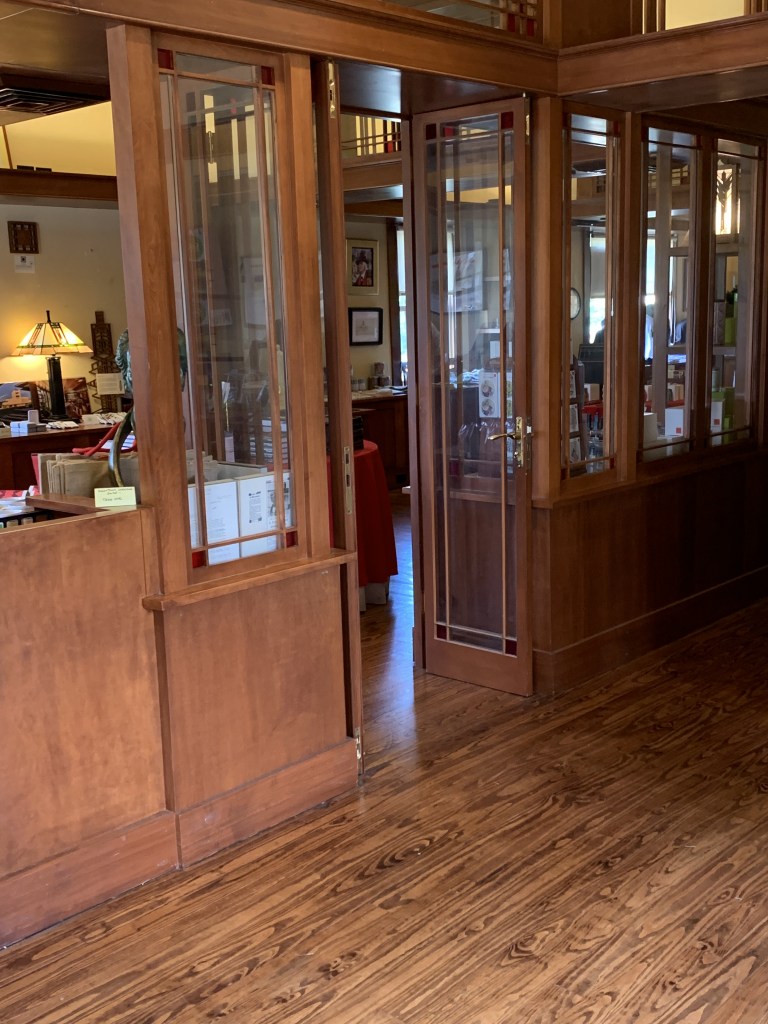
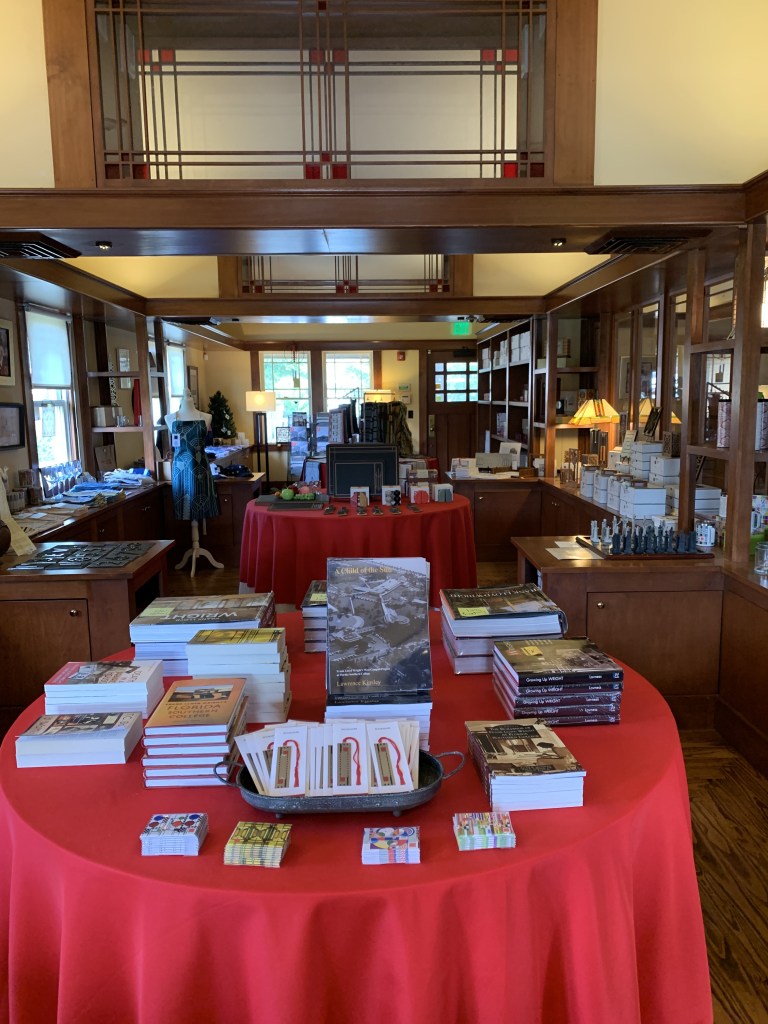
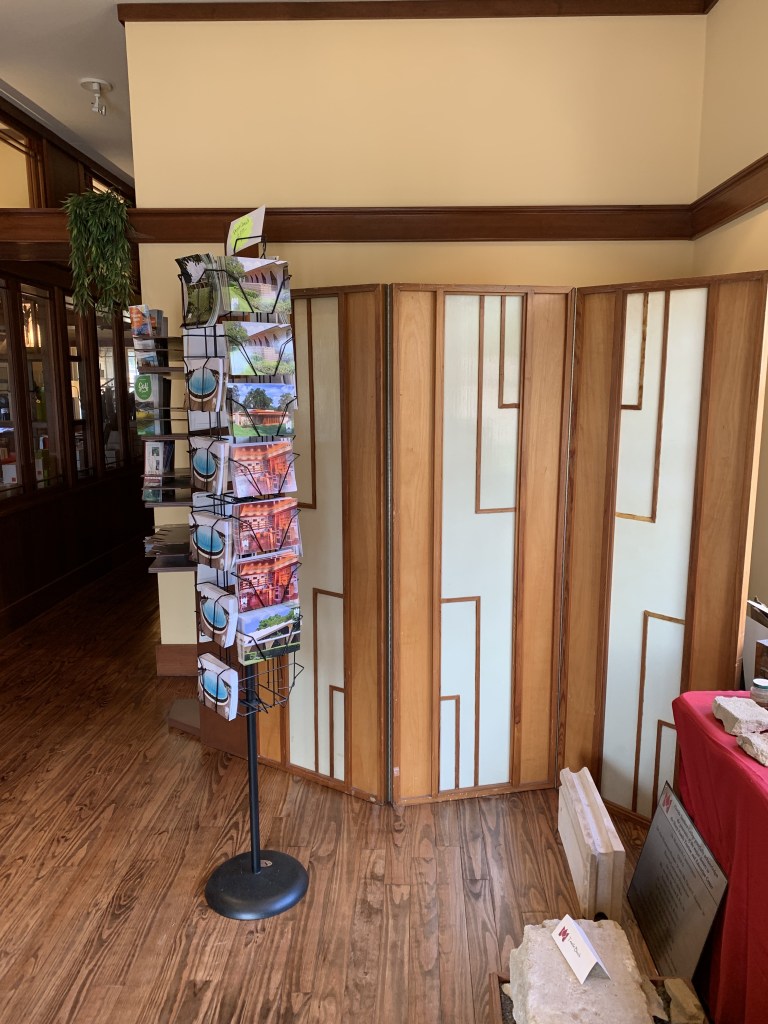
I was the only person on the tour that day and boy was it hot and humid. I felt sorry for poor Rubin (my guide). But on the other hand, if I can do it in my 70s, Rubin can do it. We started with a structure intended as a family residence for a college professor. Much to my dismay, I found that although it was interesting and every design element made perfect sense, I didn’t like it. I understood he built low ceilings in the entryway to subtly encourage people to move into the living space, but my tour guide’s head almost raked it (and he’s less than 6′). Were people just shorter in the 1930s?
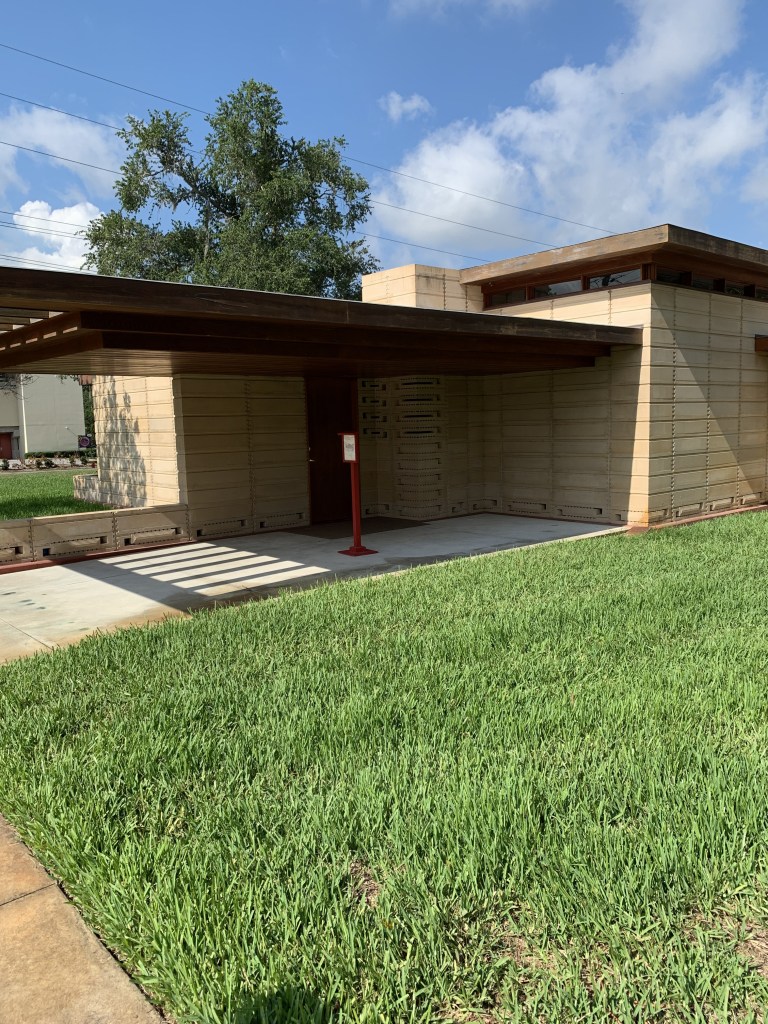
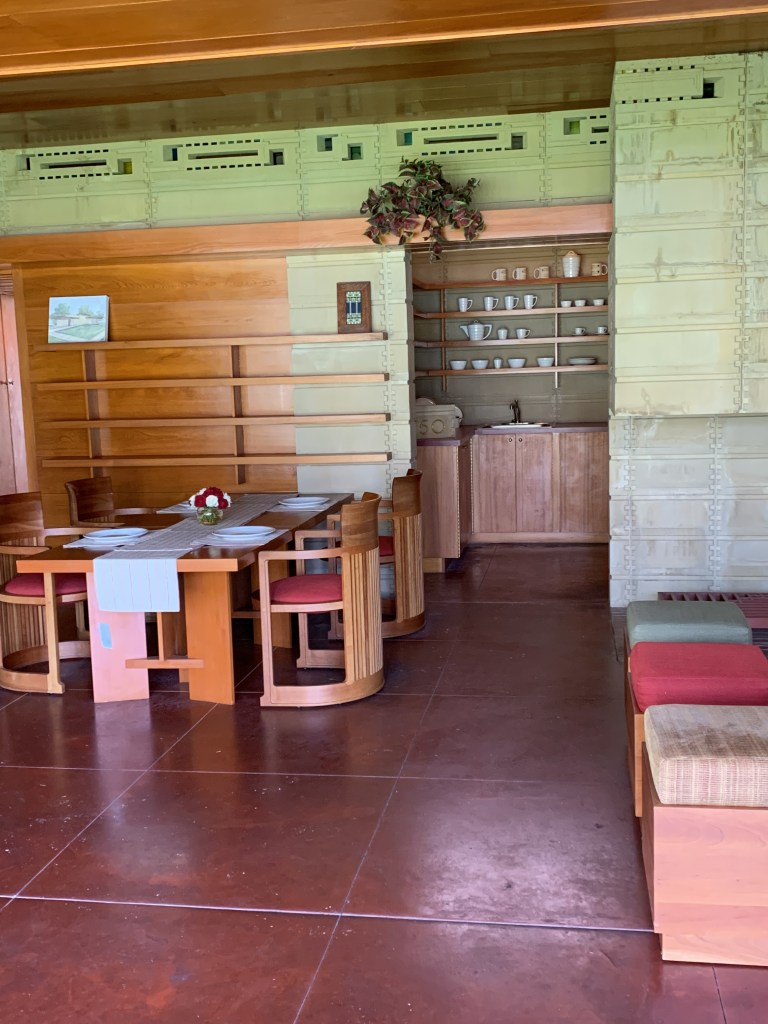
Many of the rooms (including bedrooms) were designed to have no lighting beyond the outside ambient light. I thought it was a genius idea (especially for the office area) that purposely encouraged one to stop working when the sun went down and retire to the interior family space. Nevertheless, I think it would’ve driven me crazy as a kid. There were way too many times when I didn’t want to be forced to spend my evenings with my parents. I can’t imagine it was any different back then.
I can also say I wouldn’t have been a big fan of cement blocks for interior walls. I get the uniqueness; I see the inventiveness for the time and place, but I still wouldn’t have enjoyed living there, I don’t think. I know, I know. It’s Frank Lloyd Wright for heaven’s sake.
Still.
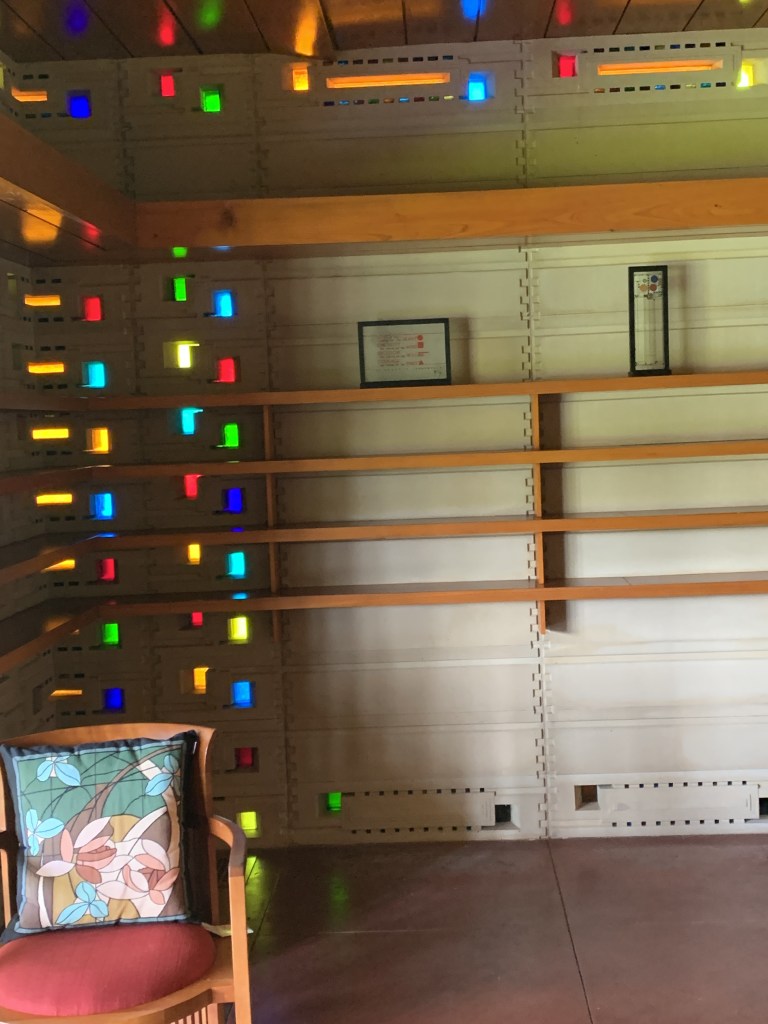
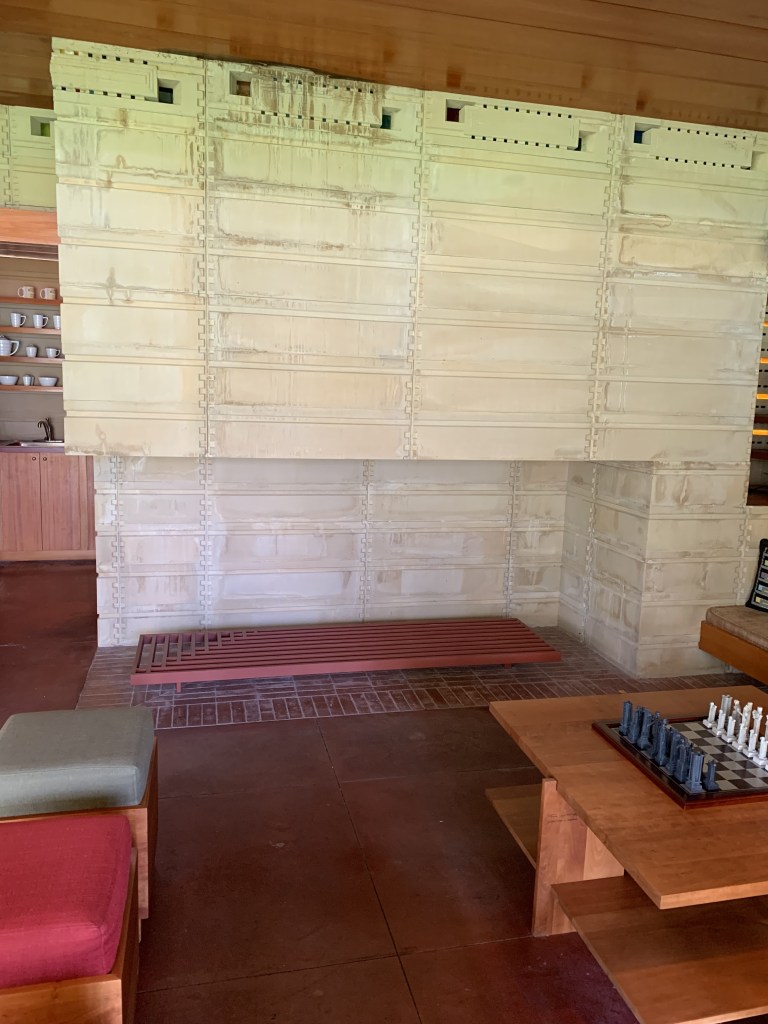
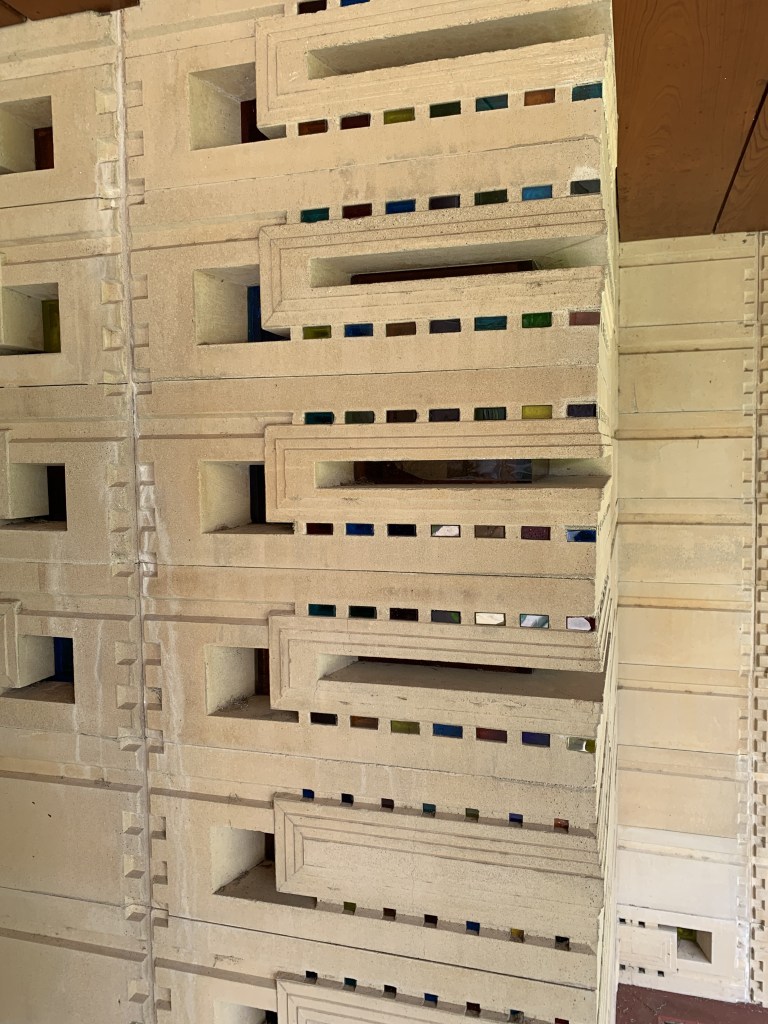
We moved on to two buildings that Wright labeled the “temple” and the “fellowship hall.” The temple was meant to be used for larger gatherings. Rubin said they use it today for everything from classroom instruction to graduation ceremonies.
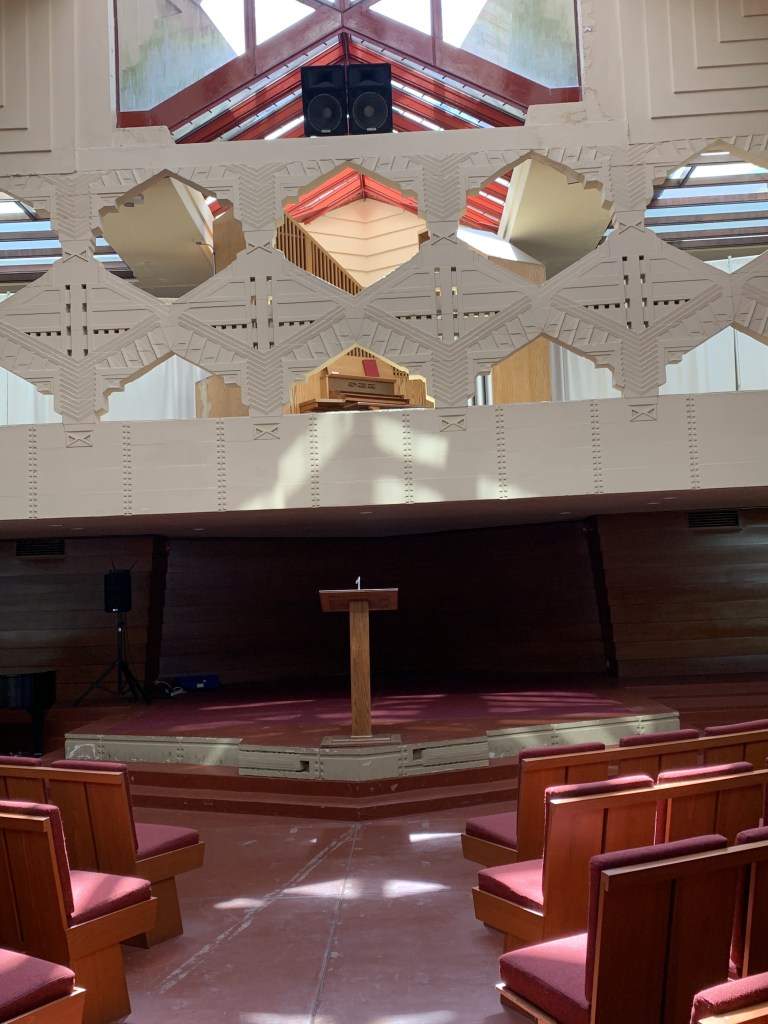
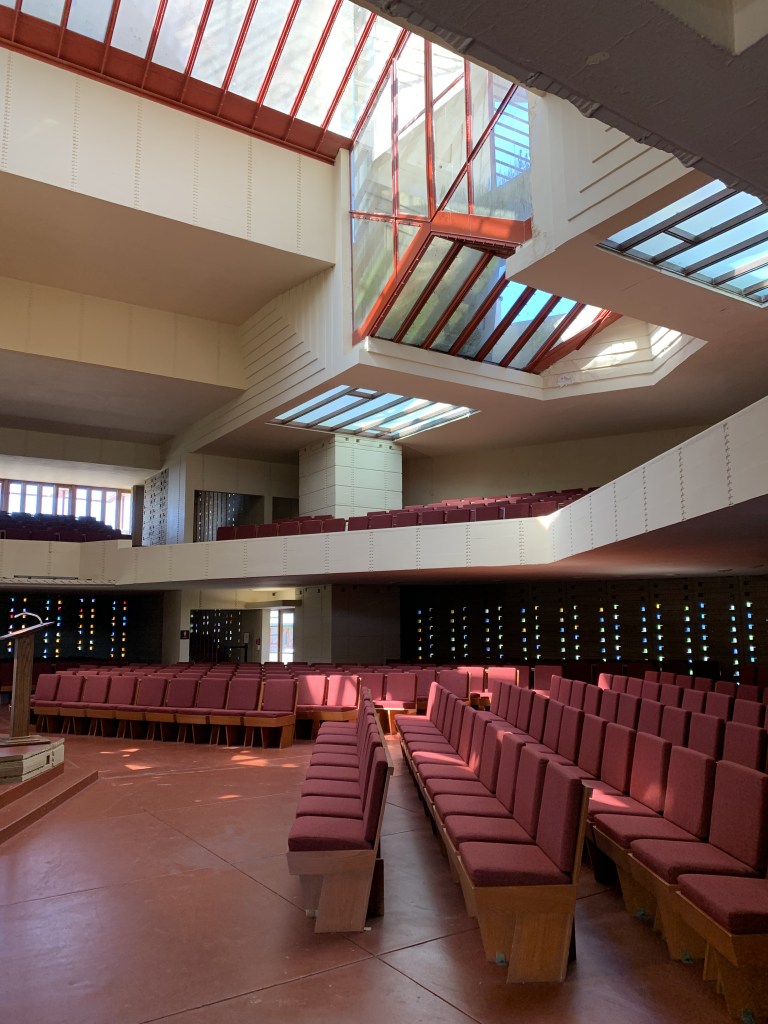
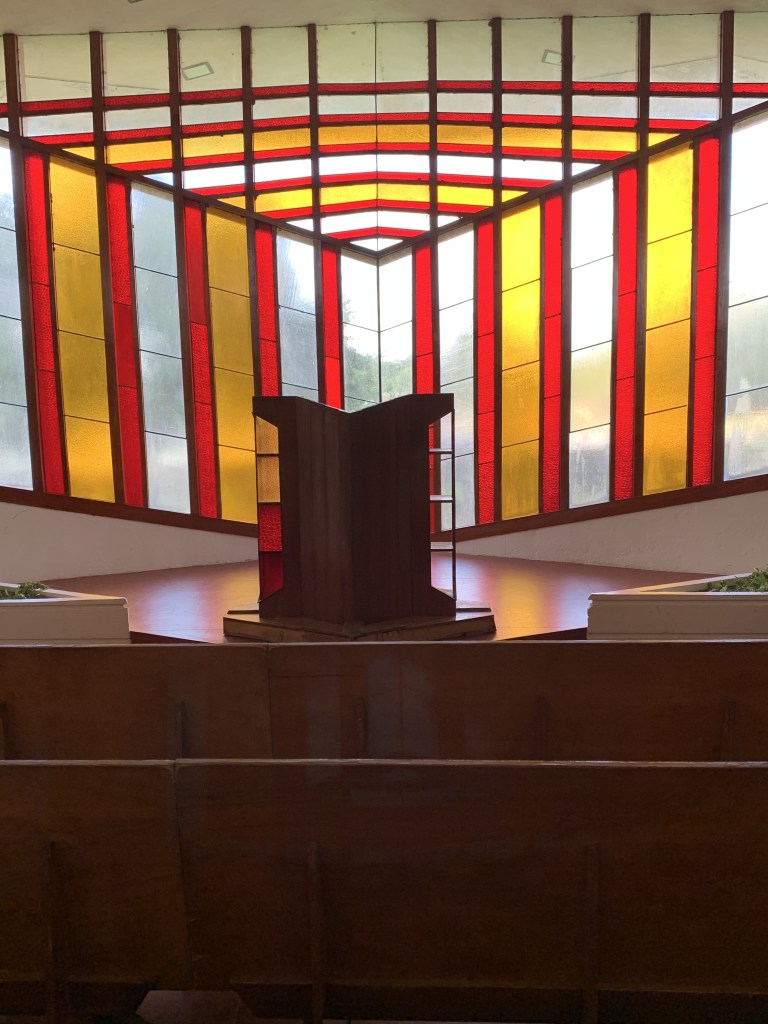
The smaller fellowship hall was meant for quiet contemplation. Rubin pointed out the stained glass in the front was meant to resemble the prow of a boat and the colors were representative of sunset. When the sun began to go down, it would speak to a time of rest and reflection. Also, since Wright was a Unitarian, there is no religious iconography in either the temple or the fellowship hall.
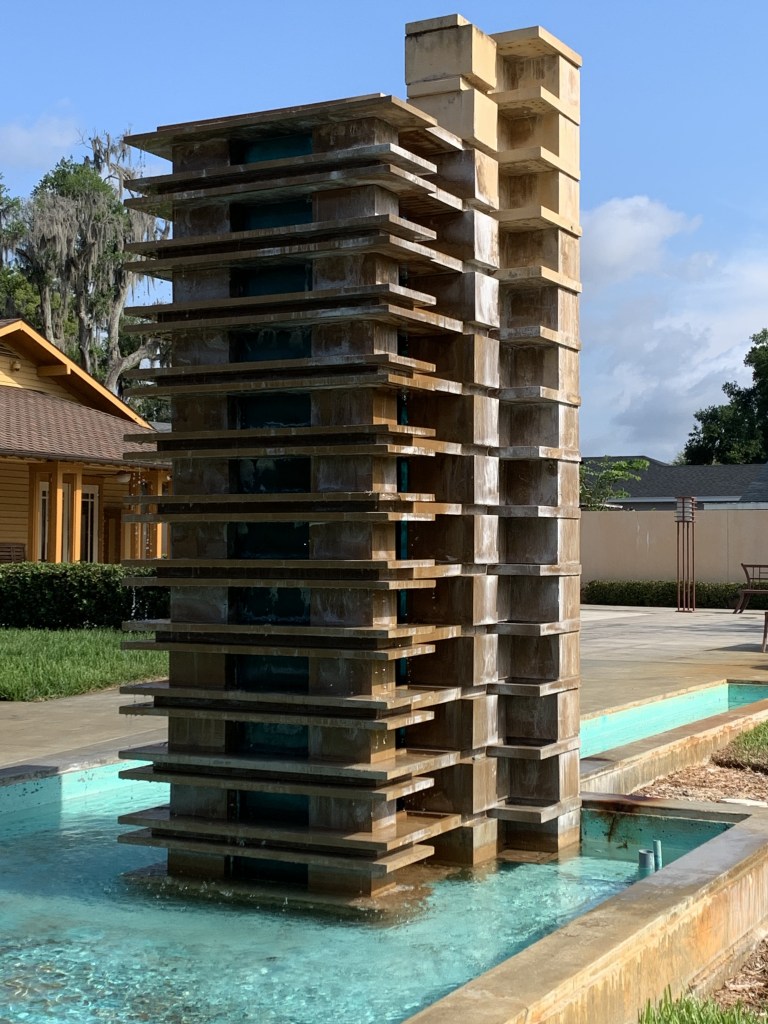
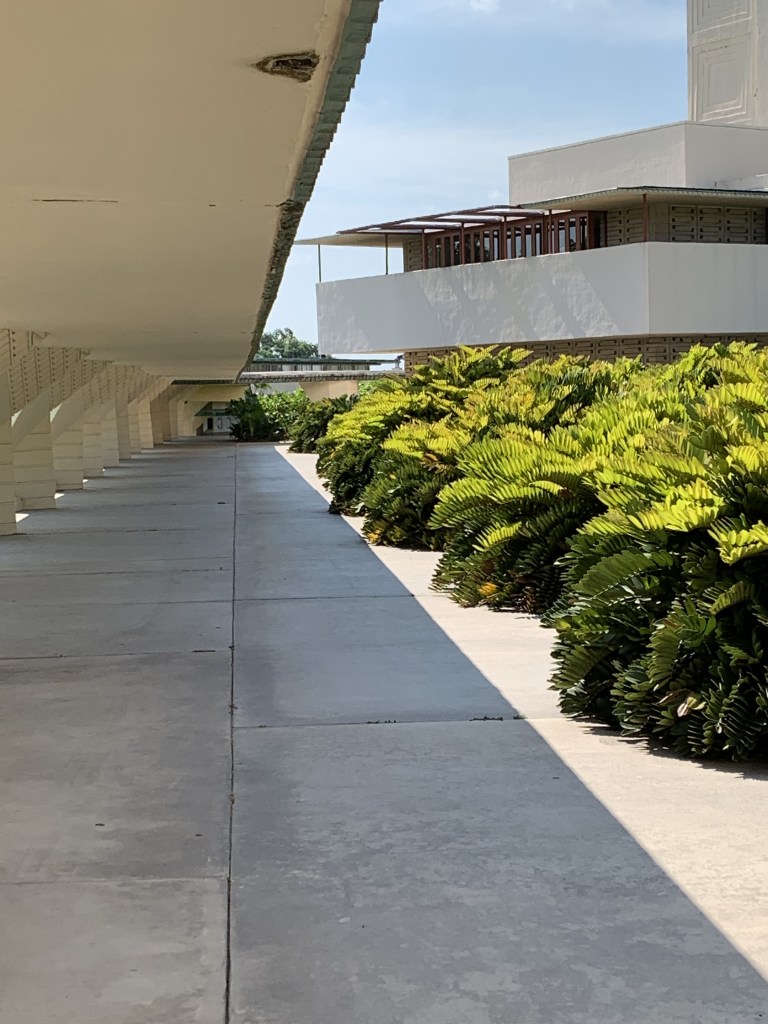
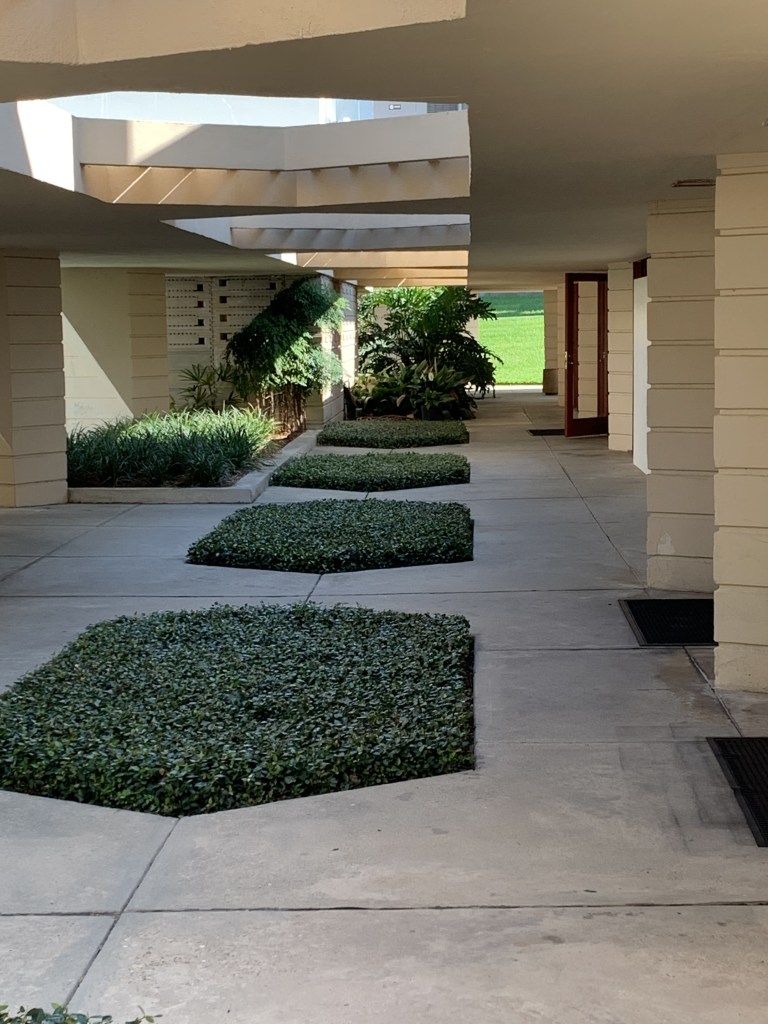
When designing this campus, Wright thought of everything. He even made sure those low ceilings meant to direct you elsewhere carried through to the outside walkways. Of course, if you weren’t really in the mood to be directed toward a classroom, he was kind enough to design the beautiful water fountain as well.
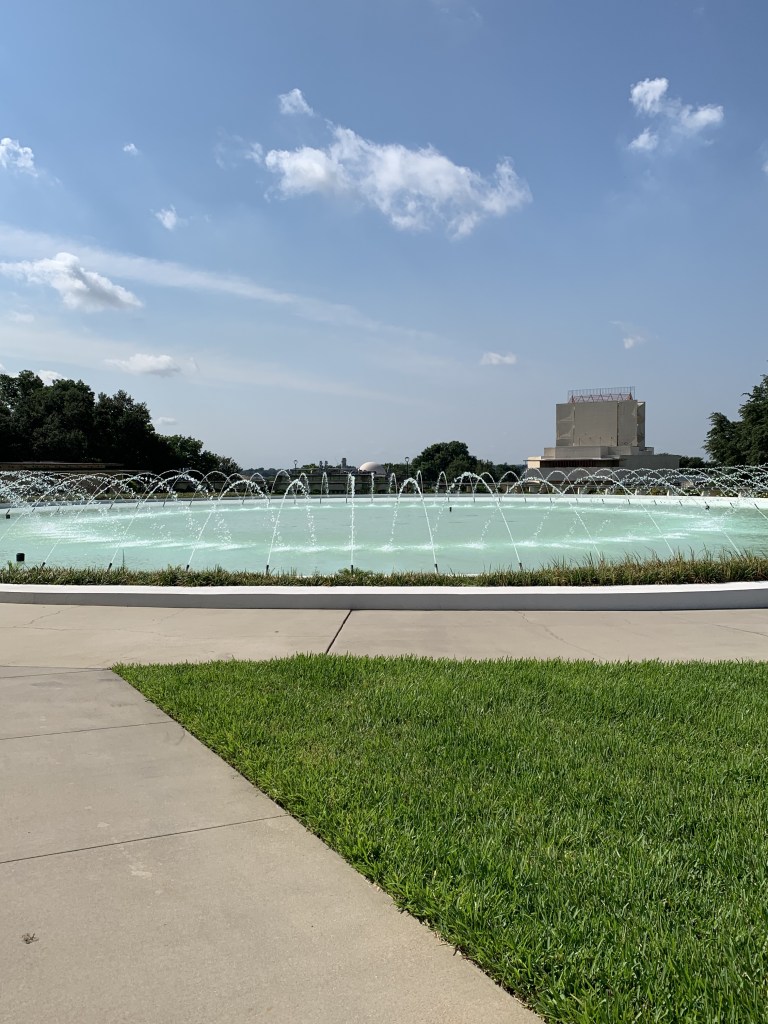
I enjoyed this tour and recommend it. I found the concepts of his interiors as fascinating as his architecture. Although I took the Basic Tour, there are more in-depth options available online. There is also an accessible tour if you can’t manage the stairs.
- 840 Johnson Ave., Lakeland, Florida
- 863-680-4597
- 7 days a week from 9:30 AM to 4:30 PM
- http://www.flsouthern.edu
- $31.50 for seniors with AARP, AAA or as active/retired military


Leave a Reply